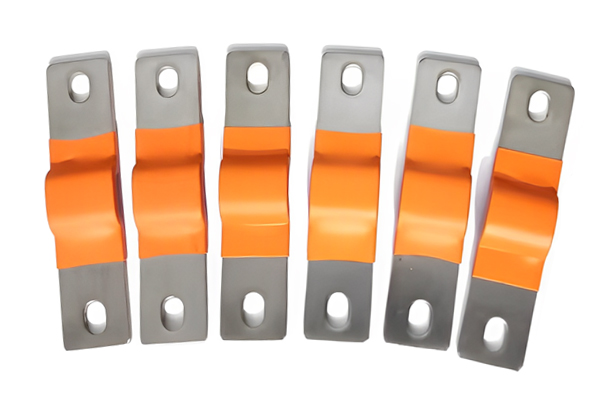
Copper Laminated Flexible Lithium Battery Bus bars For 280ah 300ah 310ah battery cell
√ Made from high-purity copper laminations.
√ Provides flexibility to accommodate battery pack movements.
√ Designed to withstand high-current loads and thermal cycling.
√ Flexible design allowing for quick connections within battery packs.
The Copper laminated flexible lithium battery bus bars is a versatile and high-performance connector designed to facilitate efficient power distribution in 280ah 300ah 310ah lithium battery packs. Constructed from multiple layers of thin copper sheets laminated together, this busbar combines excellent electrical conductivity with mechanical flexibility, making it ideal for applications requiring both high current capacity and adaptability to dynamic battery configurations.
| Product Type | Copper Laminated Flexible Lithium Battery Bus bars |
|---|---|
| Material: | High-purity copper laminations |
| Thickness: | the thickness of copper foil can be 0.05-0.3mm, and the contact surface can be customized with tin or silver plating to enhance oxidation resistance and conductivity. |
| Tensile strength: | ≥ 350 MPa, elongation 5-15%, adapt to the volume expansion caused by lithium ion embedding/de-embedding. |
| Corrosion resistance: | Pass salt spray test ≥ 48 hours, oxide layer thickness ≤ 1μm |
| Surface resistance: | <0.05 Ω/□ (6μm thickness), porosity <0.1%, reducing internal resistance and thermal runaway risk. |
| Operating Temperature: | -40°C to +125°C |
| Insulation: | Available with optional insulation layers for added safety |
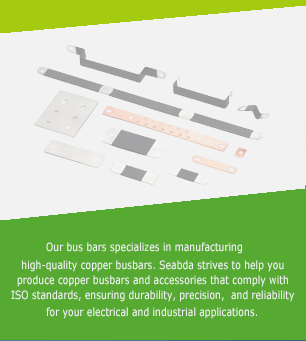
Your Trusted Lithium Battery Bus bars Manufacturer
As a leading manufacturer of Lithium Battery Busbars, we are dedicated to delivering superior connectivity solutions for modern battery systems. With a focus on innovation and precision, our busbars are engineered to meet the highest standards of performance and reliability, tailored to your specific requirements.
Why Choose Us?
1. Technical strength:
- ISO9001/14000 and IATF16949 certified, with core patents such as molecular diffusion welding.
- Mass production of 4μm very thin copper foil, yield ≥ 90%, industry-leading technical barriers.
2. Quality Assurance:
- Full process automated inspection, thickness uniformity error <1%, impurity content ≤0.05%.
- Customized plating and surface treatment to meet the special needs of corrosion resistance and low resistance.
3. Cost advantage:
- Integrated production (melting → rolling → welding) reduces processing costs, 6μm copper foil processing costs are 15% lower than the industry.
4. Service support:
- 48 hours fast sampling, provide technical guidance from selection to installation.
- Cooperating customers include Ningde Times, BYD and other head enterprises, with cases covering 30+ countries around the world.
For further information on specific models or customized solutions, please contact us e for technical support.
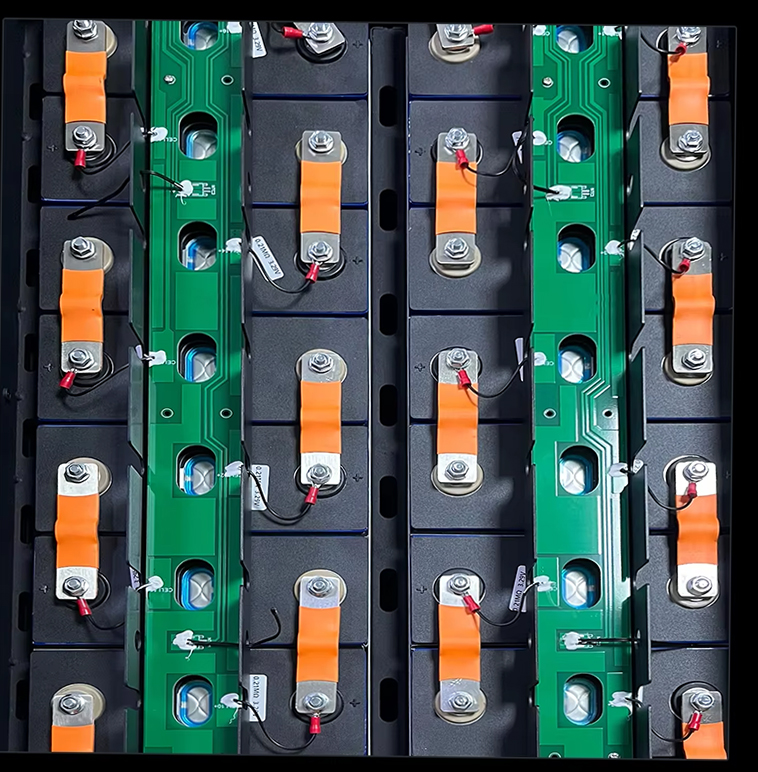
Copper Laminated Flexible Lithium Battery Bus bars Advantages:
- High Energy Density: Ultra-thin design (e.g. 4.5μm) improves the energy density of the battery to 323Wh/kg, which is about 15% higher than that of traditional copper foils.
- Safety and reliability: Flexible structure inhibits lithium dendrite growth and increases cycle life to 85.6% capacity retention (100 cycles). The composite interlayer (e.g. PET/PI) is flame retardant and heat insulating, reducing the flame self-extinguishing time by 80% in case of thermal runaway.
- Process compatibility: support for water-based/oil-based slurry coating, adhesion increased by 30%, reducing wafer manufacturing costs.
4. Lightweight: 17% porosity microporous design reduces weight by 17%, suitable for electric vehicle lightweight requirements.
Copper Laminated Flexible Lithium Battery Bus bars Applications:
- New energy vehicles: power battery module collector, support for fast charging (2000mA/g current density).
- Energy storage system: grid-level energy storage battery, adapting to frequent charging and discharging and high and low temperature environment.
- Consumer electronics: thin and light battery solutions for flexible devices (e.g. wearable devices).
- Industrial equipment: backup power in high vibration environments, such as aerospace sensors.

 English
  Arabic
  German
  Spanish
  French
  Russian
  Danish
  Japanese
  Italian
  Vietnamese
  Turkish
  Dutch
Dutch  Portuguese
  Thai
Thai  Swedish
  Korean
  Greek
Greek  Polish
  Estonian
  Esperanto
  Hindi
Hindi  Indonesian
  Latvian