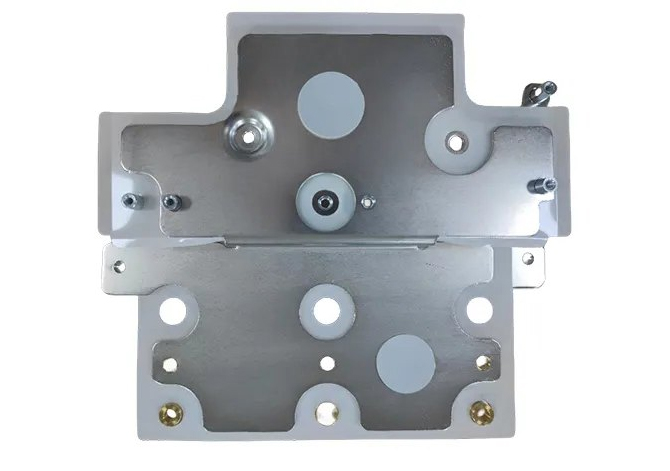
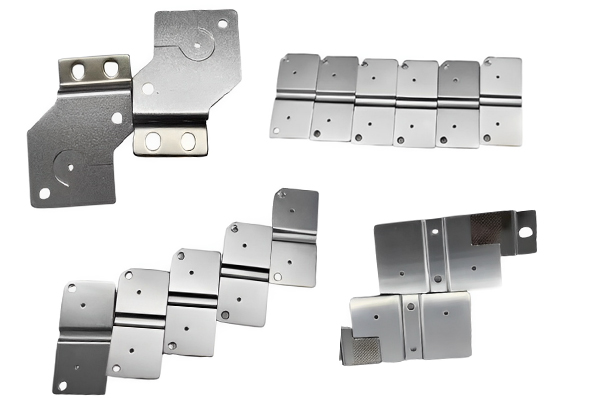
OEM Energy Storage Battery Aluminum Bus bars for 48V LiFePO4 Battery
√ Lighter than copper, simplifying installation and reducing weight.
√ Naturally resists corrosion for durability in various environments.
√ Excellent heat dissipation for enhanced safety and performance.
√ Withstands mechanical stresses and environmental conditions.
Our aluminum bus bars offer a lightweight, efficient, and reliable solution for power distribution. Crafted from high-quality aluminum, these bus bars ensure optimal electrical conductivity and mechanical strength. They are ideal for enhancing the performance and longevity of 48V LiFePO4 battery systems, providing secure and stable connections between battery cells.
| Item Type: | Aluminum bus bars |
|---|---|
| Material base: | High-quality aluminum |
| Voltage Rating: | 48V |
| Current Capacity: | Up to 200A |
| Thickness Options: | Customizable to fit specific battery designs |
| Surface Finish: | Bare or optional tin plating for enhanced conductivity and corrosion resistance |
| Operating Temperature Range: | -40°C to +85°C |
| Electrical Resistance: | High, for effective heat dissipation |
| Thermal Conductivity: | -40°C to +120°C |
| Compliance: | RoHS compliant |
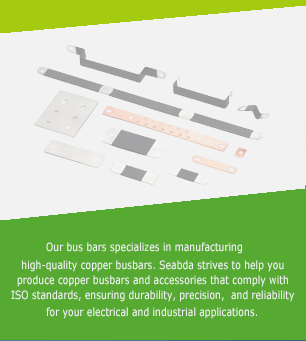
Leading Custom Aluminum Bus bars Manufacturer
As the world’s leading manufacturer of aluminum bus bars, we offer customized solutions with precision processes and intelligent optimization systems at the core. Through new targeted electro-magnetic coupling model simulation and laser anti-magnetic welding technology, we have realized online upgrading in full-current environment, reducing outage losses by up to 90%.
Aluminum Busbar Design Specifications
| Types | Structural Characteristics | Applicable Scenarios | Advantages vs. Copper Busbar |
|---|---|---|---|
| Solid Busbar | Single Piece Seamless Aluminum | High Stability Power Distribution Systems | 40% Cost Reduction, 60% Weight Reduction |
| Flexible Busbars | Multi-layer conductors + dynamic support layers | Vibration-intensive industrial equipment | 3 times higher fatigue strength |
| Laminating Busbars | Alternating Conductive/Insulating Laminations | High Voltage Environments in Compact Spaces | 50% Improvement in Thermal Efficiency |
What are the materials and processes for aluminum bus bar?
- Shell material revolution: the use of aluminum-magnesium alloy shell, compared with the traditional steel shell to reduce eddy current loss by 85%, thermal conductivity increased by 2 times.
- Conductor surface treatment: double plating process (copper + tin) to reduce the resistivity of 18%, and through the 1000 hours of salt spray test.
- Intelligent welding system: Under the environment of 1000GS strong magnetic field, laser welding realizes weld seam flatness ≤ 0.1mm, and post-weld compression is lower than international standard by 30%.
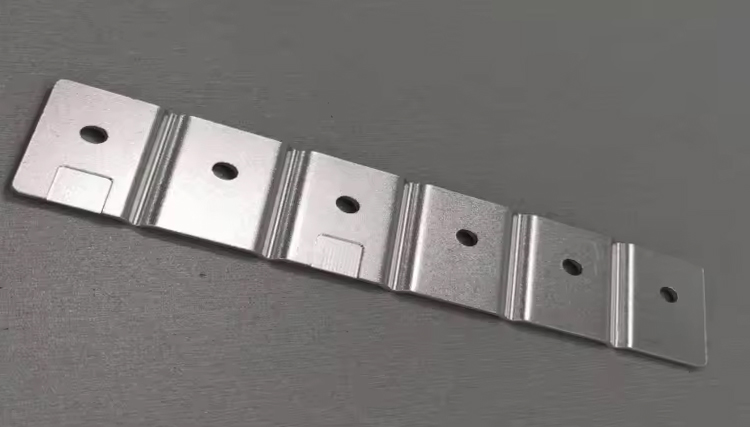
How we make the aluminum bus bar energy ffficiency?
- Multi-physical field cloud decision-making system: Dynamic optimization of current distribution through real-time monitoring by fiber-optic galvanometer + Gaussmeter, which reduces the series pressure drop by 15% and saves electricity up to 1.2 million kWh per year.
- Modularized prefabrication technology: Indonesia Beija project adopts prefabrication and assembling process, which shortens the construction period by 40% and achieves zero defect delivery.
- Environmentally friendly closed-loop design: aluminum recycling rate of 99.5%, production energy consumption of only 1/5 of copper, compliant with EU RoHS 2025 standards.
What the advantages of Aluminum Bus bars?
- Conductivity: Conductivity ≥61% IACS, UL 891 certified.
- Lightweight design: density 2.7g/cm³, 53% lighter than copper, 70% more efficient installation
- Economy: full-cycle cost reduction of 45% (including maintenance)
- Corrosion resistance: anodized treatment, C5-M level corrosion certification
- Thermal Management: Thermal conductivity 237W/m-K, temperature rise control within Δ35K
- Flexibility of customization: support for non-standard cross-section (maximum 1200mm²) and curvature bending (R ≥ 5D)
- Seismic performance: passed IEC 61439-3 Class 9 seismic test.
- Environmental protection index: carbon footprint reduced by 62% compared with the traditional process
- Intelligent monitoring: optional IoT sensors, real-time warning accuracy ≥99.8%
Industry application cases
- Shandong Steel Structure Workshop: Adopting suspended aluminum-based power busbar saves 40% of wiring space and reduces energy consumption of PE wire by 25%.
- Northwest 420kA electrolyzer: current efficiency increased by 3.2% after upgrading, annual output value increased by more than 28 million RMB.
- Indonesia smelting project: modular busbar system compressed the construction cycle from 18 months to 11 months.

 English
  Arabic
  German
  Spanish
  French
  Russian
  Danish
  Japanese
  Italian
  Vietnamese
  Turkish
  Dutch
Dutch  Portuguese
  Thai
Thai  Swedish
  Korean
  Greek
Greek  Polish
  Estonian
  Esperanto
  Hindi
Hindi  Indonesian
  Latvian