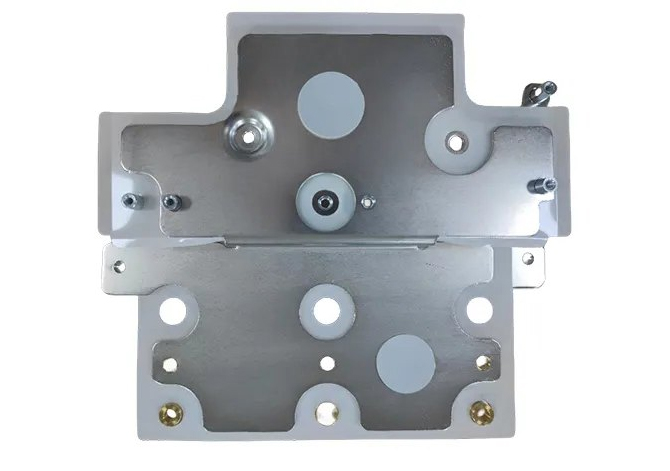
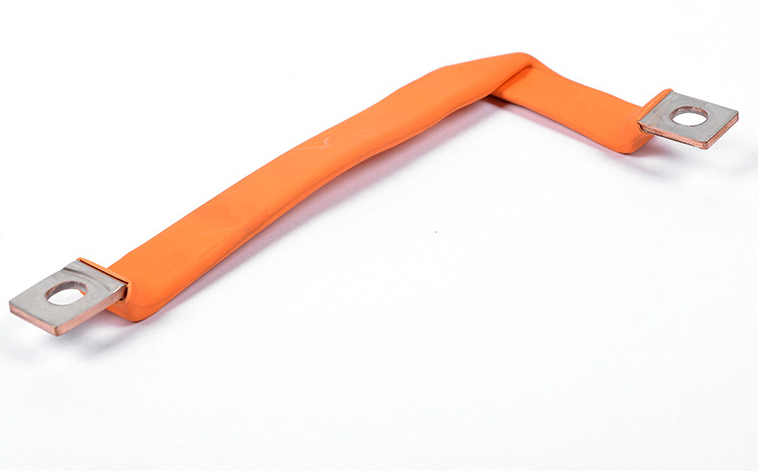
As the core conductor of electric power equipment, the surface cleanliness directly affects the conductivity and service life. In this article, the system combines physical, chemical, mechanical—three categories of the 10 scientific cleaning programs—combined with the authority of the experimental data, to provide a safe and efficient maintenance strategy to help enterprises reduce more than 30% of equipment maintenance costs.
I. Importance of copper busbar cleaning and industry standards
According to the International Copper Association (ICA) 2022 annual report, surface contamination can make the copper busbar’s conductivity decrease by 18%-25%; the thickness of the oxide layer increases by 1 μm each, the contact resistance rises by 40%. China’s GB/T 5585.1-2018 standard clearly stipulates that the surface roughness of industrial copper busbars should be ≤ 0.8 μm, and the cleanliness level needs to reach the Sa2.5 standard.
II.Physical cleaning methods and effect comparison
-
Soft cloth wiping method
- Operation specification: use microfiber cloth (fiber diameter ≤ 3μm) along the grain of the copper busbar one-way wiping
- Efficiency data: 90% of the surface dust can be removed (see Table 1).
- Note: Avoid the use of silicon polishing cloth, easy to generate electrostatic adsorption.
-
precision steel wire ball method
- Tool selection: recommended 304 stainless steel, mesh recommended 400-600 mesh
- Cleaning efficiency: 78% removal rate of stubborn oxides (U.S. ASTM test data)
- Process parameters: pressure control at 0.2-0.5MPa, the angle of 30 ° ± 5 ° to maintain
-
Ultrasonic cleaning technology
- Equipment requirements: frequency 40kHz, temperature 40-50 ℃, add special copper cleaning agent
- Economic analysis: the initial investment of about 20,000 yuan, a single piece of cleaning costs reduced by 62
- Authoritative case: Siemens distribution cabinet using this program, copper busbar life extension of 3.2 years (case link: www.siemens.com/case)
III. Chemical cleaning program optimization
-
Organic acid system
- Formulation ratio: citric acid 5% + ethanol 15% + surfactant 0.5% (v/v)
- Reaction time: 8-12 minutes at 25℃.
- Environmental certification: Comply with EU REACH Annex XVII standards.
-
Alkaline cleaning system
- Sodium hydroxide program:
- Concentration control: 3%-5% aqueous solution
- Concentration control: 3%-5% aqueous solution Temperature range: 60-70℃ for best results
- Neutralization: 1% acetic acid is required to rinse the residue.
-
Ultrasonic cleaning technology
| Brand | pH | VOC content | Corrosion rate (mm/a) | Unit price (yuan/L) |
|---|---|---|---|---|
| 3M 7350 | 6.5 | 8g/L | 0.003 | 285 |
| Henkel 279 | 7.2 | 5g/L | 0.002 | 320 |
| China X7 | 8.0 | 12/L | 0.008 | 150 |
IV. Innovative cleaning technology applications
- Laser cleaning: zero substrate damage can be achieved with a pulse width of 10 ns and an energy density of 3 J/cm²
- dry ice blasting: CO2 particle speed 200m/s, cleaning efficiency up to 3 times the traditional method
- Microbial cleaning: Pseudomonas aeruginosa biofilm decomposes organic pollutants
V. Safety practices
-
Personal Protection Requirements (OSHA standards):
- Class A protective clothing is required for chemical operations
- Goggles ≥ 89% light transmission rate
- Acid-proof gloves thickness ≥ 0.5mm
-
Waste water treatment process:
- Acid and alkali waste liquid separation and storage
- Copper ion concentration needs to be treated to ≤ 0.5mg / L (GB8978-1996)
- Recommended use of ion exchange resin recovery system
VI. Maintenance cycle recommendations
Develop a maintenance program according to IEC 61439-1 standards:
| Usage Environment | Cleaning Cycle | Deep Maintenance Cycle |
|---|---|---|
| Dry clean room | 12 months | 60 months |
| igh humidity and high dirt workshop | 6 months | 36 months |
| High humidity and high pollution workshop | 3 months | 12 months |
Conclusion
Scientific selection of a copper cleaning program can make the equipment conductive, performance increased by 15%-20%, maintenance costs reduced by 25%-40%. It is recommended that companies establish a standardized cleaning process and choose a cost-effective solution in conjunction with the environment in which the equipment is used. Regularly refer to the NEMA VE1-2017 standard for effect verification to ensure that the copper busbar system is in the best working condition.
Related Post
Why can’t a copper busbar and an aluminum busbar be directly connected?
[email protected]2025-12-08T02:54:03+00:00December 8th, 2025|0 Comments
Introduction Copper busbars and aluminum busbars are the two most commonly used conductive materials in the field of power systems and industrial distribution. Due to differences in cost, resource availability, and technical requirements, they often
How to Prepare for a Big Win at Tez888 Casino
Developer Ismail2025-10-04T21:44:04+00:00October 4th, 2025|0 Comments
When aiming for a significant payout at Tez888 casino, one crucial step often overlooked is thorough receipt checking and verification. Properly managing your transaction records not only ensures transparency but also plays a vital role
Tips and Tricks for Successful Betting on Bettilt
Developer Ismail2025-08-17T05:29:18+00:00August 17th, 2025|0 Comments
When engaging in online betting, particularly on platforms like bettilt, it's crucial to incorporate strategies such as receipt checking, tax optimization, and thorough verification to maximize your success. These elements ensure that your betting activities

How Do You Calculate the Size of a Copper Busbar?
[email protected]2025-06-06T06:54:57+00:00June 6th, 2025|0 Comments
1. Introduction to Busbar Sizing Accurate copper busbar sizing is vital for secure, dependable, and effective electric circulation. Busbars disperse high currents in switchgear and panelboards. Inappropriate sizing reasons extreme warmth, power loss, voltage
10 Essential Tips for Working with Copper Busbars
[email protected]2025-06-03T06:35:28+00:00June 3rd, 2025|0 Comments
In modern power systems, copper busbars have actually become a core element in power transmission and distribution because of their superb electric conductivity, rust resistance and mechanical strength. As a specialist manufacturer of copper
A Guide to Maintaining Copper Busbars Effectively
[email protected]2025-05-28T06:09:36+00:00May 28th, 2025|0 Comments
As a core component of power transmission systems, copper busbars are an important choice for industry due to their high electrical conductivity, corrosion resistance and mechanical strength. However, the durability of its performance is
Get IN TOUCH
We Deliver Any Customize Busbars
Related Posts
Nam lacinia arcu tortor, nec luctus nibh dignissim eu nulla sit amet maximus.

Nam lacinia arcu tortor, nec luctus nibh dignissim eu nulla sit amet maximus.
Nam lacinia arcu tortor, nec luctus nibh dignissim eu nulla sit amet maximus.
Nam lacinia arcu tortor, nec luctus nibh dignissim eu nulla sit amet maximus.
 English
  Arabic
  German
  Spanish
  French
  Russian
  Danish
  Japanese
  Italian
  Vietnamese
  Turkish
  Dutch
Dutch  Portuguese
  Thai
Thai  Swedish
  Korean
  Greek
Greek  Polish
  Estonian
  Esperanto
  Hindi
Hindi  Indonesian
  Latvian