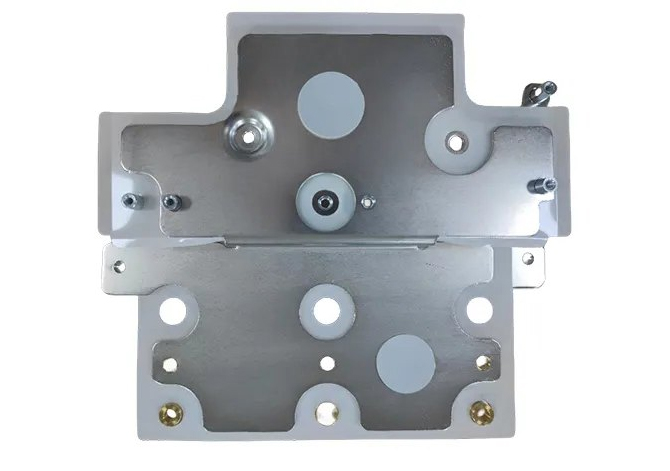
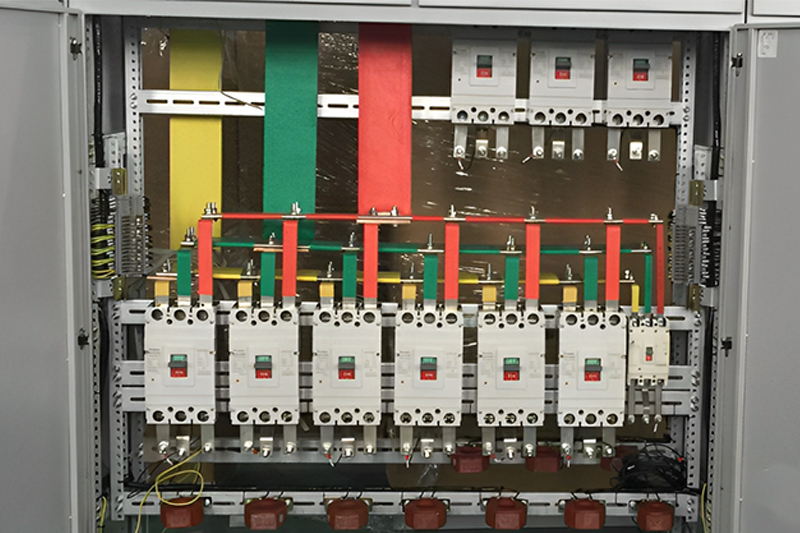
In the field of power distribution, laminated busbar realizes breakthrough advantages such as an 80% reduction of inductance, a 50% improvement of heat dissipation efficiency, and a 60% reduction of volume through the precision composite design of multi-layer conductive materials and insulators. This article systematically explains its structural innovation, eight core advantages, and customized application scenarios, combined with the International Energy Agency (IEA) and IEEE standard data, to demonstrate its strategic value in the field of new energy, industry 4.0, and intelligent transportation and to provide a key technological path for the upgrading of the power system.
I. Structural Characteristics
Laminated busbars adopt an alternating lamination process of copper/aluminum conductors and polyimide/epoxy insulators to form a micron-level composite structure with a thickness of 0.1-2mm (Figure 1). Compared with the traditional busbar, its interlayer capacitance increases to 15-30 pF/cm², effectively suppressing voltage spikes.ABB laboratory tests show that this structure reduces eddy current loss to 12% of the traditional busbar, and the temperature rise is only 28℃ (65℃ for the traditional busbar) under the 10kA current scenario.
Comparison of technical parameters
| Indicators | Laminated Busbar | Conventional Busbar | Improvement |
|---|---|---|---|
| Inductance (nH/cm) | 3-8 | 15-40 | 73% ↓ |
| Thermal Resistance (°C/W) | 0.15 | 0.35 | 57%↓ |
| Power Density (kW/cm³) | 2.7 | 0.9 | 200%↑ |
II. Advantages of laminate busbars
1. Inductance Suppression Technology
Siemens Energy Division’s real-world measurements show that the electromagnetic interference (EMI) intensity of laminated busbars is reduced to 35 dBμV in 10 MHz high-frequency scenarios (compared to 72 dBμV for conventional busbars), which meets the stringent CISPR 22 Class B standard. With the adoption of this technology in the Tesla Model S Plaid, the motor controller signal BER is reduced from 10⁻⁶ to 10⁻⁹, helping to realize 200μs-level ultra-high-speed switching response.
2. 3D Thermal Management Architecture
Directional heat dissipation channels are established through a copper layer-insulator gradient thermal conductivity design (5 W/mK in the vertical direction → 0.2 0.2W/mK in the horizontal direction). According to a research report by Ningde Times, this structure compresses the temperature difference of the battery module from ±5°C to ±1.2°C and extends the cycle life to 8,000 times (37% improvement).
3. Space compression
Fuji Electric developed a curved laminated busbar that realizes a 62% reduction in power module size in a 1.2 MW PV inverter. Its serpentine alignment design enables a wiring density of 18A/mm², far exceeding the 6A/mm² required by the IEC 61439 standard.
4. Mechanical-Electrical Synergy Reinforcement
DuPont Laboratory impact tests show that busbars with a fiberglass reinforcement layer maintain insulation resistance >10¹²Ω and vibration fatigue life >10⁷ times under 50G acceleration impact (8 times improvement). Schneider Electric realized MTBF (mean time between failure) exceeding 150,000 hours in nuclear power plant applications.
5. Customized design
Case 1: GE’s star-shaped laminated busbar (Fig. 3) for offshore wind power reduces converter losses by 19% through 24 layers of interleaved copper foils to achieve 360° current homogenization.
Case 2: L-shaped busbar for Xiaopeng Automobile’s X9 model, with a bending radius of 2mm to maintain 100 kA short-circuit withstand capability, saving 43% of wiring space.
III. Industry Applications
1. New Energy Field
According to NREL data, the system efficiency of a PV power plant with a laminated busbar is increased to 98.7% (96.2% for traditional), and the annual power generation per MW is increased by 21,000 kWh. Goldwind reduced the energy consumption of the pitch system by 14% after applying it to a 6.25MW wind turbine.
2. Industry 4.0
Fanuc’s robotic arm is equipped with a ring-shaped laminated busbar that realizes a current density of 500 A/cm² at the joints, increasing motion response speed to 0.25 ms (compared to the conventional 1.2 ms). Mitsubishi Electric calculations show that this technology reduces production line energy consumption by 22%/year.
IV. Future Trends and Technological Innovations
- Material revolution: Sumitomo Electric has developed a graphene-copper composite laminated busbar, which reduces loss to 18% of traditional materials under 100 kHz operating conditions.
- Intelligent integration: ABB launched the implantable fiber optic sensing busbar, real-time monitoring of temperature/strain, and prediction accuracy of ± 0.5 ℃ (IEC 61557 standard).
Conclusion
Laminated busbars are reshaping the global power transmission landscape with their structural innovations and customizable advantages. While achieving inductance reduction and thermal management optimization, its modular design provides key technical support for new energy and high-end manufacturing. With breakthroughs in material technology and intelligent monitoring systems, this technology will play a more central role in the energy efficiency revolution.
Related Post
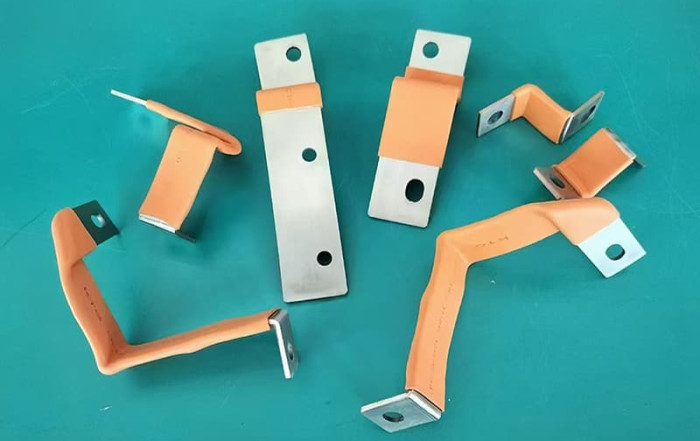
Why can’t a copper busbar and an aluminum busbar be directly connected?
[email protected]2025-12-08T02:54:03+00:00December 8th, 2025|0 Comments
Introduction Copper busbars and aluminum busbars are the two most commonly used conductive materials in the field of power systems and industrial distribution. Due to differences in cost, resource availability, and technical requirements, they often
How to Prepare for a Big Win at Tez888 Casino
Developer Ismail2025-10-04T21:44:04+00:00October 4th, 2025|0 Comments
When aiming for a significant payout at Tez888 casino, one crucial step often overlooked is thorough receipt checking and verification. Properly managing your transaction records not only ensures transparency but also plays a vital role
Tips and Tricks for Successful Betting on Bettilt
Developer Ismail2025-08-17T05:29:18+00:00August 17th, 2025|0 Comments
When engaging in online betting, particularly on platforms like bettilt, it's crucial to incorporate strategies such as receipt checking, tax optimization, and thorough verification to maximize your success. These elements ensure that your betting activities

How Do You Calculate the Size of a Copper Busbar?
[email protected]2025-06-06T06:54:57+00:00June 6th, 2025|0 Comments
1. Introduction to Busbar Sizing Accurate copper busbar sizing is vital for secure, dependable, and effective electric circulation. Busbars disperse high currents in switchgear and panelboards. Inappropriate sizing reasons extreme warmth, power loss, voltage
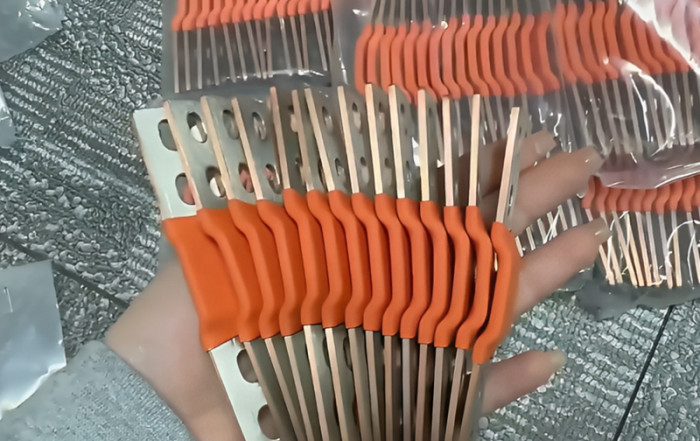
10 Essential Tips for Working with Copper Busbars
[email protected]2025-06-03T06:35:28+00:00June 3rd, 2025|0 Comments
In modern power systems, copper busbars have actually become a core element in power transmission and distribution because of their superb electric conductivity, rust resistance and mechanical strength. As a specialist manufacturer of copper
A Guide to Maintaining Copper Busbars Effectively
[email protected]2025-05-28T06:09:36+00:00May 28th, 2025|0 Comments
As a core component of power transmission systems, copper busbars are an important choice for industry due to their high electrical conductivity, corrosion resistance and mechanical strength. However, the durability of its performance is
Get IN TOUCH
We Deliver Any Customize Busbars
Related Posts
Nam lacinia arcu tortor, nec luctus nibh dignissim eu nulla sit amet maximus.

Nam lacinia arcu tortor, nec luctus nibh dignissim eu nulla sit amet maximus.
Nam lacinia arcu tortor, nec luctus nibh dignissim eu nulla sit amet maximus.
Nam lacinia arcu tortor, nec luctus nibh dignissim eu nulla sit amet maximus.

 English
  Arabic
  German
  Spanish
  French
  Russian
  Danish
  Japanese
  Italian
  Vietnamese
  Turkish
  Dutch
Dutch  Portuguese
  Thai
Thai  Swedish
  Korean
  Greek
Greek  Polish
  Estonian
  Esperanto
  Hindi
Hindi  Indonesian
  Latvian