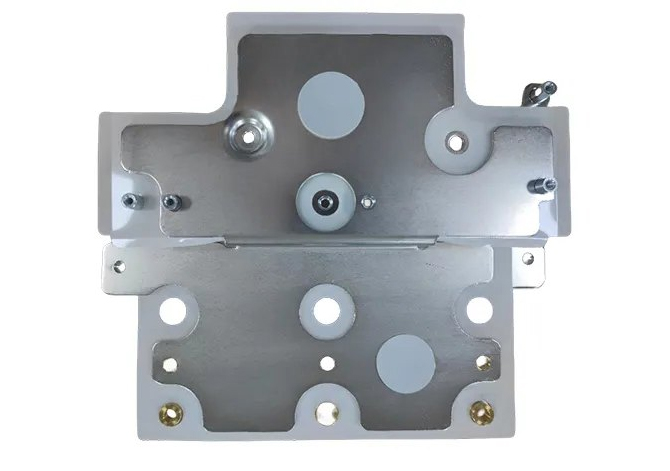
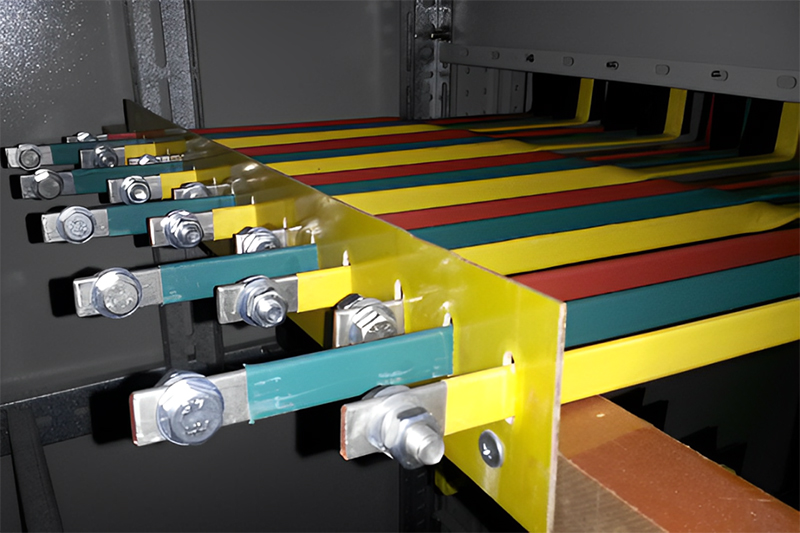
In the critical period of the automotive industry’s transition to electrification and intelligence, laminated flexible busbar is reshaping the technological paradigm of vehicle power distribution systems with its revolutionary 3D composite structure design. Through in-depth analysis of 10 core dimensions, this article reveals how this technology brings a system-level performance leap for the automotive industry through material innovation (87% copper-aluminum composite material usage), structural optimization (70% reduction in space occupation), and technological breakthroughs (ultrasonic welding yield rate increased to 99.6%). Data shows that the energy loss of electric vehicles adopting this technology has been reduced by 23%, and the range has been increased by 8%, which verifies its strategic value in promoting the innovation of the industry.
Structure and Material of Laminated Flexible Busbar
1. Three-dimensional composite conductive architecture
Laminated flexible busbars adopt the composite structure of alternating stacks of copper/aluminum foils, and the thickness of a single layer can be controlled at 0.1-0.3 mm. The conductive layer is combined with the PET/polyimide insulating layer through the high-pressure laminating process (>5 MPa) to form a flexible module with gradient conductive characteristics. The battery module connection system of the Tesla Model 3 uses a 12-layer 0.2 mm copper foil structure, which reduces the weight of the wiring harness by 35% compared to conventional wiring harnesses.
Comparison of key parameters
| Parameters | Conventional Wiring Harness | Laminated Busbar | Improvement |
|---|---|---|---|
| Current Density (A/mm²) | 3.2 | 8.5 | 165% |
| Space Occupancy | 100% | 30% | 70% |
| temperature rise (Δ°C/100A) | 45 | 18 | 60% |
2. Composite insulation system innovation
A hybrid insulation scheme of PET (polyethylene terephthalate) and PI (polyimide) is used :
- Flexible section: 125 μm PET film (CTI > 600 V) ensures insulation reliability in the bending area.
- Rigid connection zone: 50 μm PI film (RTI > 200°C) supports the thermal stability of the soldering process
Rogers ROLINX busbar maintains >100 MΩ insulation resistance in 1000 bending tests, validating the durability of the design.
6 Advantages of Laminated Flexible Busbar
1. Inductance Suppression Technology
The tightly laminated structure allows the magnetic fields of neighboring conductors to cancel each other out, keeping the distributed inductance below 3 nH/cm. After applying this technology to the motor drive system of the Volkswagen ID.4, switching noise is reduced by 18 dB, and the EMC test pass rate is increased to 98%.
2. Dynamic Thermal Management System
Through the gradient thermal conductivity design of the copper-insulation layer-aluminum, the heat transfer efficiency reaches 380 W/mK (only 65 W/mK for traditional wiring harnesses). The BMW iX3’s busbar system keeps the temperature rise within 22°C under 150A continuous load, ensuring 20% longer battery life.
3. Spatial Reconfiguration Capability
Flexible design allows for a minimum bending radius of up to 5 times thickness (conventional harnesses require 20 times diameter). Ningde Times’ latest CTP3.0 battery pack utilizes this feature to achieve a volume utilization rate of 72% and an energy density of 255 Wh/kg.
4. Smart Manufacturing Adaptability
The ultrasonic welding process makes the connection resistance <10 μΩ, which improves efficiency by 300% compared to bolted connections. The Toyota bZ4X production line adopts fully automatic welding robots, with a single-day production capacity exceeding 1,200 sets and a yield rate of 99.8%.
5. Full Life Cycle Cost Optimization
Although the initial cost is 15-20% higher:
- Assembly time reduced by 60% (Mercedes EQS data)
- Failure rate reduced by 75% (GM Ultium platform statistics)
Realized a 28% reduction in 3-year TCO (Total Cost of Ownership).
6. High-voltage system safety assurance
The 800V system of the Azera ET7 is IP67 & UL94 V-0 certified through the insulation design with partial discharge onset voltage >6kV/mm, combined with aluminum-based composite materials (ignition point >750°C).
III. Technology Evolution and Market Prospects
A. Material Innovation Route
- Conductive layer: graphene-reinforced copper matrix composites (40% increase in conductivity) entering pilot stage
- Insulation layer: Liquid silicone 3D printing technology realizes a 0.05mm ultra-thin package.
B. Market Scale Forecast
| Year | Global Market | EV Penetration |
|---|---|---|
| 2025 | $8.5B | 38% |
| 2030 | $25B | 62% |
Typical Cases of Industry Applications
Tesla 4680 battery system:
- Utilizes a 96-layer flexible busbar matrix
- Inter-unit connection resistance <5μΩ
- System energy density increased by 16%.
BYD Blade Battery Pack:
- Integrated laminate design reduces 87 connections.
- 23% reduction in production cost
- Capacity retention rate >90% through 1500 cycles
Conclusion
Laminated flexible busbars are reshaping the underlying logic of automotive electrical architecture through multi-dimensional technological innovation. Its value is not only reflected in the 23% energy efficiency improvement and 70% space saving but, more importantly, it provides a physical carrier for cutting-edge directions such as 800 V high-voltage platform and CTC battery technology. As material costs continue to dip (copper usage decreases by 5% annually) and process intelligence accelerates (AI welding control accuracy of ±1μm), the technology will become a core element in defining the next generation of smart electric vehicles. It is recommended that the industry focus on three strategic opportunities:
- Synergistic optimization with silicon carbide power devices
- very low inductance design for 400kW fast charging
- Industrialization of self-healing insulating materials
Related Post
Why can’t a copper busbar and an aluminum busbar be directly connected?
[email protected]2025-12-08T02:54:03+00:00December 8th, 2025|0 Comments
Introduction Copper busbars and aluminum busbars are the two most commonly used conductive materials in the field of power systems and industrial distribution. Due to differences in cost, resource availability, and technical requirements, they often
How to Prepare for a Big Win at Tez888 Casino
Developer Ismail2025-10-04T21:44:04+00:00October 4th, 2025|0 Comments
When aiming for a significant payout at Tez888 casino, one crucial step often overlooked is thorough receipt checking and verification. Properly managing your transaction records not only ensures transparency but also plays a vital role
Tips and Tricks for Successful Betting on Bettilt
Developer Ismail2025-08-17T05:29:18+00:00August 17th, 2025|0 Comments
When engaging in online betting, particularly on platforms like bettilt, it's crucial to incorporate strategies such as receipt checking, tax optimization, and thorough verification to maximize your success. These elements ensure that your betting activities

How Do You Calculate the Size of a Copper Busbar?
[email protected]2025-06-06T06:54:57+00:00June 6th, 2025|0 Comments
1. Introduction to Busbar Sizing Accurate copper busbar sizing is vital for secure, dependable, and effective electric circulation. Busbars disperse high currents in switchgear and panelboards. Inappropriate sizing reasons extreme warmth, power loss, voltage
10 Essential Tips for Working with Copper Busbars
[email protected]2025-06-03T06:35:28+00:00June 3rd, 2025|0 Comments
In modern power systems, copper busbars have actually become a core element in power transmission and distribution because of their superb electric conductivity, rust resistance and mechanical strength. As a specialist manufacturer of copper
A Guide to Maintaining Copper Busbars Effectively
[email protected]2025-05-28T06:09:36+00:00May 28th, 2025|0 Comments
As a core component of power transmission systems, copper busbars are an important choice for industry due to their high electrical conductivity, corrosion resistance and mechanical strength. However, the durability of its performance is
Get IN TOUCH
We Deliver Any Customize Busbars
Related Posts

Nam lacinia arcu tortor, nec luctus nibh dignissim eu nulla sit amet maximus.
Nam lacinia arcu tortor, nec luctus nibh dignissim eu nulla sit amet maximus.
Nam lacinia arcu tortor, nec luctus nibh dignissim eu nulla sit amet maximus.
Nam lacinia arcu tortor, nec luctus nibh dignissim eu nulla sit amet maximus.

 English
  Arabic
  German
  Spanish
  French
  Russian
  Danish
  Japanese
  Italian
  Vietnamese
  Turkish
  Dutch
Dutch  Portuguese
  Thai
Thai  Swedish
  Korean
  Greek
Greek  Polish
  Estonian
  Esperanto
  Hindi
Hindi  Indonesian
  Latvian