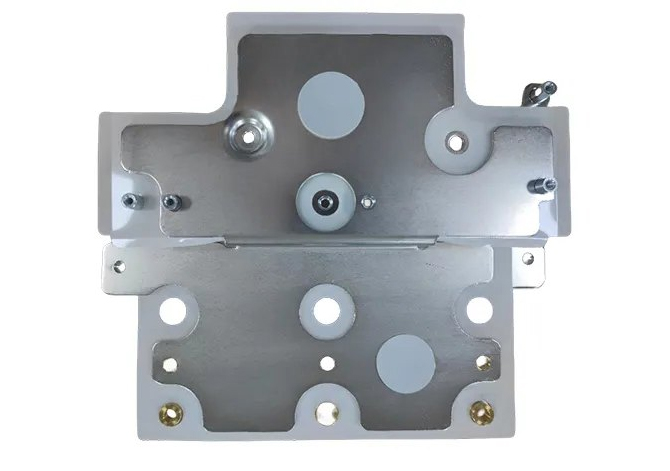
With the rapid development of the new energy industry, the high-current scenario requires increasingly stringent performance of conductive components. With its excellent conductivity, corrosion resistance, and solderability, Tin-plated copper busbar has become the core component of new energy vehicles, photovoltaic power generation, and other fields. This article starts from the scientific principles of tin-plating process, combined with 7 technical dimensions, in-depth analysis of the selection criteria and application strategy of the tinned copper busbar, and authoritative data comparison to provide enterprises with landing solutions.
- Conductivity enhancement and stability optimization
- The conductivity of copper itself is as high as 58 S/m, but the conductivity of copper oxide on the surface decreases significantly. After tin plating, tin oxide (SnO₂) has better conductivity than copper oxide (CuO), which can reduce the contact resistance by up to 30%. Experimental data show that the temperature rise of tin-plated copper busbars is 15-20% lower than that of bare copper busbars(under the same current), which significantly reduces power loss.
- Upgrading of corrosion resistance by leaps and bounds
In the salt spray test, the thickness of the tin-plated layer ≥ 25 25μm copper busbar can withstand 1000 hours without corrosion, far more than the limit of 72 hours of bare copper. For example, in coastal photovoltaic power plants, the service life of tinned copper busbars can be extended to more than 15 years, reducing maintenance costs by 40%.
- Improvement of soldering process
When the surface roughness (Ra value) of matte tin plating is controlled at 0.8-1.6 μm, the bonding strength of soldering is increased by more than 50%, and a reliable connection can be realized without flux. The Tesla Supercharger uses this process to improve welding efficiency by 3 times.
2. Tin plating process
| Process Type |
Plating Thickness (μm) |
Conductivity (%IACS) |
Scenarios |
Cost Index (Bare Copper = 1) |
| Bright Tin |
8-12 |
85-90 |
Switchboards, Exterior Parts |
1.8 |
| Matte Tin (Solderable) |
12-15 |
80-85 |
Connector Pieces, PCB Soldering |
2.2 |
| Hot Dip Tin |
25-40 |
75-80 |
Equipment, Chemical Environments |
3.5 |
- Bright Tin: Balancing Aesthetics and Function
Suitable for data center power distribution cabinets and other scenarios that require a high level of appearance, with a mirror gloss (measured at a 60° angle) of 90GU or more, but soldering applications need to be avoided.
- Matte tin: the ultimate solution for industrial connections
High-temperature resistance can be increased to 200°C by plating a nickel base layer (2-5μm thickness), which is used in Ningde Times battery modules, reducing the defective soldering rate to 0.02%.
- Hot-dip tin: a protective barrier for extreme environments
In offshore wind power projects, 40μm hot-dip tinned copper busbars are 10 times more resistant to sulfide corrosion than bare copper, which is especially suitable for industrial environments containing H₂S.
3. Plating thickness material
- Thickness selection
- Indoor dry environment: 12.5μm (meet GB/T 2423.17 salt spray test level 4 standard)
- Humid/industrial environment: 25μm (passed IEC 60068-2-11 severe grade test)
- Chemical/marine environment: ≥30μm (refer to NACE TM0172 standard)
- Irreplaceability of C110 pure copper
C110 copper busbars with copper content ≥99.9%, conductivity up to 101% IACS, and bending formability 3 times higher than brass are the best substrates for the tin-plating process. An ultra-high voltage substation project was measured to show that the C110 copper busbar of the current-carrying capacity of 22% higher than the alloy copper.
4. Quality control
- Plating uniformity test
X-ray fluorescence spectrometer (XRF) is used for thickness mapping, requiring a deviation of ≤±10% (refer to ASTM B568 standard).
- Bonding test
Pass the bending test (180° bending without peeling off) and thermal shock test (-40°C~150°C cycle for 5 times) stipulated by ISO 2819.
- Environmental protection process upgrade
Leading companies have adopted cyanide-free tin plating processes (e.g. citrate systems), which reduce the toxicity of wastewater by 90% and comply with RoHS 3.0 standards.
5. Industry Application
- High-voltage system for new energy vehicles
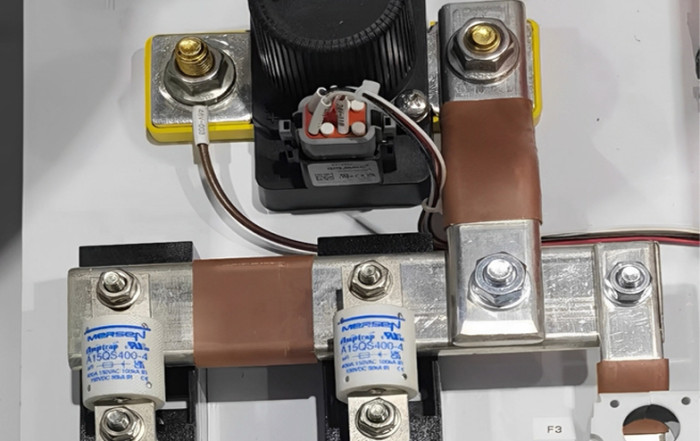
The BYD blade battery module adopts matte tin copper busbars, with contact resistance stabilized at below 0.15 mΩ, supporting 600 A continuous current.
- PV Inverter Topology Optimization
Sunny Power’s latest string inverter uses tinned copper busbars to increase the power density to 1.5W/cm³, and the efficiency breaks through 99%.
Summarize
The technological breakthrough of tinned copper busbar busbars is reshaping the competitive landscape of the new energy industry. From the quantum-level optimization of electrical conductivity to the reliability of extreme environments, the scientific selection of plating processes and thicknesses has become the core strategy of cost reduction and efficiency. With the strategic deployment of high-end materials, the tinned copper busbar will accelerate to aerospace, smart grid and other cutting-edge areas of penetration, opening a new era of conductive components.



 English
  Arabic
  German
  Spanish
  French
  Russian
  Danish
  Japanese
  Italian
  Vietnamese
  Turkish
  Dutch
Dutch  Portuguese
  Thai
Thai  Swedish
  Korean
  Greek
Greek  Polish
  Estonian
  Esperanto
  Hindi
Hindi  Indonesian
  Latvian