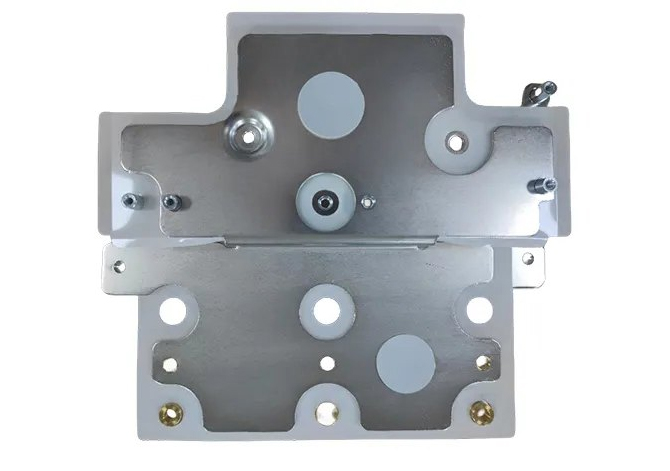
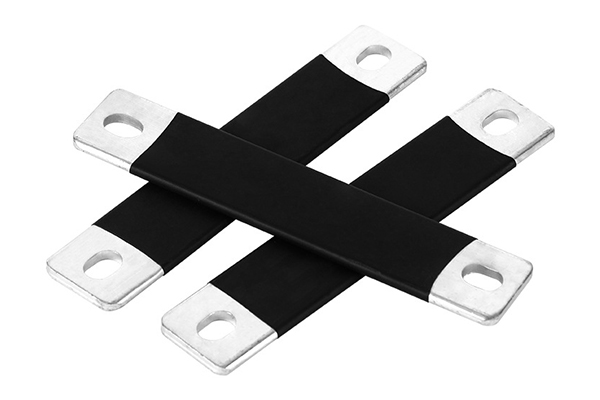
Our factory nickel-plated copper busbar is a conductive material that is uniformly covered with a layer of nickel metal on the surface of high-purity copper through the electroplating process and is widely used in high-demand scenarios such as power transmission, new energy equipment (e.g., batteries, photovoltaics), rail transportation, and communication base stations. Its core advantage lies in combining the high conductivity of copper with the corrosion resistance of nickel, which is suitable for harsh environments such as humidity, high temperature, and chemical corrosion.
| نوع العنصر | قضيب توصيل من النحاس المطلي بالنيكل |
|---|---|
| المادة الأساسية: | High purity electrolytic copper (purity ≥ 99.95%) nickel plating (nickel layer thickness 5-20μm) |
| الطلاء: | Nickel layer bonding ≥ 5N/mm², surface hardness HV200-300 |
| الجهد المقدر: | 250V-600V (depending on the model) |
| الموصلية: | ≥10V |
| طول: | قابلة للتخصيص، عادة ما يصل إلى 6 أمتار |
| الموصلية: | ≥ 98% IACS (المعيار الدولي للنحاس الملدن) |
| المقاومة: | ≤ 0.017241 أوم·مم²/م |
| قوة الشد: | 200-400 ميجا باسكال (اعتمادًا على درجة النحاس المحددة) |
| استطالة: | 30-45% |
| الموصلية الحرارية: | 385 واط/م·ك |
| نطاق درجة حرارة التشغيل: | -65℃ to 260℃ (long-term use), short-term temperature resistance up to 300℃ |
| سمك النيكل: | عادة 1-10 ميكرون |
| التصاق: | رابطة قوية وموحدة مع ركيزة النحاس |
| مقاومة التآكل: | حماية ممتازة ضد التآكل والأكسدة |
الشركة الرائدة في تصنيع قضبان التوصيل النحاسية المطلية بالنيكل
باعتبارنا شركة رائدة في مجال التصنيع، يتخصص مصنعنا في إنتاج قضبان نحاسية مطلية بالنيكل عالية الجودة لتوزيع الطاقة بكفاءة وموثوقية. تُصنع قضبان النحاس لدينا من النحاس عالي النقاء ومطلية بطبقة متينة من النيكل، وهي مصممة لتلبية المتطلبات الصارمة لمختلف التطبيقات الصناعية والتجارية.
Production Process of nickel plate copper bus bar:
1. Copper wire preparation:
Adopt high-purity electrolytic copper through drawing and stranding processes to process it into the required diameter of copper wire, with tolerance control within ± 0.005mm.
2. Surface treatment:
Copper wire by ultrasonic cleaning and acid washing (such as with sulfamic acid) to remove surface oil and oxides.
3. Electroplating nickel layer:
Adopt the electroplating or chemical plating process, and control the current density (2-5A/dm²), temperature (50-60℃) and pH (3.5-5.5) to form a uniform and dense nickel layer.
4. Post-treatment:
Annealing to eliminate internal stress, ultrasonic cleaning to remove residues, drying and testing of coating thickness, bonding force, and other indicators.
5. Quality Inspection:
The use of high-precision instruments to detect the conductivity, plating uniformity, and corrosion resistance (such as salt spray test).
لماذا يتم طلاء قضبان التوصيل بالنيكل؟
1. Corrosion resistance:
Nickel in the humid, salt spray environment can form a passivation film, preventing oxidation of the copper substrate, prolonging the life of the busbar.
2. Reduce contact resistance:
The nickel layer has a smooth surface, which reduces the roughness of the contact surface and avoids the elevated resistance caused by oxidized copper and improves the efficiency of current transmission.
3. Abrasion resistance:
Nickel hardness (HV200-300) is much higher than copper (HV40-60), suitable for sliding contact scenarios (e.g. drawer cabinet connectors).
4. Solderability:
The nickel plating layer is stable at high temperature, superior to tin plating (easy to produce tin whiskers), and suitable for high-frequency welding processes.

ما هي استخدامات النحاس المطلي بالنيكل؟
With its high electrical conductivity, corrosion resistance, and abrasion resistance, nickel-plated copper is widely used in electronic communications, new energy, industrial manufacturing, and other fields: in electronic communications, it is used in 5G equipment, high-frequency circuit boards, and precision sensors to ensure the stable transmission of signals; in the new energy automotive and photovoltaic industries, it is used as a battery connector and high-voltage conductor to adapt to high temperatures, salt spray, and other harsh environments; and it is used for abrasion-resistant mechanical parts and chemical pipelines to resist friction and cost in the industry.
With the development of 5G, electric vehicles, and other industries, the application of nickel-plated copper will continue to expand in scenarios that require high conductivity and durability.
هل النحاس المطلي بالنيكل أفضل من النحاس؟
باعتبارنا شركة مصنعة، فإننا ندرك أن ملاءمة النحاس المطلي بالنيكل مقارنة بالنحاس العاري تعتمد على متطلبات التطبيق المحددة. يوفر النحاس المطلي بالنيكل مزايا من حيث مقاومة التآكل المعززة، ومنع الأكسدة، وتحسين المتانة مقارنة بالنحاس العاري. تجعل هذه المزايا النحاس المطلي بالنيكل مناسبًا بشكل خاص للتطبيقات حيث من المتوقع التعرض لبيئات قاسية أو مواد تآكلية أو استخدام لفترات طويلة. ومع ذلك، قد يكون النحاس العاري مفضلًا في التطبيقات حيث يتم إعطاء الأولوية للفعالية من حيث التكلفة أو الحد الأدنى من المقاومة الكهربائية. في النهاية، يعتمد الاختيار بين النحاس المطلي بالنيكل والنحاس العاري على عوامل مثل الظروف البيئية وتوقعات الأداء والقيود الميزانية.
| صفات | Nickel-plated copper | Pure copper |
|---|---|---|
| Electrical Conductivity | Slightly lower (higher nickel resistivity) | Excellent (conductivity ≥100% IACS) |
| مقاومة التآكل | Excellent (resistant to oxidation, acids and alkalis) | Medium (easily oxidized to produce copper green) |
| Mechanical Strength | عالي | واسطة |
| Environment | High humidity, high salt spray, high temperature | Dry, non-corrosive environment |
| Costs | عالي | قليل |

 Arabic
  English
  German
  Spanish
  French
  Russian
  Danish
  Japanese
  Italian
  Vietnamese
  Turkish
  Dutch
Dutch  Portuguese
  Thai
Thai  Swedish
  Korean
  Greek
Greek  Polish
  Estonian
  Esperanto
  Hindi
Hindi  Indonesian
  Latvian