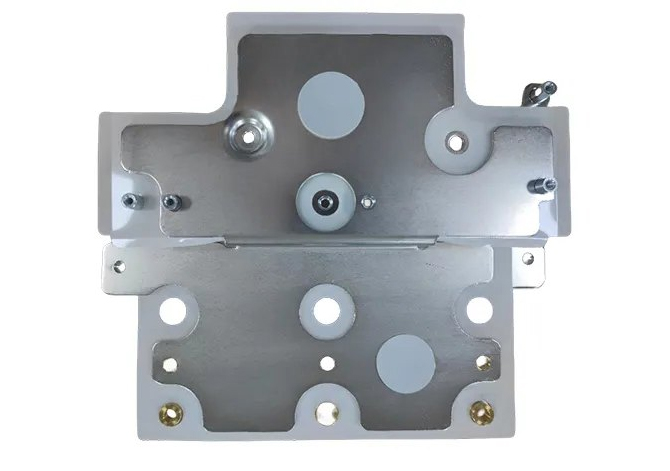
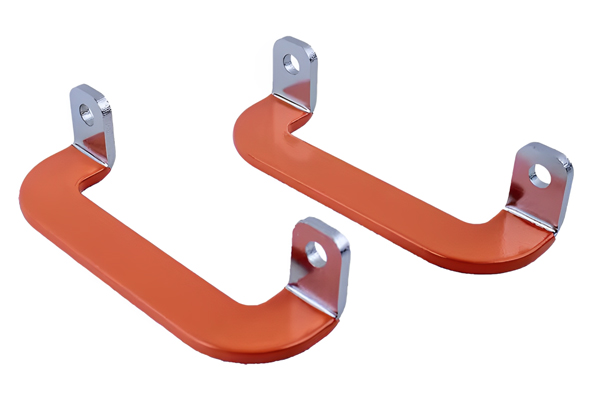
Our flat insulated solid copper busbar is an electrically conductive material designed for high current transmission. The core is made of high-purity copper (e.g. T1/T2 oxygen-free copper) covered with an insulating layer (e.g. PTFE, polyimide film or fiberglass composite), which provides a compact structure, high current-carrying capacity, and excellent heat dissipation performance. Its design reduces skin effect and eddy current loss, and is suitable for complex electromagnetic environments and high-temperature scenarios.
| نوع المنتج | قضبان نحاسية صلبة |
|---|---|
| درجة النحاس: | النحاس (99.9% Cu) |
| Current-carrying capacity: | 250A-5500A (e.g., 80×10mm copper tube 5500A, 40×4mm flat copper row 506A). |
| Insulation thickness: | 0.2-0.9mm (polyimide or glass fiber coating). |
| عرض: | 20-200mm, Thickness: 3-16mm (e.g., 40×4mm, 80×10mm, etc.). |
| طول: | حتى 3000 مم (قابلة للتخصيص) |
| Tensile strength: | ≥80HRA in hard state, 180° bendable in soft state. |
| Insulation material temperature resistance: | 200-400 ميجا باسكال (اعتمادًا على درجة النحاس المحددة) |
| قوة الخضوع: | -25℃ to 180℃ (PTFE). |
| استطالة: | 30% إلى 45% |
| سطح النحاس: | لمسة نهائية ناعمة وعالية التوصيل |
| العزل: | طلاء ناعم وموحد |
| مقاومة التلامس: | < 0.2 مΩ |
الشركة المصنعة الموثوقة لقضبان النحاس الصلبة
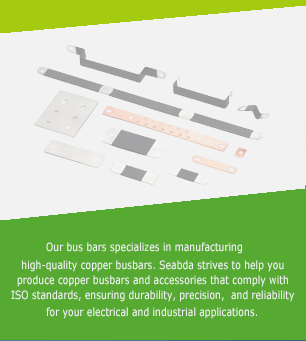
نحن متخصصون في تصنيع قضبان التوصيل النحاسية الصلبة عالية الجودة التي توفر توصيلًا كهربائيًا ومتانة استثنائيتين. تمكننا منشأتنا الحديثة من إنتاج قضبان التوصيل بأحجام وتكوينات مختلفة، مصممة لتلبية احتياجاتك المحددة. نحن نقدم خيارات تخصيص شاملة، بما في ذلك الأبعاد الدقيقة وأنواع العزل والتشطيب، مما يضمن ملاءمة قضبان التوصيل بسلاسة مع تطبيقك. سواء كانت لوحات توزيع الطاقة أو معدات التوزيع أو أنظمة الطاقة المتجددة، فإننا نقدم حلولاً موثوقة مصممة للأداء الأمثل والسلامة. اتصل بنا اليوم لمناقشة متطلبات قضبان التوصيل النحاسية الصلبة المخصصة لك!
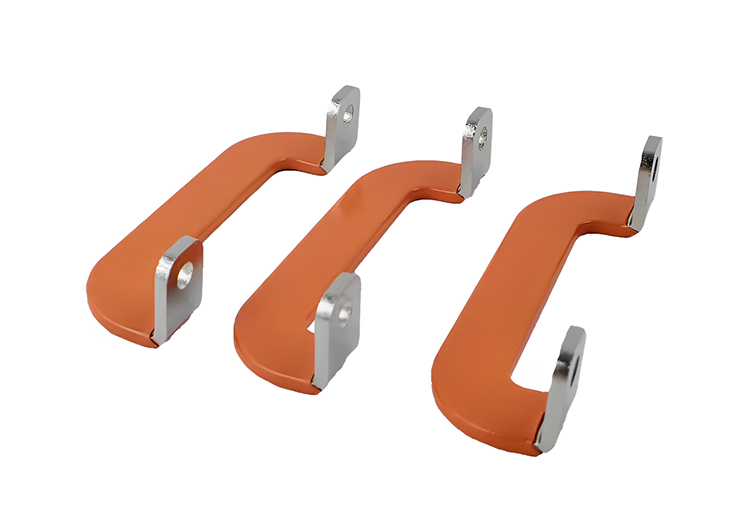
Solid copper busbar Surface Production process:
1. Raw material processing: High-purity copper rods from the continuous casting and rolling process are selected, and the oxidized layer is removed by straightening and pickling.
2. Molding processing: made into a flat cross section by drawing and calendering processes to ensure the dimensional accuracy (tolerance ±0.12mm).
3. Insulation processing:
- Extrusion/Coating: Polyimide film or glass fiber is extruded at high temperature or vacuum coated to cover the copper surface.
- Curing: Heat is applied to the insulating material to form a dense protective layer.
4. Quality testing: including conductor resistance test, insulation withstand voltage test (e.g., 20 20kV/mm), aging test.
5. Finished product packaging: moisture-proof and shock-proof packaging, part of the need for shielding treatment (such as tin-plated anti-oxidation).
Solid copper busbar Surface treatment process:
1. Plating technology:
- Tin/silver plating: Enhance corrosion resistance (tin plating thickness 10-20μm) and conductivity (silver plating to reduce contact resistance).
- Nickel plating: enhances wear resistance and oxidation resistance, suitable for high-humidity environments.
2. Passivation treatment: chemical passivation to form an oxide film to prevent copper surface oxidation.
3. Mechanical treatment:
- Polishing/Brushing: Reduce surface roughness (Ra≤0.8μm), reduce current loss.
- Sandblasting: increases the friction coefficient, suitable for anti-slip demand scenarios.
Solid copper busbar Advantages:
1. High efficiency and energy saving:
- Compared with the cable to save copper 10-35%, power loss is reduced by more than 15%.
- Low skin effect (AC resistance / DC resistance coefficient ≤ 1.1) reduces heat.
2. High reliability:
- Insulation layer is chemical resistant (e.g. PTFE), life expectancy of over 30 years.
- Support ultrasonic welding, high connection strength, and no heat-affected zone.
3. Adaptable:
- Compact design saves space, customizable bending radius (≥10 times thickness).
- Suitable for high-temperature (110℃), high-humidity, and electromagnetic interference environments.
Solid copper busbar Application:
1. Power system: high voltage switchgear (40.5kV), substation busbar, smart grid transmission.
2. New energy:
- PV/wind power inverter, new energy vehicle battery pack connection.
- Charging pile high current transmission (support more than 5000A).
3. Industrial equipment: metallurgical furnace, chemical explosion-proof power distribution system.
4. High-end manufacturing:
- Data center server power supply (such as AI server cluster).
- Aerospace and rail transportation (lightweight, high reliability requirements).
Aerospace and rail transportation (lightweight, high reliability requirements):

 Arabic
  English
  German
  Spanish
  French
  Russian
  Danish
  Japanese
  Italian
  Vietnamese
  Turkish
  Dutch
Dutch  Portuguese
  Thai
Thai  Swedish
  Korean
  Greek
Greek  Polish
  Estonian
  Esperanto
  Hindi
Hindi  Indonesian
  Latvian