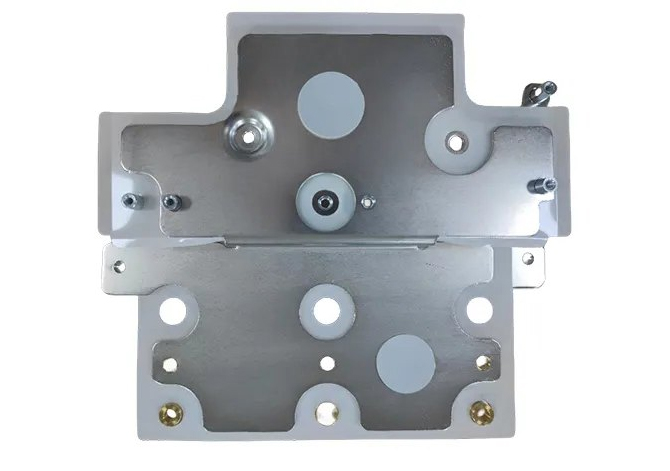
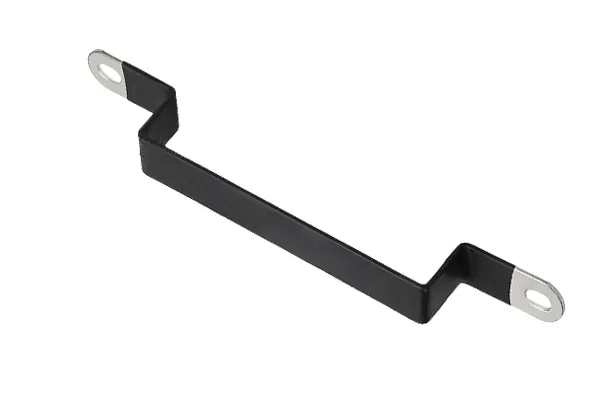
Our factory tin plated copper bus bars are engineered to deliver exceptional conductivity, corrosion resistance, and longevity. Covered with a tin layer on the surface of a pure copper busbar through electroplating or a hot plating process, which is widely used in electric power systems, new energy equipment, rail transportation, communication base stations, and other fields. Its core advantage is that it combines the high conductivity of copper with the corrosion resistance of tin and is suitable for high-current transmission and high-frequency signal shielding scenarios.
| نوع العنصر: | قضيب توصيل من النحاس المطلي بالقصدير |
|---|---|
| المادة الأساسية: | النحاس (C11000 أو C10100) |
| الطلاء: | القصدير (غير لامع أو لامع) |
| عرض: | 10 ملم إلى 200 ملم |
| سماكة: | 2 مم إلى 20 مم |
| طول: | قابلة للتخصيص، عادة ما يصل إلى 6 أمتار |
| الموصلية: | ≥ 98% IACS (المعيار الدولي للنحاس الملدن) |
| مقاومة: | مقاومة منخفضة للتلامس بسبب طلاء القصدير |
| قوة الشد: | 200-400 ميجا باسكال (اعتمادًا على السبائك المحددة والصلابة) |
| استطالة: | 30-40% (اعتمادًا على السبائك المحددة والصلابة) |
| صلابة: | 40-80 HV (صلادة فيكرز) |
| سمك طلاء القصدير: | 3 إلى 15 ميكرون (قابلة للتخصيص) |
| مقاومة التآكل: | ممتاز بسبب طلاء القصدير |
| درجة حرارة التشغيل: | -55 درجة مئوية إلى +105 درجة مئوية (مناسبة لمعظم التطبيقات الكهربائية) |
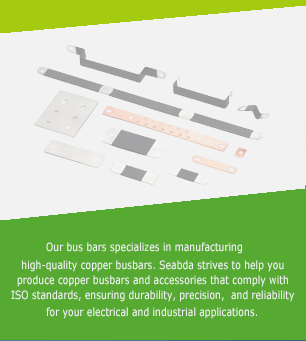
الشركة الرائدة في تصنيع قضبان التوصيل النحاسية المطلية بالقصدير
يتخصص مصنعنا في تصنيع قضبان التوصيل النحاسية المطلية بالقصدير عالية الجودة. تتميز منتجاتنا بمقاومة متزايدة للتآكل، وتوصيل كهربائي ممتاز، وقابلية لحام محسنة. بفضل الأبعاد القابلة للتخصيص والامتثال لمعايير ISO والصناعة، فإننا نضمن قضبان توصيل موثوقة ومتينة لمجموعة واسعة من التطبيقات الكهربائية والصناعية. ثق بنا للحصول على أداء فائق وجودة استثنائية في كل قضيب توصيل ننتجه.
حدود
1. Electrical performanc
- Rated current: 250A to 5000A (adjusted according to cross-section and wire diameter).
- Conductivity: Tinned copper purity ≥ 99.95%, resistivity ≤ 0.01777 Ω-mm²/m (hard state).
- Voltage withstand level: frequency withstand voltage 42kV (dry test), impact withstand voltage 75 kV.
2. Physical Characteristics
- Single wire diameter: 0.05mm to 0.30mm (braided); cross-section range 1.5-6000mm².
- Thickness of tin plating: usually 0.5-2.0 μm (conventional plating), special requirements up to 6 μm or more.
- Mechanical strength: hard state busbar tensile strength ≥200N/mm², soft state elongation ≥35%.
3. Environmental adaptability
- Temperature range: -30℃ to 105℃, some high-temperature-resistant models can reach 200℃.
- Protection grade: IP54 (dustproof and waterproof).
كيفية طلاء قضيب النحاس بالقصدير؟
1. Copper pretreatment
- Drawing and annealing: High purity copper rods are drawn to the target wire diameter, and the annealing temperature is controlled at 400-550°C to optimize the ductility.
- Acid washing to remove oxidized layer: Use acidic solution (such as hydrochloric acid or flux) to remove surface oxides to ensure plating adhesion.
2. Tin plating process
- Hot-dip plating/electroplating: Copper wires are immersed in a tin furnace (250-260°C) or electroplating bath to form a uniform plating layer. Cooling and cleaning: Water or air cooling is used to remove the surface oxides.
- Cooling and Cleaning: After water or air cooling, clean the residue, add shaft guide oil to prevent the generation of tin ash.
3. Post-treatment and inspection
- Annealing: 600-800℃ annealing to eliminate stress and improve flexibility.
- Quality inspection: including conductivity test, plating thickness measurement (such as X-ray fluorescence method) and corrosion resistance test.
ما هو سمك شريط النحاس المطلي بالقصدير؟
- Conventional applications: 0.5-2.0μm, balancing cost and performance.
- High protection requirements: such as power equipment or marine environment, the thickness of the coating can be more than 6μm.
لماذا يتم طلاء قضبان التوصيل النحاسية بالقصدير؟
يخدم طلاء القصدير على قضبان التوصيل النحاسية أغراضًا متعددة. أولاً، يعزز مقاومة النحاس للتآكل، ويطيل عمره ويضمن الأداء طويل الأمد، خاصة في البيئات الرطبة أو المسببة للتآكل. ثانيًا، يوفر طلاء القصدير سطحًا أكثر سلاسة، مما يقلل من مخالفات السطح ويحسن الاتصال الكهربائي والتوصيل. بالإضافة إلى ذلك، يمكن لطلاء القصدير منع أكسدة سطح النحاس، والحفاظ على سلامته وخصائصه الكهربائية بمرور الوقت. بشكل عام، يوفر طلاء القصدير متانة وموصلية وموثوقية محسنة لقضبان التوصيل النحاسية في تطبيقات مختلفة.
توفر قضبان التوصيل النحاسية المطلية بالقصدير العديد من المزايا:
1. Anti-oxidation and corrosion resistance
- The tin layer isolates copper from oxygen and moisture, avoiding the generation of copper green (Cu₂(OH)₂CO₃) with poor electrical conductivity, and prolonging the life of the busbar.
2. Improve conductive stability
- Tin plating reduces contact resistance (by about 10-15%), especially in high-frequency or high-current scenarios to reduce energy loss.
3. Enhanced solderability
- Tin has a low melting point (232°C), which makes solder joints easier to form and stronger, making it suitable for automated soldering processes.
4. Adapt to complex environments
- Resistant to salt spray, acid and alkali, suitable for chemical, marine and other corrosive environments.
5. Economy and environmental protection
- Compared with pure silver plating, tin plating cost is lower, and tin non-toxic in line with RoHS standards.
Tin-plated copper bus bars application:
- Power system: transformer, switchgear connection, extra high voltage transmission.
- New energy vehicles: battery pack connection, charging pile internal conductor.
- Communication equipment: 5G base station, data center high frequency signal shielding.

 Arabic
  English
  German
  Spanish
  French
  Russian
  Danish
  Japanese
  Italian
  Vietnamese
  Turkish
  Dutch
Dutch  Portuguese
  Thai
Thai  Swedish
  Korean
  Greek
Greek  Polish
  Estonian
  Esperanto
  Hindi
Hindi  Indonesian
  Latvian