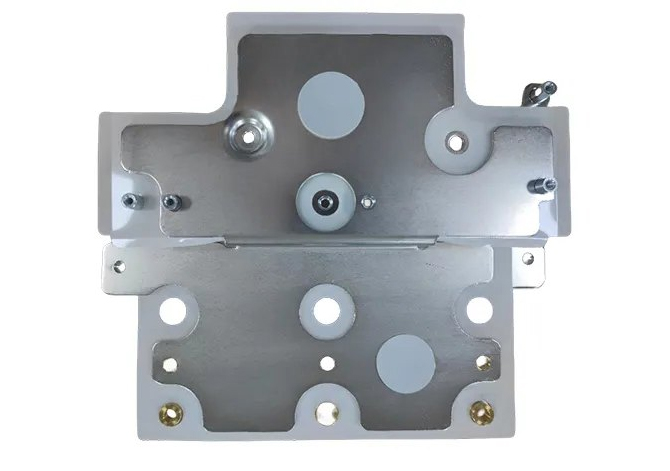
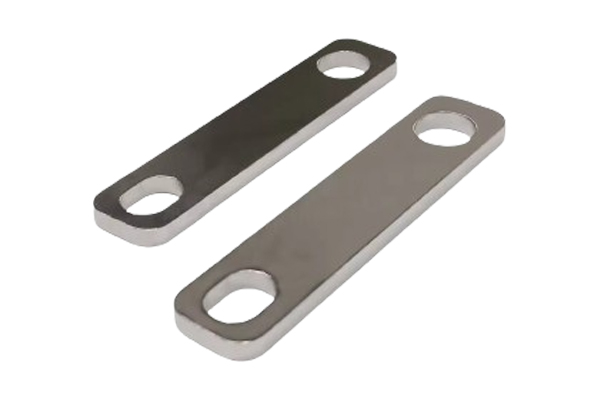
Tin Coated Copper Busbar Car battery Bus bar
√ Easily tailored to specific battery designs and requirements
√ Tin coating adds a layer of mechanical protection to the copper
√ Compatible with various battery chemicals and configurations
√ Tin coating adds a layer of mechanical protection to the copper
Our Tin-coated copper busbars is a key conductive component in new energy vehicle battery packs, which is mainly used to efficiently transmit high currents, connect battery monomers, reduce contact resistance, and adapt to complex working conditions. Its surface tinning treatment significantly improves oxidation and corrosion resistance, and is widely used in electric vehicle powertrain, charging pile and energy storage system.
| Item Type: | Tin Coated Copper Busbar Car battery Bus bar |
|---|---|
| Material base: | High purity electrolytic copper (T2 copper, purity ≥99.9%) or aluminum, tin/nickel/silver plated surface. |
| Coating: | Tin (matte or bright finish) |
| Dimensions: | Typical width 20mm, thickness 3mm, length 200mm (can be customized); copper foil single layer thickness 0.03-0.3mm, support multi-layer stacking. |
| Insulation: | PVC, polyimide or polyester resin, thickness 0.1-1.0mm, flame retardant grade UL94-V-0. |
| Resistivity: | ≤0.00001Ω, conductivity ≥57%. |
| Conductivity: | Maintains high electrical conductivity for efficient power transmission |
| Rated voltage: | DC 1.0kVDC, maximum power up to 300kW |
| Customization: | Available in various sizes, shapes, and configurations to meet individual car battery needs |
| Durability: | Designed to withstand automotive environments and mechanical stress |
| Safety: | Provides reliable electrical connections for safe battery operation |
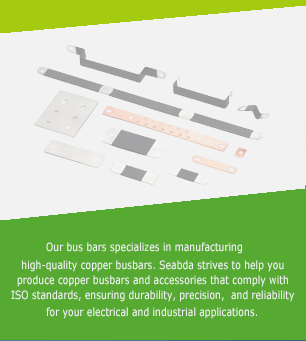
Leading Tin Coated Copper Busbar Car battery Bus bar
Manufacturer
As a leading manufacturer of Tin Coated Copper Busbars for car batteries, we specialize in delivering high-quality solutions tailored to meet the demanding requirements of automotive applications. Our busbars are meticulously crafted using premium copper materials and coated with tin for enhanced durability and corrosion resistance. We prioritize innovation and customization, ensuring that our busbars are precisely engineered to fit the specifications of car battery systems, providing reliable electrical connections and optimal performance. With a commitment to excellence and customer satisfaction, we stand as a trusted partner for automotive manufacturers seeking top-tier busbar solutions. Choose us as your preferred supplier for Tin Coated Copper Busbars, and experience the difference in quality and reliability.
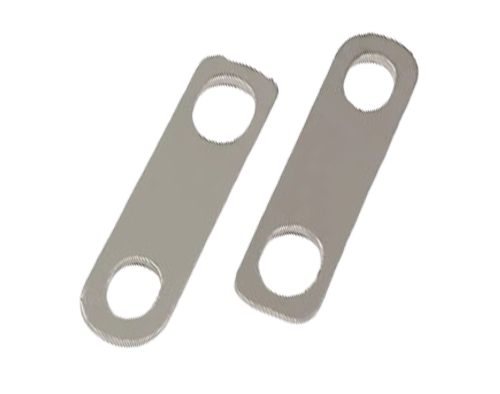
Tin Coated Copper Busbar Prodution Process:
1. Substrate pretreatment
- Unwinding and annealing: copper wire is stretched by wire drawing machine and then annealed, controlling the temperature at 400-550℃ to optimize the ductility.
- Pickling activation: Use acidic solution (such as tinning flux) to remove surface oxides and enhance the adhesion of plating.
2. Tin plating process
- Plating solution configuration: use stannic acid or tin chloride plating solution, temperature control 250-260 ℃ (to prevent oxidation and tin tumors).
- Plating process: Form a uniform tin layer by electrochemical deposition, the thickness of the layer is 3-12μm, and support salt spray test ≥ 240 hours.
3. Post-treatment and testing
- Cooling and insulation: air or air-cooled and wrapped with insulating materials (e.g. heat-shrink tubing or impregnated paint).
- Quality control: Test conductivity, plating thickness, insulation strength, complying with IATF 16949 and RoHS standards.
Tin Coated Copper Busbar Car battery Bus bar Feature:
In a battery system, busbars serve as critical components for efficiently distributing electrical power within the battery pack. Here’s how busbars are used in batteries:
1. High conductivity and low loss
– Copper substrate combined with tin plating layer, taking into account the conductivity efficiency (close to pure copper) and surface oxidation resistance, reducing energy transmission loss.
2. Environmental resistance
– Tin-plated layer to isolate moisture, salt spray corrosion, suitable for automotive battery packs, high temperature, vibration environment.
3. Flexible design
– Multi-layer copper foil laminated structure supports multi-angle bending, suitable for complex battery module layout.
4. Integration and light weight
– Voltage/temperature sensor signal lines can be integrated to reduce overall weight (50% weight reduction compared to aluminum busbar).
Tin Coated Copper Busbar Car battery Bus bar Application:
- Power battery pack: cylindrical/square battery connection for Tesla, BMW and other models.
- Charging system: conductive module for high-voltage fast-charging pile, supporting 800V high-voltage platform.
- Energy storage system (BESS): low inductance and high reliability power distribution in energy storage batteries.
What is the use of busbar in battery?
In a battery system, busbars serve as critical components for efficiently distributing electrical power within the battery pack. Here’s how busbars are used in batteries:
1. Current transmission and distribution
– Connecting battery cells to form series/parallel circuits, realizing efficient energy transfer and reducing contact resistance (laser welding technology reduces heat loss).
2. Thermal management support
– Copper’s high thermal conductivity (401W/mK) helps to dissipate heat, avoiding localized overheating and triggering thermal runaway of the battery.
3. Mechanical Stability
– Rigid structure supports the battery module to resist displacement caused by vehicle vibration and enhance safety.
4. Signal Integration
– Part of the hybrid bus integrates BMS signal lines to monitor battery voltage, temperature and other parameters in real time.

 English
  Arabic
  German
  Spanish
  French
  Russian
  Danish
  Japanese
  Italian
  Vietnamese
  Turkish
  Dutch
Dutch  Portuguese
  Thai
Thai  Swedish
  Korean
  Greek
Greek  Polish
  Estonian
  Esperanto
  Hindi
Hindi  Indonesian
  Latvian