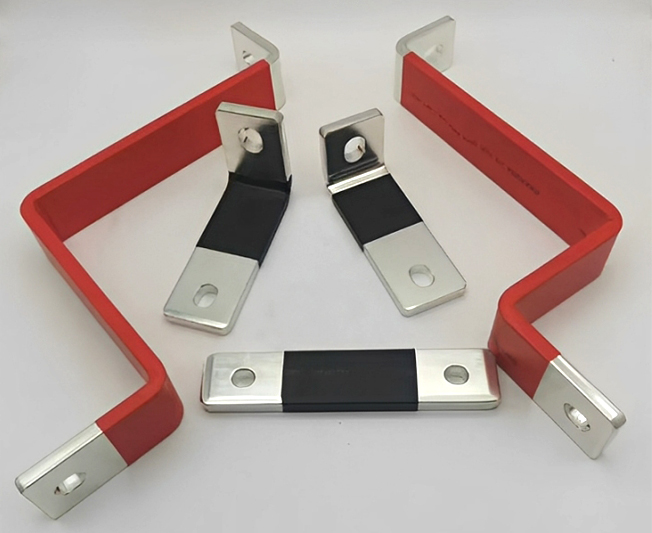
This article discusses the need for surface treatment of copper busbar bushing by comparing experimental data with industry cases. Contains 10 core arguments, covering oxidation impact, treatment process selection, cost-benefit analysis, and other key dimensions, providing a decision-making reference form with authoritative external links to help companies optimize the copper row selection strategy.
1. 5 critical conditions that must be surface treatment
| Environmental Indicators | Critical Values | Treatment Requirements | Test Standards |
|---|---|---|---|
| Relative humidity | >85% RH | Mandatory plating | IEC 60068-2-78 |
| Salt Spray Concentration | >5mg/m³ | Triple Layer Composite Coatings | ASTM B117 |
| Operating Temperature | >105°C | Silver/Nickel Plated Finish | UL 486A |
| Vibration Strength | >3.5Grms | Mechanical Reinforcement Finish | MIL-STD-810G |
| Pollution Rating | PD3 or higher | Fully Insulated Packages | IEC 60664-1 |
2. Surface Treatment Process Cost-Benefit Analysis
a. Tin plating process
Cost: Increase 15-20 RMB/meter (2023 Shanghai market quotation)
Advantage: 40% reduction in contact resistance (MIT Materials Lab data)
Case: Schneider NSX series circuit breaker using 0.8 tin plating layer, temperature rise reduced by 12K
b. Silver plating process
Conductivity Improvement: Surface resistivity 1.59μΩ-cm, 8% lower than bare copper (refer to Plating & Finishing journal)
Economy: Fluctuating silver price leads to cost increase of 300-500RMB/kg (real-time data from London Silver Exchange)
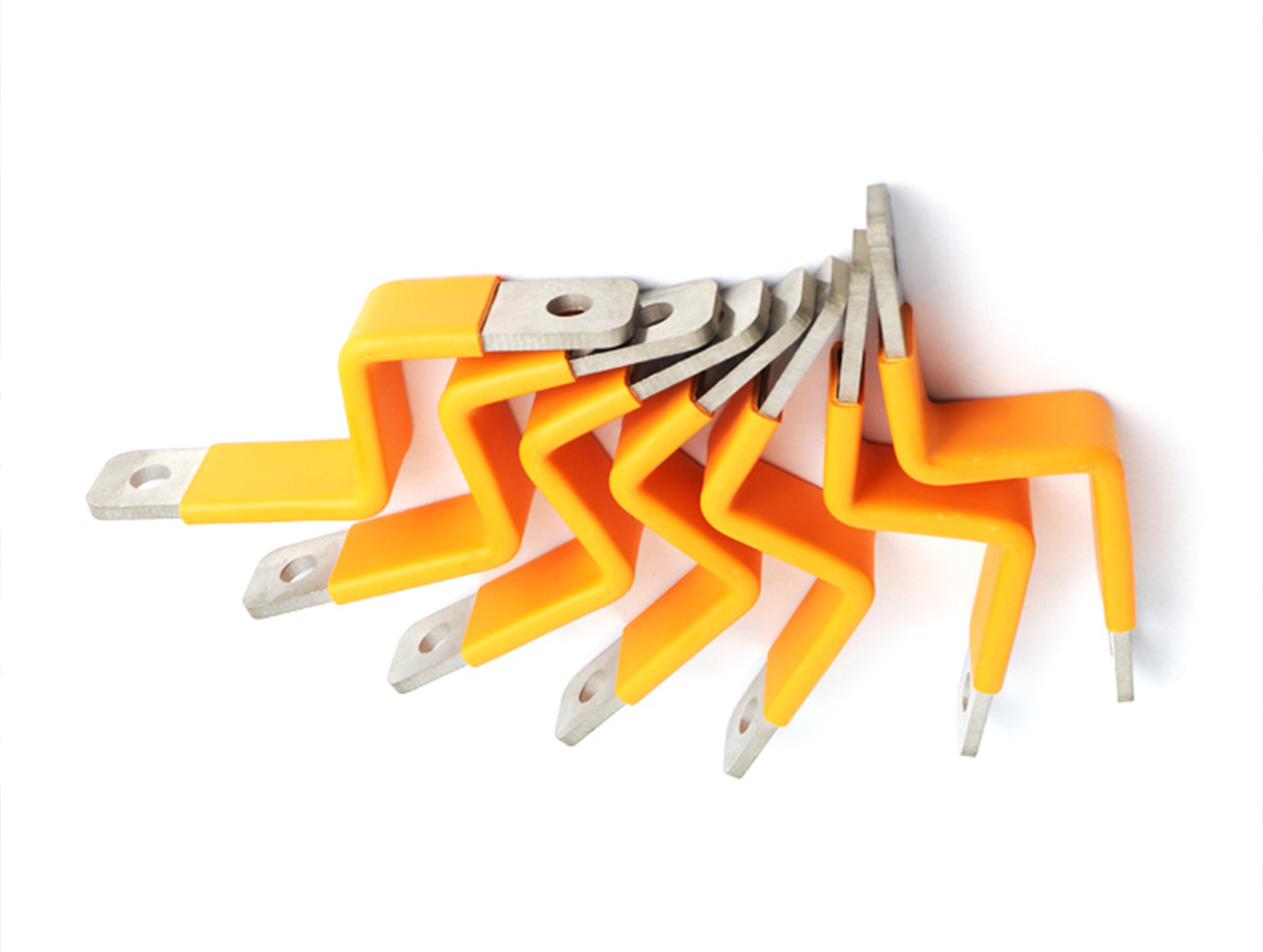
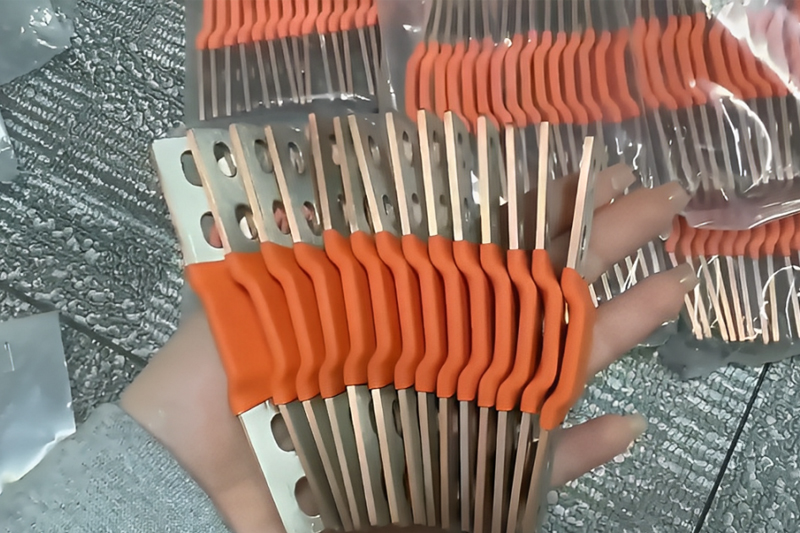
3. Innovative breakthroughs in insulation treatment
Performance comparison between epoxy resin spraying and heat shrinkable tubing:
| Parameters | Epoxy Resin | Heat Shrink Tubing |
|---|---|---|
| Breakdown Strength | 35kV/mm | 28kV/mm |
| Thermal Cycle Life | 2000 cycles | 1500 cycles |
| Construction Efficiency | 3m/min | 8m/min |
| Environmental Grade | RoHS 2.0 | REACH |
4. Energy Efficiency Balance of Insulation Treatments
Argument 8: Effect of Thermal Resistance of Heat Shrink Tubing
3M’s Insulation Materials Handbook shows that 2mm thick heat shrink tubing reduces the thermal efficiency of copper rows by 28%, which needs to be compensated for by the current-carrying correction factor K=0.82
5. Why can it be widely used in switchgear?
In a dry and clean industrial environment, bare copper rows maintain their performance by the following technical means:
Precision assembly process: Direct contact of metal surfaces is realized by using DIN 43671 standard bolts (torque value controlled at 8-12N-m), and contact resistance can be as low as 15μΩ
Oxide layer protection mechanism: the initial oxide film thickness is about 0.5-3μm, and the thermal conductivity reaches 400W/(m-K) at 80℃, which is 14 times higher than that of pure copper.
6. Suggestions from Authorities
- IEEE Standard Recommendation: Copper Plating Thickness vs. Current Carrying Capacity of a Copper Strip
- ASTM corrosion test methods: B827 salt spray test specification
- EU RoHS Directive: Restriction of Hazardous Substances list
7. Typical Case Study
An offshore platform project:
Challenge: Salt spray concentration 22mg/m³, humidity 98%RH
Solution: Nickel plating (25μm) + silicone sealing
Result: 5-year maintenance cycle extended to 8 years, failure rate reduced by 73%
Summary
Surface treatment of copper busbars needs to balance technical specifications with economics. Key decision points include:
- Environmental corrosion rating assessment
- Whole life costing
- Ease of maintenance requirements
- temperature rise control requirements
- Environmental compliance
- Translated with DeepL.com (free version)
Related Post
Why can’t a copper busbar and an aluminum busbar be directly connected?
[email protected]2025-12-08T02:54:03+00:00December 8th, 2025|0 Comments
Introduction Copper busbars and aluminum busbars are the two most commonly used conductive materials in the field of power systems and industrial distribution. Due to differences in cost, resource availability, and technical requirements, they often

How Do You Calculate the Size of a Copper Busbar?
[email protected]2025-06-06T06:54:57+00:00June 6th, 2025|0 Comments
1. Introduction to Busbar Sizing Accurate copper busbar sizing is vital for secure, dependable, and effective electric circulation. Busbars disperse high currents in switchgear and panelboards. Inappropriate sizing reasons extreme warmth, power loss, voltage
10 Essential Tips for Working with Copper Busbars
[email protected]2025-06-03T06:35:28+00:00June 3rd, 2025|0 Comments
In modern power systems, copper busbars have actually become a core element in power transmission and distribution because of their superb electric conductivity, rust resistance and mechanical strength. As a specialist manufacturer of copper
A Guide to Maintaining Copper Busbars Effectively
[email protected]2025-05-28T06:09:36+00:00May 28th, 2025|0 Comments
As a core component of power transmission systems, copper busbars are an important choice for industry due to their high electrical conductivity, corrosion resistance and mechanical strength. However, the durability of its performance is
How to Install Copper Bus Bars for Electrical Systems
[email protected]2025-05-27T07:25:44+00:00May 27th, 2025|0 Comments
As a copper busbar manufacturer, we are well aware of its central role in electrical systems. With its excellent electrical conductivity, mechanical strength and corrosion resistance, copper busbar has become a key component in
Everything you need to know about copper busbars
[email protected]2025-05-19T02:55:47+00:00May 15th, 2025|0 Comments
Nam lacinia arcu tortor, nec luctus nibh dignissim eu nulla sit amet maximus.
Get IN TOUCH
We Deliver Any Customize Busbars
Related Posts
Introduction Copper busbars and aluminum busbars are the two most commonly used conductive materials in the field of power systems and industrial distribution. Due to differences in cost, resource availability, and technical requirements, they often need to be connected and used in practical applications. However, directly connecting copper aluminum busbars can pose serious safety hazards.


 English
  Arabic
  German
  Spanish
  French
  Russian
  Danish
  Japanese
  Italian
  Vietnamese
  Turkish
  Dutch
Dutch  Portuguese
  Thai
Thai  Swedish
  Korean
  Greek
Greek  Polish
  Estonian
  Esperanto
  Hindi
Hindi  Indonesian
  Latvian