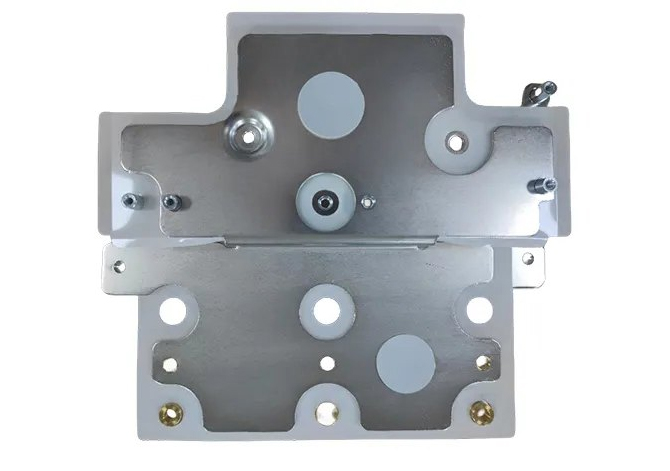
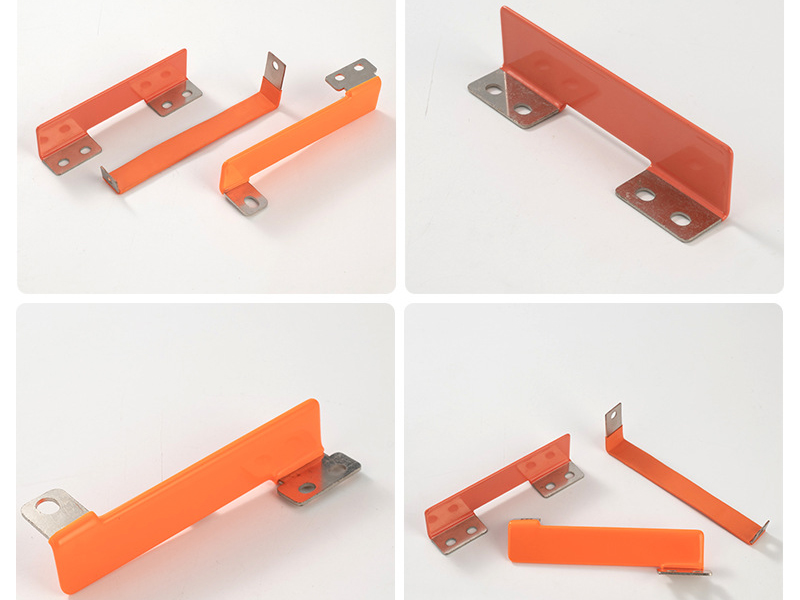
Copper busbar, as the core conductive elements of modern power systems, play an irreplaceable role in the new energy revolution and smart grid construction. Based on the IEEE 3001.5-2023 standard and GB/T 5585.1-2018 national standard requirements, this paper systematically analyzes 7 technical types of copper busbar and 12 customized parameter standards, and we provide a complete solution that includes material selection, processing technology, and performance verification to help companies build highly reliable power distribution systems.
What are the Types of copper busbars?
| Type | Current Capacity (A) | Resistivity (Ω-m) | Insulation Class (kV) | Typical Application Scenarios | International Standard |
|---|---|---|---|---|---|
| Solid Copper Busbar | 2000-6000 | ≤1.68×10⁻⁸ | 1-36 | Substation Mains Busbar | IEC 60439-2 |
| Flexible Copper Busbars | 800-2500 | ≤1.72×10⁻⁸ | 0.6-1 | New Energy Equipment Connections | UL 467 |
| Insulated Copper Busbar | 1000-4000 | ≤1.75×10⁻⁸ | 3.6-40.5 | Railway Power Distribution | GB/T 14048.11 |
| Tubular Copper Busbar | 3150-12500 | ≤1.70×10⁻⁸ | 12-252 | Ultra High Voltage Transmission | IEC 62271-200 |
| Water-cooled Copper Busbar | 5000-20000 | ≤1.68×10⁻⁸ | 0.4-1.14 | Data Center Rack | TIA-942-B |
Types of Copper Busbars
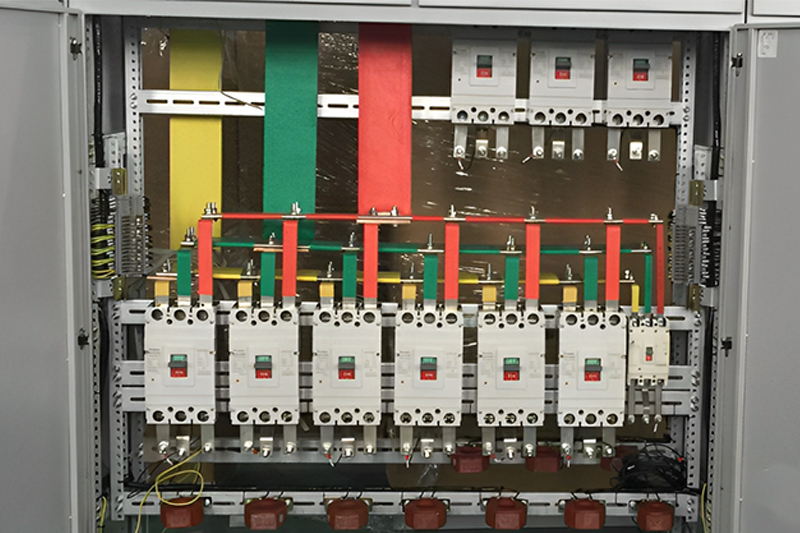
Solid Copper Busbars
Solid copper busbars are typically used in applications requiring high current capacity and durability. They are often found in substations and industrial settings.
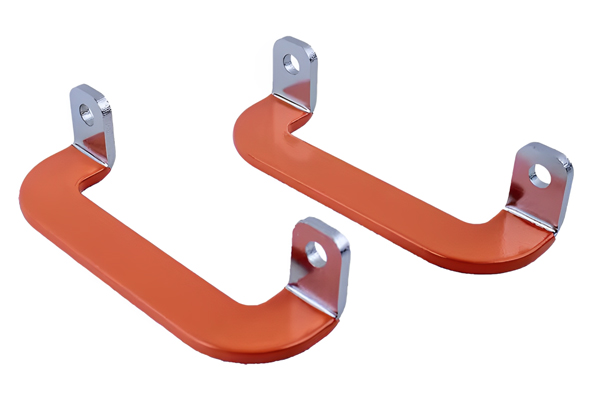
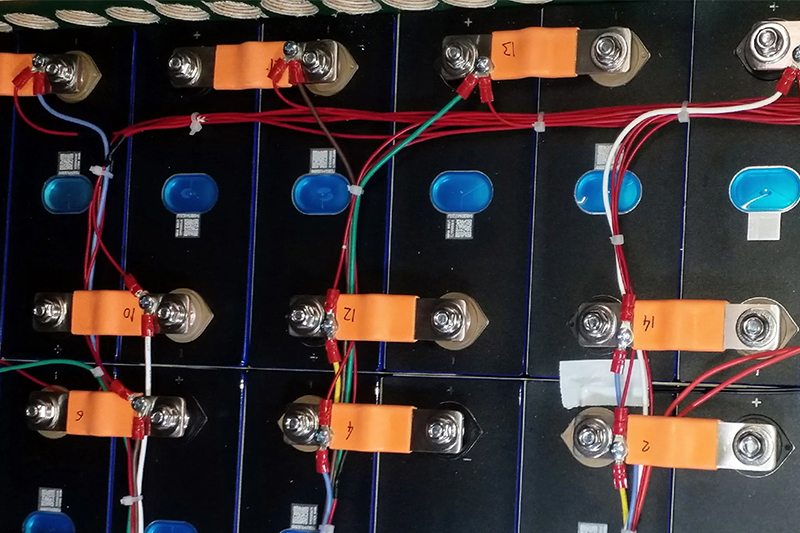
Flexible Copper Busbars
These busbars are designed for applications where flexibility is required. They are often used in environments where movement or vibration is present, such as in machinery or electrical panels.
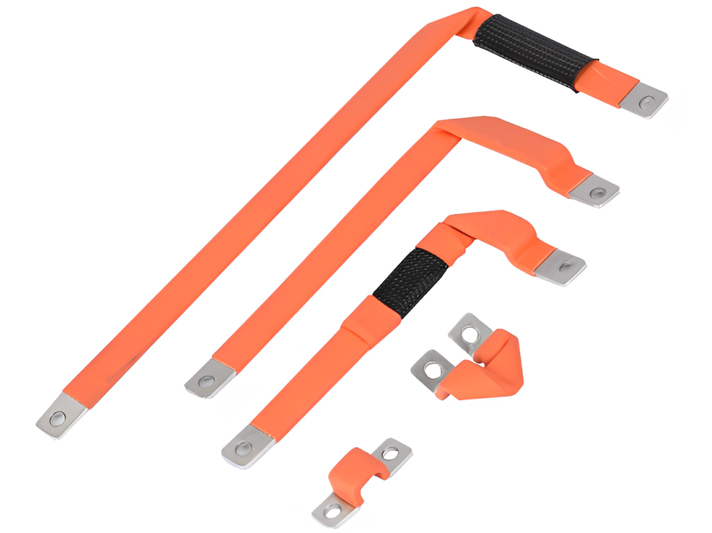
Insulated Copper Busbars
Insulated copper busbars are coated with an insulating material to prevent electrical faults and enhance safety. They are used in environments where electrical isolation is crucial.
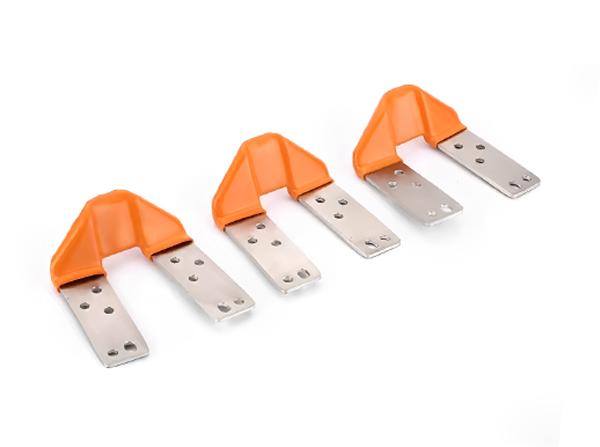
3 factors for customized copper busbar
1. Material engineering standards
- Purity requirements: electrolytic copper (Cu-CATH-1) purity ≥ 99.95% (GB/T 467-2022)
- Alloy treatment: tin-plated layer thickness 20-40 μm (ASTM B545), silver-plated layer ≥ 5 μm (MIL-DTL-45204D)
- Corrosion resistance: salt spray test ≥ 720h without red rust (ISO 9227)
2. Structural design dimensions
- Section shape: rectangle (width/thickness ratio ≤12:1), circle (diameter tolerance ±0.05mm)
- Bending radius: ≥8 times thickness (IEC 61439-1)
- Load capacity calibration:
I = K \times S^ \times \Delta T^
(K=0.8-1.2, depending on heat dissipation conditions)
3. Insulation system construction
- Epoxy resin coating: thickness 0.2-0.5mm, breakdown strength ≥30 kV/mm
- Silicone rubber insulation: temperature resistance -60℃~+200℃, CTI≥600V (IEC 60112)
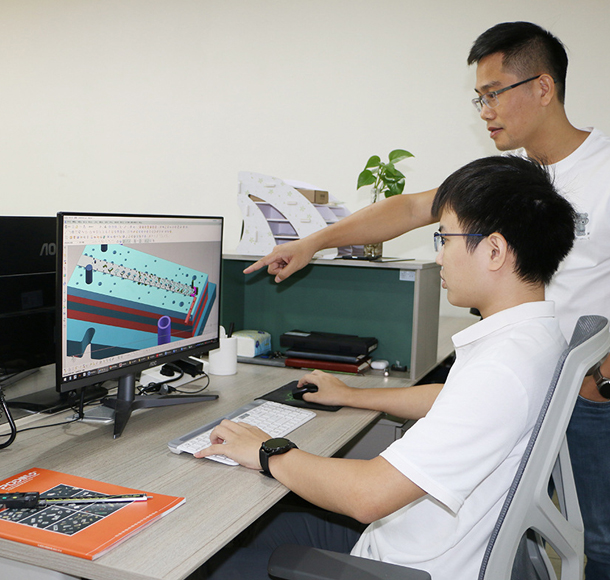
How is the industrial solution for copper busbar?
| Problem Types | Technical Countermeasures | Implementation Effect |
|---|---|---|
| Contact surface overheating | Silver-nickel alloy contacts + laser welding process | Temperature rise reduced by 35K, life expectancy 5 times longer |
| Electromagnetic Interference | Three-layer shielding structure (copper mesh + aluminum foil + ferrite) | Radiated noise ≤ 45dB (μV/m) @30MHz |
| Vibration Failure | Disc Spring Compensated Connector + Flexible Segment Design | Vibration Resistant up to IEC 61373 Class B |
| Space constraints | 3D printed topology optimized structure | 42% volume reduction and 58% increase in current carrying density |
Conclusion
Copper busbar customization has entered the “material-structure-intelligence” three-dimensional innovation stage. Companies need to focus on
- Establishing a full life cycle management system based on digital twins.
- Adopting high-strength and high-conductivity copper alloys (e.g., C7025) to improve the performance boundary.
- Connect with the ISO 50001 energy management system to realize energy-saving certification.
Related Post
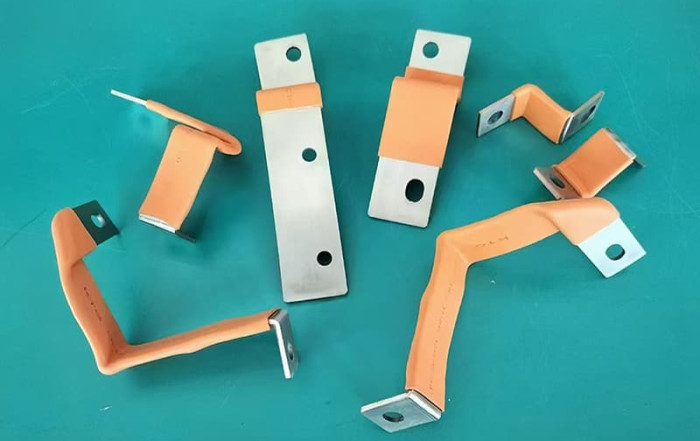
Why can’t a copper busbar and an aluminum busbar be directly connected?
[email protected]2025-12-08T02:54:03+00:00December 8th, 2025|0 Comments
Introduction Copper busbars and aluminum busbars are the two most commonly used conductive materials in the field of power systems and industrial distribution. Due to differences in cost, resource availability, and technical requirements, they often

How Do You Calculate the Size of a Copper Busbar?
[email protected]2025-06-06T06:54:57+00:00June 6th, 2025|0 Comments
1. Introduction to Busbar Sizing Accurate copper busbar sizing is vital for secure, dependable, and effective electric circulation. Busbars disperse high currents in switchgear and panelboards. Inappropriate sizing reasons extreme warmth, power loss, voltage
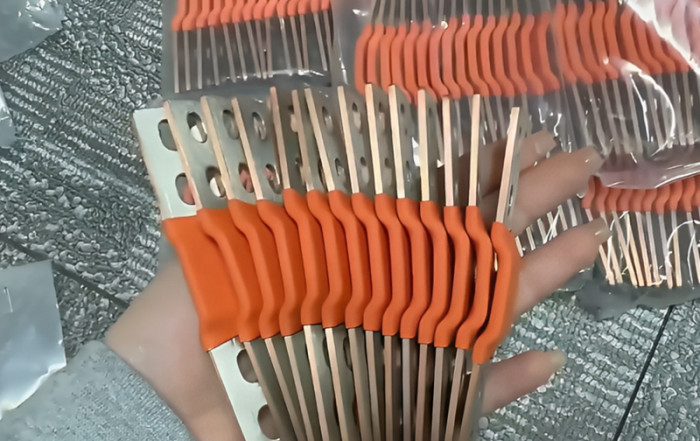
10 Essential Tips for Working with Copper Busbars
[email protected]2025-06-03T06:35:28+00:00June 3rd, 2025|0 Comments
In modern power systems, copper busbars have actually become a core element in power transmission and distribution because of their superb electric conductivity, rust resistance and mechanical strength. As a specialist manufacturer of copper
A Guide to Maintaining Copper Busbars Effectively
[email protected]2025-05-28T06:09:36+00:00May 28th, 2025|0 Comments
As a core component of power transmission systems, copper busbars are an important choice for industry due to their high electrical conductivity, corrosion resistance and mechanical strength. However, the durability of its performance is
How to Install Copper Bus Bars for Electrical Systems
[email protected]2025-05-27T07:25:44+00:00May 27th, 2025|0 Comments
As a copper busbar manufacturer, we are well aware of its central role in electrical systems. With its excellent electrical conductivity, mechanical strength and corrosion resistance, copper busbar has become a key component in
Everything you need to know about copper busbars
[email protected]2025-05-19T02:55:47+00:00May 15th, 2025|0 Comments
Nam lacinia arcu tortor, nec luctus nibh dignissim eu nulla sit amet maximus.
Get IN TOUCH
We Deliver Any Customize Busbars
Related Posts
Nam lacinia arcu tortor, nec luctus nibh dignissim eu nulla sit amet maximus.

Nam lacinia arcu tortor, nec luctus nibh dignissim eu nulla sit amet maximus.
Nam lacinia arcu tortor, nec luctus nibh dignissim eu nulla sit amet maximus.
Nam lacinia arcu tortor, nec luctus nibh dignissim eu nulla sit amet maximus.

 English
  Arabic
  German
  Spanish
  French
  Russian
  Danish
  Japanese
  Italian
  Vietnamese
  Turkish
  Dutch
Dutch  Portuguese
  Thai
Thai  Swedish
  Korean
  Greek
Greek  Polish
  Estonian
  Esperanto
  Hindi
Hindi  Indonesian
  Latvian