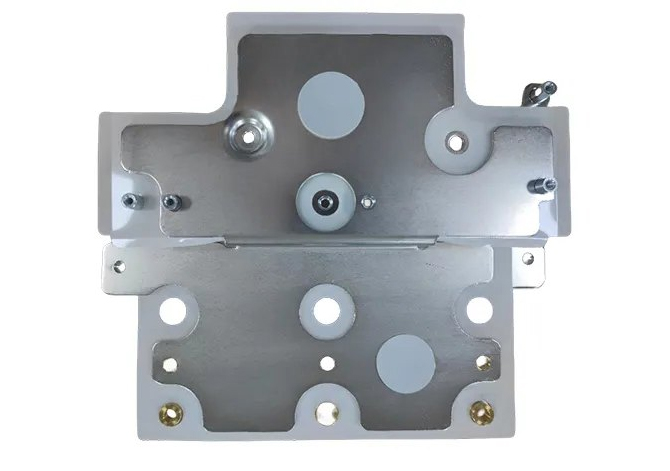
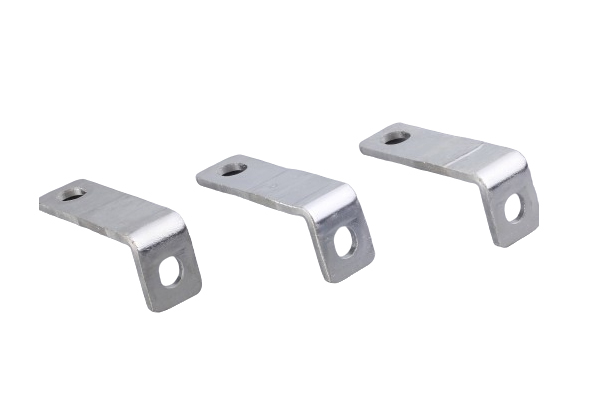
Forsølvet kobber busstang
√ Cilverplettering forbedrer kobberets ledningsevne betydeligt
√ Fremragende holdbarhed mod oxidation og barske miljøer.
√ Effektiv varmeafledning for at forhindre overophedning.
√ Stærk og robust, modstår fysisk stress og slid.
√ Pålidelige elektriske forbindelser med reduceret modstand.
The silver plated copper busbar we manufacture is a kind of power transmission material with high-purity copper (such as oxygen-free copper or low-oxygen copper) as the substrate, and the surface is covered with silver layer through electroplating process. It combines the high conductivity of copper with the oxidation resistance of silver, and is widely used in high-precision and high-reliability scenarios such as electric power systems, communication equipment, new energy vehicles, aerospace, etc. It is especially suitable for high-frequency transmission and high-current environments.
| Varetype: | forsølvet kobberskinne |
|---|---|
| Materiale base: | Kobberkerne med et sølvbelægningslag. |
| Sølvbelægning tykkelse: | Typisk varierer fra 5 til 15 mikron. |
| Tykkelse af kobberkerne: | Varierer baseret på strømbærende kapacitet og anvendelseskrav. |
| Spændingsværdi: | Velegnet til forskellige spændingsniveauer, afhængig af isolering og design. |
| Længde: | Kan tilpasses til at passe til de ønskede dimensioner af det elektriske system. |
| Bredde: | Kan tilpasses baseret på de specifikke applikationsbehov. |
| Nuværende kapacitet: | Bestemt af tykkelse, bredde og materialeegenskaber. |
| Temperaturvurdering: | Kan fungere inden for et bredt temperaturområde, typisk fra -50°C til 150°C. |
| Forlængelse: | 30-40% (afhængig af den specifikke legering og temperament) |
| Hårdhed: | 40-80 HV (Vickers hårdhed) |
| Tinbelægnings tykkelse: | 3 til 15 mikron (tilpasses) |
| Overfladefinish: | Sølvbelægning giver fremragende korrosionsbestandighed og forbedrer den elektriske ledningsevne. |
| Ansøgninger: | Velegnet til brug i strømfordelingssystemer, elektriske paneler, koblingsudstyr og forskellige industrielle applikationer, der kræver høj ledningsevne og korrosionsbestandighed. |
Førende producent af forsølvet kobberbusstang
Vi er specialiserede i fremstilling af højkvalitets forsølvede kobbersamleskinner, der er skræddersyet til at opfylde de krævende krav fra forskellige industrier. Vores forsølvede kobbersamleskinner er konstrueret til enestående ledningsevne, pålidelighed og holdbarhed. Med præcisionsteknik og state-of-the-art forsølvningsteknologi tilbyder vores samleskinner overlegen elektrisk ydeevne, hvilket sikrer minimalt energitab og effektiv kraftoverførsel.
1. conductor material:
- Copper purity ≥ 99.95% (e.g. T2 copper or high purity oxygen-free copper), surface silver plating layer thickness is usually 1-5μm.- Conductivity ≥ 97.6% IACS (International Annealed Copper Standard), better than ordinary copper busbar.
2. Electrical performance:
- Carrying capacity increased by more than 30% (due to the silver layer to reduce the contact resistance).- Temperature rise limit: Silver-plated busbar allows temperature rise up to 70K (bare copper is 60K), suitable for high load scenarios.
3. Physical properties:
- Tensile strength ≥15%, can withstand high-frequency vibration and mechanical shock.- Corrosion resistance: passed 1800 hours of salt spray test, suitable for humid, chemical, and other harsh environments.
4. Dimensional specifications:
- Common thickness 1.5-25mm, width 10-250mm, support customized shaped rows (such as C-type female rows).
Silver plated copper bus bar Production process:
1. Raw material processing:
- Copper rods are processed into copper strips by the top-induction method or cold-rolling process, and the surface is milled to remove the oxidized layer.
2. Pre-plating treatment:
- Alkaline etching: 50-80 ℃ sodium hydroxide solution to clean the oil.
- Acid cleaning activation: dilute sulfuric acid to remove oxides and enhance the adhesion of the plating layer.
3. Silver plating process:
- Pre-silver plating: current density 1-3A/dm², energized for 5-10 seconds to form the bottom layer.
- Main silver plating: current density 0.5-3A/dm², temperature 15-35 ℃, plating 1.5-2.5 hours, and the thickness of the silver layer is uniform.
4. Post-treatment:
- Dip anti-silver discoloration agent (such as benzotriazole) to prevent sulfidation and oxidation.
- Laser marking, automatic inspection, and packaging.
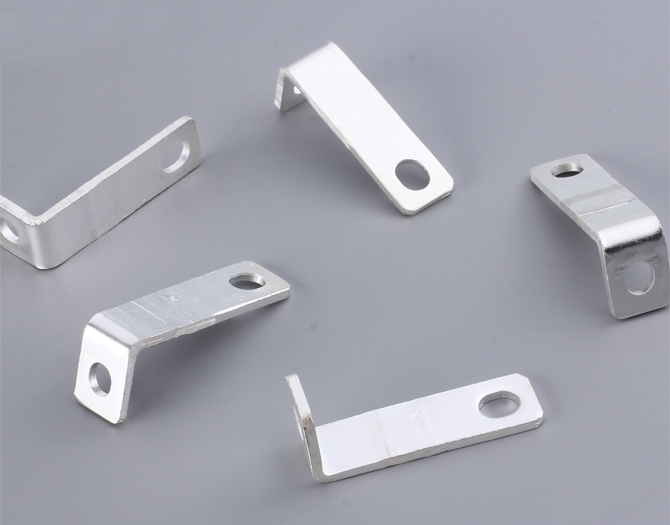
Forsølvet kobber bus bar funktioner:
1. High conductivity: the conductivity of silver (6.3×10⁷ S/m) is higher than that of copper (5.96×10⁷ S/m), which reduces transmission losses.
2. Oxidation resistance: silver layer isolates copper from oxygen, avoiding the generation of copper oxide and keeping low contact resistance.
3. High-frequency adaptability: under skin effect, the silver layer improves the stability of high-frequency signal transmission, suitable for 5G, data center and other scenarios.
4. High Temperature Resistance: Support -65℃ to 250℃ working temperature, short time resistance 300℃, better than tinned copper row.
5. Environmentally friendly: Halogen-free materials, no release of toxic gases in case of fire, passes UL94 flame retardant standard.
Hvorfor er samleskinner forsølvet?
Samleskinner er ofte sølvbelagte af flere årsager:
- Reduced contact resistance: silver conductivity is better than copper and tin; silver plating reduces contact resistance by 30%, improving current-carrying capacity and energy efficiency.
- Resistance to corrosion and oxidation: Silver is less susceptible to corrosion in humid, sulfur/chlorine environments, avoiding performance degradation caused by oxidation of the copper substrate.
- Optimization of high-frequency performance: high-frequency current is concentrated on the surface of the conductor (skin effect), and the silver layer reduces signal attenuation and ensures communication quality.
- Extended service life: the silver plating layer is wear-resistant, suitable for frequent plugging and unplugging scenarios (such as switchgear connectors), reducing maintenance costs.
- Temperature rise control: allows a higher temperature rise (70K vs. 60K for bare copper), adapting to the needs of high-current transmission.
 Danish
  English
  Arabic
  German
  Spanish
  French
  Russian
  Japanese
  Italian
  Vietnamese
  Turkish
  Dutch
Dutch  Portuguese
  Thai
Thai  Swedish
  Korean
  Greek
Greek  Polish
  Estonian
  Esperanto
  Hindi
Hindi  Indonesian
  Latvian