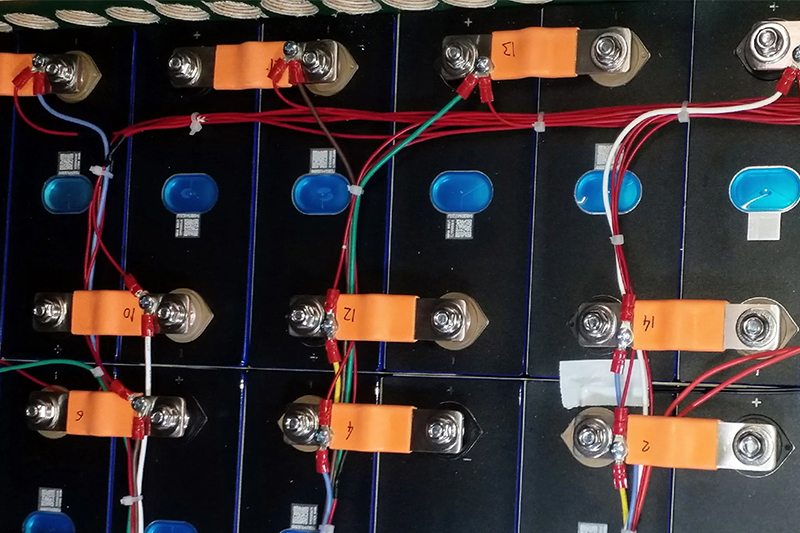
In the power transmission and distribution system, fleksibel samleskinne and rigid busbar are two core technology solutions, serving the needs of dynamic and static scenarios, respectively. This article from the structural design, material properties, electrical performance, installation, and maintenance of eight dimensions of the comparison, combined with industry cases and authoritative data, reveals the core differences between the two to provide a scientific basis for engineering selection.
Comparison of structural design and material
1. Flexible busbar: multi-layer composite and dynamic adaptability
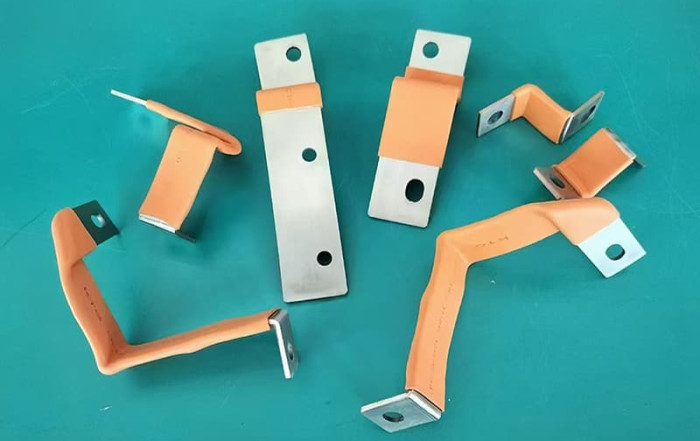
The flexible busbar adopts the sandwich structure of copper wire row conductor + winding and wrapping layer + interlocking metal armor layer), the conductor is braided by multiple strands of fine copper wires, and the outer layer is wrapped with PET or PI insulating film. Its ductility is more than 100% and can be bent with a radius as low as 6 times the diameter, adapting to complex spaces such as tunnels and roofs.
2. Rigid busbar: monolithic casting and static stability
Rigid busbar is made of solid copper/aluminum rows + glass fiber-reinforced polyester as the core (e.g., Rogers DM1 material), using an extrusion molding process. The typical cross-section is rectangular or channel type, with mechanical strength of 300 MPa or more, suitable for large-span suspension installation.
| Parameter | Fleksibel samleskinne | Rigid Busbar |
|---|---|---|
| Conductor ductility | ≥ 100% | ≤ 5% |
| Insulation thickness | 50-350µm | 1-6mm |
| Bend Radius | 6D | Unbendable |
Electrical Performance and Safety Indicators
a. Load capacity and temperature rise control
Flexible busbar, through layered heat dissipation design, the temperature rise under 3200A current is ≤ 40K (test data of Yanghua Techtronics), while rigid busbar, due to the solid structure, is prone to eddy currents, and the same specifications of the load capacity is reduced by 15%-20%.
b. Protection level and durability
Flexible busbar adopts IP68 fully sealed structure, which can work continuously underwater for 1 meter; rigid busbar is commonly IP55, which needs extra moisture-proof treatment. In terms of life expectancy, flexible busbars are designed for 25 years (automotive field) to 50 years (industrial field), while rigid busbars can last up to 60 years but with 30% higher maintenance costs.
Environmental Adaptability
1. Seismic and dynamic loads
The metal armor layer of flexible busbar can absorb 80% of the vibration energy (LS cable test), successfully used in Shanghai Metro vibration damping system; rigid busbar is prone to bolt loosening when the vibration exceeds 0.5g.
2. Extreme temperature response
- High temperature scenario: flexible busbar PI insulation withstands 200℃ (Rogers data), the rigid busbar glass fiber reinforced polyester upper limit is 130℃.
- Low temperature scenarios: flexible busbar retains 90% of its tensile strength at -40°C; rigid busbar is prone to brittle cracking.
Installation and economic analysis
a. Construction Cost Comparison
Flexible busbar supports continuous laying without joints (maximum length 500 meters), and the installation efficiency is improved by 3 times. Take the national climate demonstration project Shenzhen Indus Center as an example; the construction cost of a 3200A flexible busbar is 42% lower than that of the cable solution. The rigid busbar needs to be lifted in sections, and the cost of each additional elbow rises by ¥2000/place.
b. Total Life Cycle Cost
| Cost items | Flexible Busbar ($2,000/km) | Rigid Busbar ($2,000/km) |
|---|---|---|
| Initial investment | 85-120 | 60-90 |
| 20-year maintenance cost | 15 | 50 |
| Residual Value | 40% | 10% |
Industry Application Scenario Breakdown
1. Flexible Breakthroughs in the New Energy Revolution
- Supercharging station: Huawei’s 800kW liquid-cooled supercharging host adopts flexible busbar power supply, realizing a network density of “1km, 1 station.”
- PV Array: Flexible busbar bending feature reduces bracket usage by 23%, helping LONGI reduce cost by $0.7 million/100MW for Qinghai power plant.
2. Rigid demand from traditional industries
- Metallurgical furnace: Baosteel Zhanjiang base adopts a 4000A rigid busbar to withstand 140℃ high-temperature flue gas.
- Data center: Ali Zhangbei data center uses a rigid busbar to achieve 99.999% power supply reliability.
Future trends and technological innovation
Intelligent upgrading: Flexible busbar integrates temperature/current sensors (e.g. Yanghua Techtronics i-Bus system), realizing a fault warning response time of <50 ms. Environmentally friendly materials: BASF develops biobased PI film, which reduces the carbon footprint of flexible busbar by 57%.
Konklusion
The choice between a fleksibel samleskinne and a rigid busbar is essentially a trade-off between dynamic adaptability and static reliability. In the new energy, intelligent buildings, and other emerging areas, flexible busbar has a 25% annual growth rate (MarketsandMarkets 2024 forecast) to reshape the industry pattern, and in heavy industry and infrastructure facilities, rigid busbar is still an irreplaceable “power skeleton.” Engineers need to consider the cost, environment, operation, and other dimensions to develop the optimal power distribution program.
Product Categories
Related Post
Why can’t a copper busbar and an aluminum busbar be directly connected?
[email protected]2025-12-08T02:54:03+00:00december 8th, 2025|0 Comments
Introduction Copper busbars and aluminum busbars are the two most commonly used conductive materials in the field of power systems and industrial distribution. Due to differences in cost, resource availability, and technical requirements, they often
How to Prepare for a Big Win at Tez888 Casino
Developer Ismail2025-10-04T21:44:04+00:00oktober 4th, 2025|0 Comments
When aiming for a significant payout at Tez888 casino, one crucial step often overlooked is thorough receipt checking and verification. Properly managing your transaction records not only ensures transparency but also plays a vital role
Tips and Tricks for Successful Betting on Bettilt
Developer Ismail2025-08-17T05:29:18+00:00august 17th, 2025|0 Comments
When engaging in online betting, particularly on platforms like bettilt, it's crucial to incorporate strategies such as receipt checking, tax optimization, and thorough verification to maximize your success. These elements ensure that your betting activities

How Do You Calculate the Size of a Copper Busbar?
[email protected]2025-06-06T06:54:57+00:00juni 6th, 2025|0 Comments
1. Introduction to Busbar Sizing Accurate copper busbar sizing is vital for secure, dependable, and effective electric circulation. Busbars disperse high currents in switchgear and panelboards. Inappropriate sizing reasons extreme warmth, power loss, voltage
10 Essential Tips for Working with Copper Busbars
[email protected]2025-06-03T06:35:28+00:00juni 3rd, 2025|0 Comments
In modern power systems, copper busbars have actually become a core element in power transmission and distribution because of their superb electric conductivity, rust resistance and mechanical strength. As a specialist manufacturer of copper
A Guide to Maintaining Copper Busbars Effectively
[email protected]2025-05-28T06:09:36+00:00maj 28th, 2025|0 Comments
As a core component of power transmission systems, copper busbars are an important choice for industry due to their high electrical conductivity, corrosion resistance and mechanical strength. However, the durability of its performance is
TAG KONTAKT
Vi leverer alle tilpassede samleskinner
Relaterede indlæg
Nam lacinia arcu tortor, nec luctus nibh dignissim eu nulla sit amet maximus.

Nam lacinia arcu tortor, nec luctus nibh dignissim eu nulla sit amet maximus.
Nam lacinia arcu tortor, nec luctus nibh dignissim eu nulla sit amet maximus.
Nam lacinia arcu tortor, nec luctus nibh dignissim eu nulla sit amet maximus.

 Danish
  English
  Arabic
  German
  Spanish
  French
  Russian
  Japanese
  Italian
  Vietnamese
  Turkish
  Dutch
Dutch  Portuguese
  Thai
Thai  Swedish
  Korean
  Greek
Greek  Polish
  Estonian
  Esperanto
  Hindi
Hindi  Indonesian
  Latvian