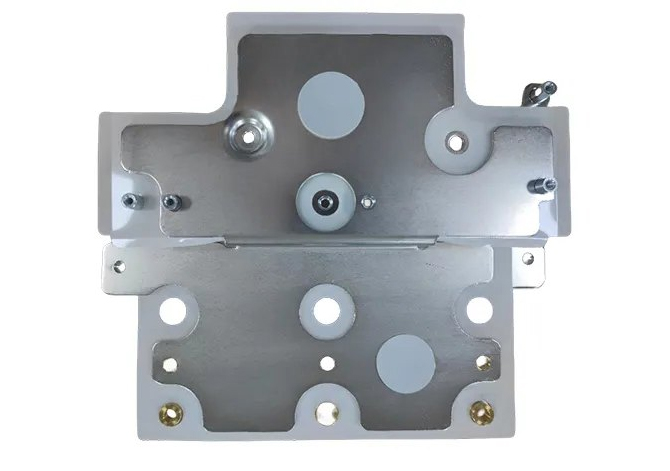
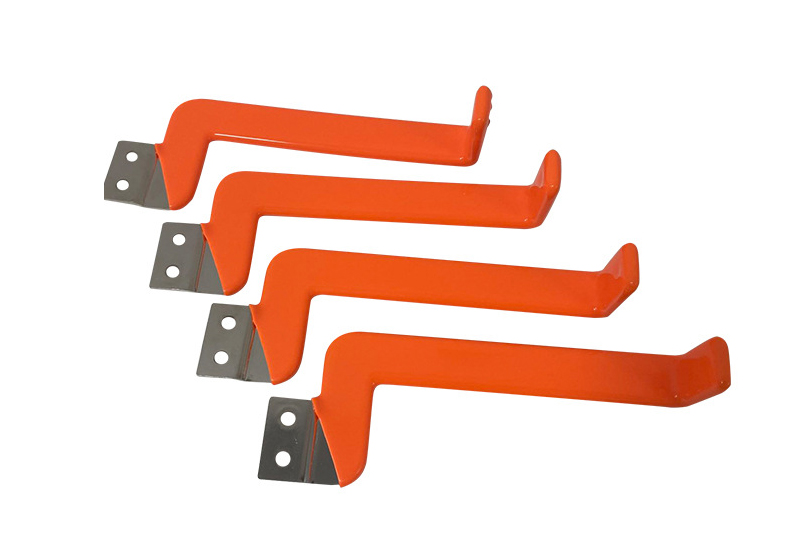
Introduktion til fleksible samleskinner
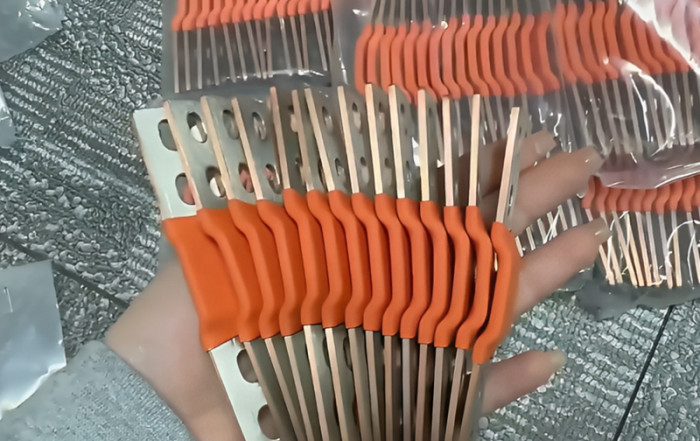
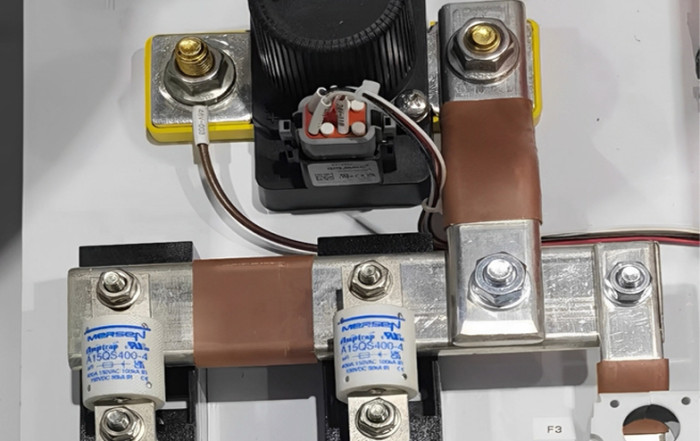
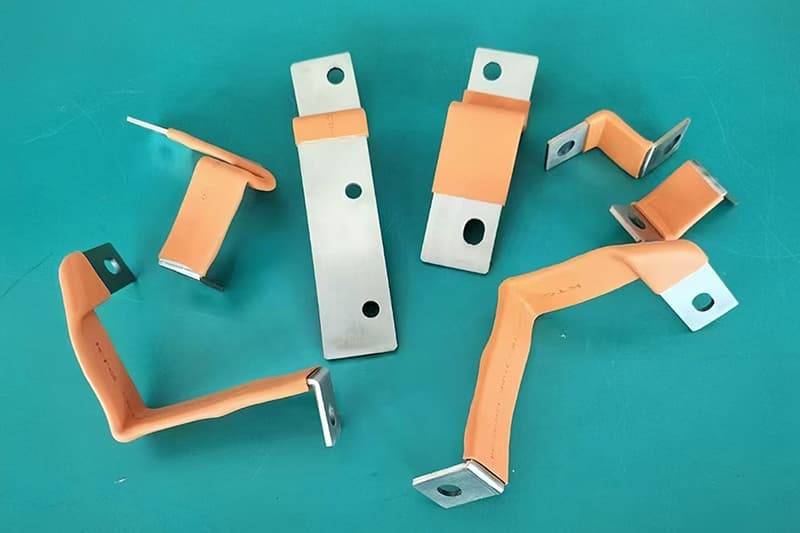
Fleksible samleskinner with flexible structures, high protection levels, and intelligent features have become the core power distribution solution for new energy, IDC server rooms, supercharging piles, and other fields. This paper starts from the definition of flexible busbar, analyzes its material innovation, structural design, production process, and market application, and combines industry cases and data comparison to reveal its technological advantages and commercial value in the hundreds of billions of power distribution market.
Hvad er fleksible samleskinner?
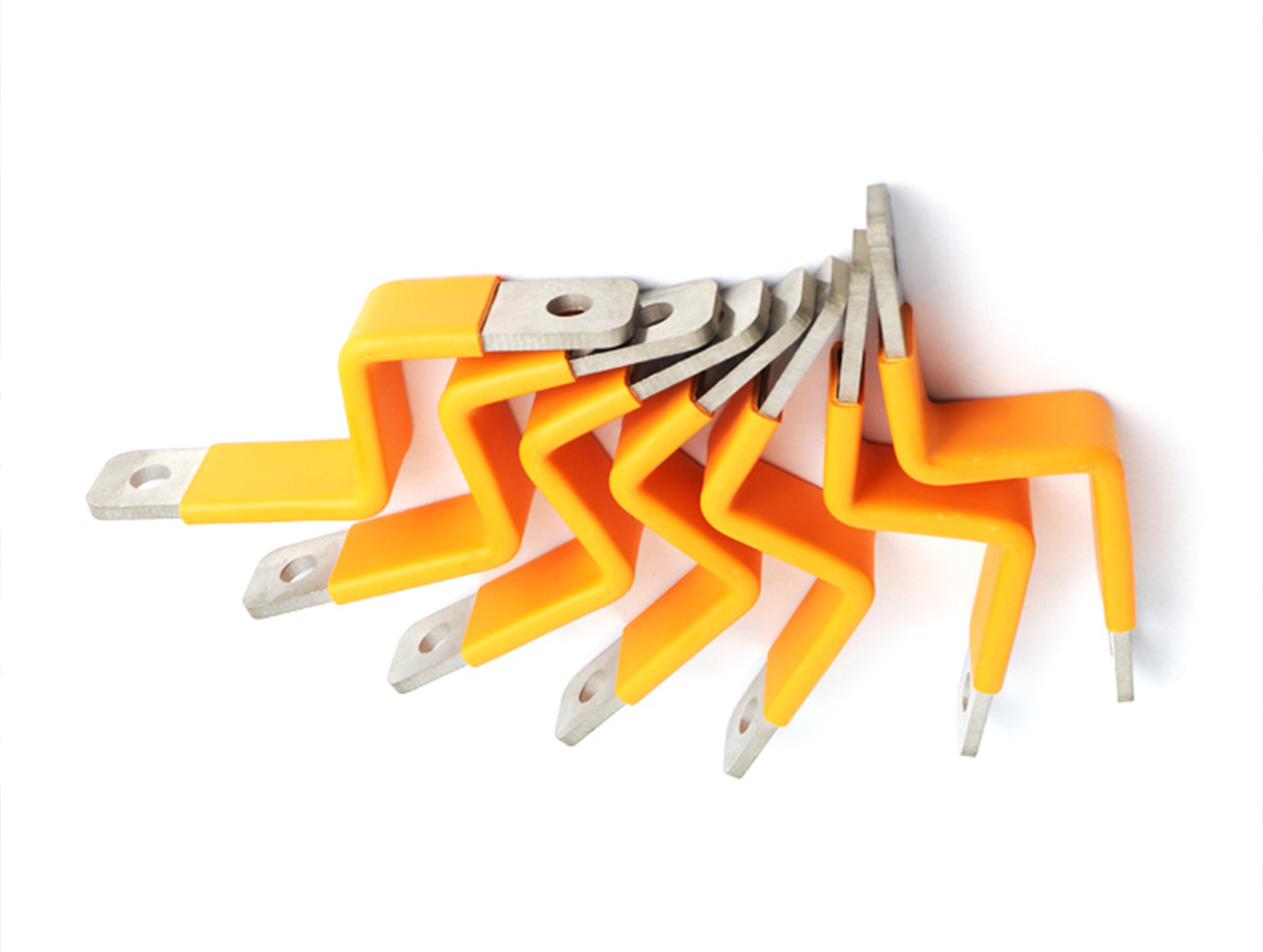
EN fleksibel samleskinne er en type elektrisk leder, der bruges til at fordele strøm i elektriske systemer. I modsætning til stive samleskinner er disse lavet af fleksible materialelag (normalt kobber eller aluminium), hvilket giver dem mulighed for at bøje og justere til forskellige konfigurationer. Denne funktion gør dem perfekte til systemer, hvor pladsoptimering og tilpasningsevne er afgørende.
1. Flexible Busbar is a kind of flexible busbar consisting of a high-purity copper wire row conductor, winding layer, insulation layer, and metal armor layer. Its core innovation lies in:
– Conductor innovation: the use of a copper wire row instead of a traditional copper busbar increases current density by more than 30%, with the current-carrying capacity of up to 6300A.
– Multi-layer protection: IP68 protection level (waterproof and dustproof), 15000 MΩ insulation resistance, and non-inductive design, supporting outdoor and humid environment use.
2. Comparison with traditional busbar/cable
| Indicators | Conventional Busbar | Fleksibel samleskinne | Multi-spliced Cable |
|---|---|---|---|
| Load Capacity (2000A) | Customized Dimensions Required | One Piece Laying | Multiple Parallel Connection Required |
| Installation Space | Allow 30% redundancy | Compact construction saves 50% space | Layered laydown required |
| Construction Costs | High (customized + connectors) | Reduced by 60% (maintenance-free) | Medium (many connectors) |
| Temperaturstigning | ≤70K | ≤30K | | ≤50K |
What are the advantages of flexible busbar?
- Material innovation: copper wire row and composite insulation
– Conductor material: 99.95% high purity copper wire rows with tin or silver-plated surfaces to reduce contact resistance.
Insulation material: Class B (130℃) polyester film and halogen-free flame retardant sheath to meet the fire protection requirements of data centers. - Structural design: modularization and intelligence
– Armor layer: interlocking metal armor to enhance mechanical strength, bending radius up to 6 times the diameter.
Intelligent monitoring: built-in sensors monitor current and temperature in real time, supporting remote warning (Huawei super charging station case). - Production process: standardized assembly line
– Lamination process: copper wire rows are diffusion welded to form a continuous conductor, eliminating traditional welding hot spots.
– Automated testing: 3.5kV withstand voltage test and 15000 MΩ insulation test ensure zero defects. - Energy Efficiency Improvement: Eddy Current Suppression and Heat Dissipation Optimization
– Eddy current free design: Layered conductor structure reduces hysteresis loss and wire loss by 20%.
– Heat dissipation channel: Hollow copper tube support combined with natural convection, reducing temperature rise by 60% compared to copper row. - Cost advantage: full life cycle economy
Copper-saving benefits: annual copper savings of 100,000 tons, helping the “dual-carbon” goal.
– Construction efficiency: no intermediate joints, 60% shorter installation time (Shenzhen Indus Center case). - Safety protection: triple redundancy mechanism
– Electrical safety: 20 kV/mm dielectric strength with self-extinguishing insulation.
– Mechanical protection: anti-vibration design certified by IEC 61439. - Application Scenario Expansion
New energy: 800 kW liquid-cooled supercharging pile power supply (Huawei technical cooperation).
– IDC server room: replacing the column header cabinet, saving 30% server room space.
– Ship and military industry: salt spray corrosion resistance and impact resistance design. - Balance between standardization and customization
Modularized fittings: T-connectors and converter boxes support fast branching (pre-customization rate increased by 40%). - Environmental adaptability
– Extreme climate: -40℃~125℃ wide temperature range operation (national climate demonstration project verification). - Intelligent upgrade
– Digital Twin: Integration with smart grid to realize dynamic adjustment of load.
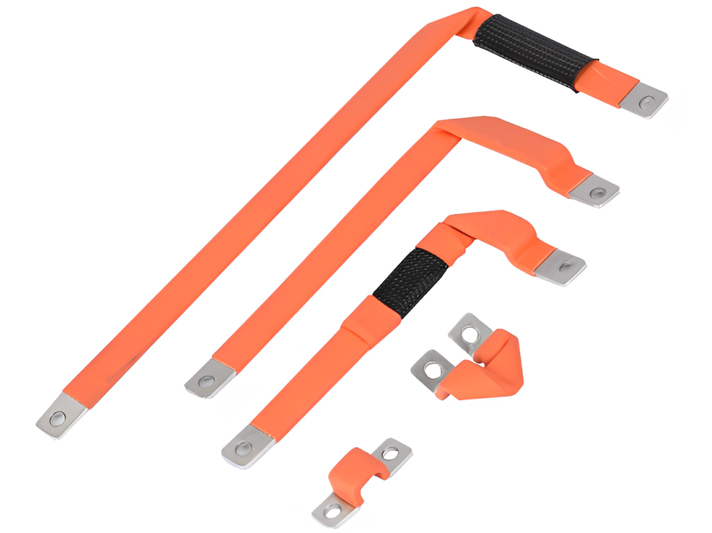
Flexible busbar production processes
1.Material pretreatment
- Copper wire annealing: eliminate internal stress and improve ductility.
- Surface cleaning: electrolytic degreasing to remove oxides (purity ≥ 99.95%).
2. Conductor molding
- Copper wire row braiding: 36 strands of 0.1mm copper wire to enhance flexibility.
- Armor layer interlocking: stainless steel tape spiral winding, tensile strength ≥ 500MPa.
3. Insulation coating
- Double-winding: polyester film + mica tape, breakdown voltage ≥35 kV.
- Extrusion molding: PVC or TPU sheath molded in one go, thickness tolerance ±0.1mm.
4. Quality Inspection
- Online monitoring: Infrared thermal camera captures temperature rise abnormality in real time.
- Type test: Verified by GB7251.6-2015 standard.
5. Packaging and transportation
- Reel packaging: the length of a single reel can be up to 500 meters, reducing on-site splicing.
Industry Challenges and Future Trends
- Current bottlenecks
– Material costs: copper price fluctuations affect profitability (need to develop aluminum-based alternatives).
– Lack of standards: the urgent need to develop a flexible busbar international certification system. - Technology frontiers
– Superconducting materials: nano-copper composite conductor, resistivity reduced by 50%.
– 3D printing: support topology-optimized structure customization (Siemens pilot project). - Market Forecast
- Global market size in 2025: USD 20 billion (CAGR 22%).
- China share: 45% (new energy and IDC driven).
Konklusion
Flexible busbar is reconfiguring the underlying logic of high-current power distribution through the synergistic innovation of material, process, and design. From the 3200A application in Huawei’s supercharging station to the space revolution in IDC server rooms, its technical advantages have been transformed into significant commercial value. With the support of Made in China for high-end equipment, flexible busbar will become a key cornerstone of smart grid and zero-carbon society.
Product Categories
Related Post
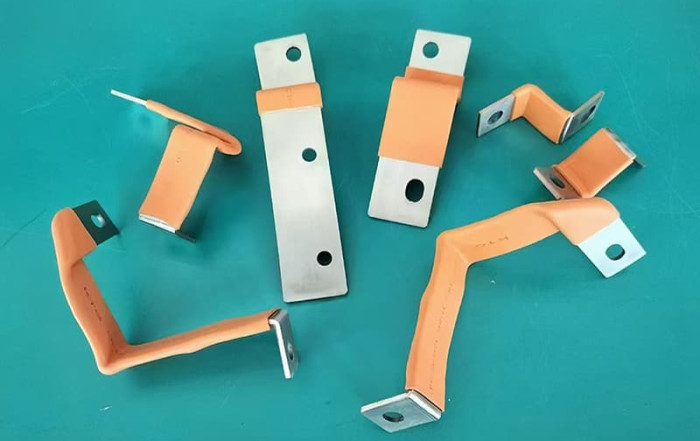
Why can’t a copper busbar and an aluminum busbar be directly connected?
[email protected]2025-12-08T02:54:03+00:00december 8th, 2025|0 Comments
Introduction Copper busbars and aluminum busbars are the two most commonly used conductive materials in the field of power systems and industrial distribution. Due to differences in cost, resource availability, and technical requirements, they often
How to Prepare for a Big Win at Tez888 Casino
Developer Ismail2025-10-04T21:44:04+00:00oktober 4th, 2025|0 Comments
When aiming for a significant payout at Tez888 casino, one crucial step often overlooked is thorough receipt checking and verification. Properly managing your transaction records not only ensures transparency but also plays a vital role
Tips and Tricks for Successful Betting on Bettilt
Developer Ismail2025-08-17T05:29:18+00:00august 17th, 2025|0 Comments
When engaging in online betting, particularly on platforms like bettilt, it's crucial to incorporate strategies such as receipt checking, tax optimization, and thorough verification to maximize your success. These elements ensure that your betting activities

How Do You Calculate the Size of a Copper Busbar?
[email protected]2025-06-06T06:54:57+00:00juni 6th, 2025|0 Comments
1. Introduction to Busbar Sizing Accurate copper busbar sizing is vital for secure, dependable, and effective electric circulation. Busbars disperse high currents in switchgear and panelboards. Inappropriate sizing reasons extreme warmth, power loss, voltage
10 Essential Tips for Working with Copper Busbars
[email protected]2025-06-03T06:35:28+00:00juni 3rd, 2025|0 Comments
In modern power systems, copper busbars have actually become a core element in power transmission and distribution because of their superb electric conductivity, rust resistance and mechanical strength. As a specialist manufacturer of copper
A Guide to Maintaining Copper Busbars Effectively
[email protected]2025-05-28T06:09:36+00:00maj 28th, 2025|0 Comments
As a core component of power transmission systems, copper busbars are an important choice for industry due to their high electrical conductivity, corrosion resistance and mechanical strength. However, the durability of its performance is
TAG KONTAKT
Vi leverer alle tilpassede samleskinner
Relaterede indlæg
Introduction Copper busbars and aluminum busbars are the two most commonly used conductive materials in the field of power systems and industrial distribution. Due to differences in cost, resource availability, and technical requirements, they often need to be connected and used in practical applications. However, directly connecting copper aluminum busbars can pose serious safety hazards.
When aiming for a significant payout at Tez888 casino, one crucial step often overlooked is thorough receipt checking and verification. Properly managing your transaction records not only ensures transparency but also plays a vital role in tax optimization. Understanding the legal framework surrounding gambling winnings and maintaining accurate documentation will help you navigate potential audits
-
When engaging in online betting, particularly on platforms like bettilt, it’s crucial to incorporate strategies such as receipt checking, tax optimization, and thorough verification to maximize your success. These elements ensure that your betting activities remain transparent, compliant with legal requirements, and financially efficient. By focusing on these areas, bettors can safeguard their investments and

 Danish
  English
  Arabic
  German
  Spanish
  French
  Russian
  Japanese
  Italian
  Vietnamese
  Turkish
  Dutch
Dutch  Portuguese
  Thai
Thai  Swedish
  Korean
  Greek
Greek  Polish
  Estonian
  Esperanto
  Hindi
Hindi  Indonesian
  Latvian