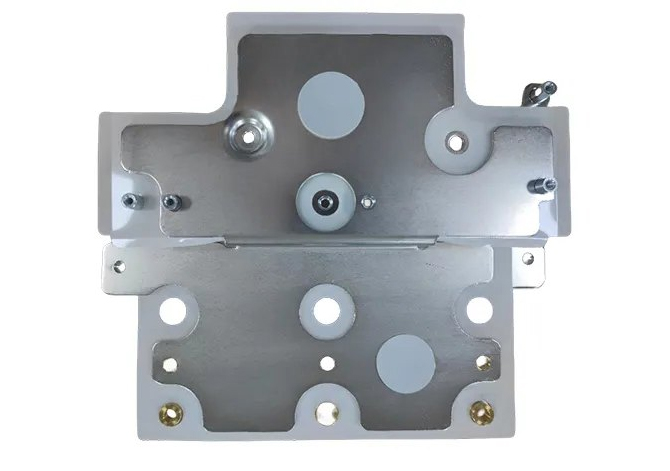
Vores skræddersyede fortinnede aluminiumssamleskinner tilbyder en unik blanding af letvægtsdesign og overlegen elektrisk ydeevne. Blikbelægningen øger korrosionsbestandigheden, mens den bibeholder fremragende ledningsevne. Disse samleskinner er ideelle til applikationer, der kræver effektiv strømfordeling og holdbare forbindelser, såsom i bilindustrien, industrielle og vedvarende energisystemer. Vi skræddersyer hver samleskinne til at opfylde dine specifikke krav, hvilket sikrer præcis pasform og optimal funktionalitet.
| Varetype: | fortinnet aluminiumsskinne |
|---|---|
| Materiale base: | Aluminium med fortinning |
| Dimensioner: | Kan tilpasses til specifikke krav |
| Tykkelse: | Skræddersyet til at håndtere specifikke strømbelastninger |
| Forbindelsestype: | Forskellige muligheder tilgængelige |
| Anvendelse: | Automotive, industriel, vedvarende energi. |
| Design: | Flad, L-formet, U-formet. |
| Belægning: | Fortinnet, blankt aluminium. |
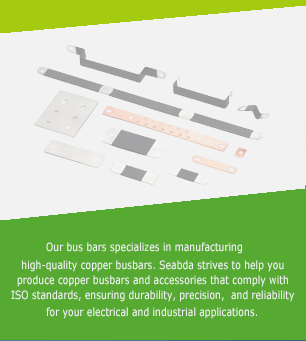
Tin Plated Aluminum Busbar: Technical Advantages and Application Guide
Product types and technical data
In order to meet the diverse needs, we offer the following three types of tinned aluminum busbars, covering the electrical performance requirements of different scenarios:
| Product Types | Technical Parameters | Applikationsscenarier |
|---|---|---|
| Solid tinned aluminum busbars | Current capacity: 5000A+, thickness: 5-50mm | Industrial power distribution systems, substation high voltage transmission |
| Laminated Tinned Aluminum Busbar | Interlayer Insulation: PET/Mica, Temperature Resistance: 150°C+ | New Energy Storage Systems, Data Center Power Distribution |
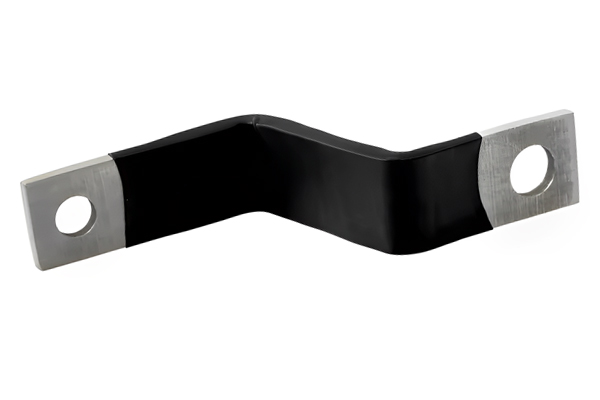
| Flexible Tinned Aluminum Busbar | Bending radius: ≥ 10 times thickness, dynamic endurance: 1 million times | Electric Vehicle Battery Packs, Robot Internal Wiring |
Technical Advantage: Why Choose Tin Plated Aluminum Busbar?
- Enhanced corrosion resistance
The tin-plated layer can effectively resist salt spray and acid and alkaline environment corrosion, and the service life is more than 3 times longer than ordinary aluminum busbars. - Lightweight design
The density of the aluminum core is only 30% of copper, which significantly reduces the overall weight of the power distribution system and saves installation costs. - Conductive efficiency optimization
Aluminum substrate conductivity up to 62% IACS (International Annealed Copper Standard), combined with a tin-plating process to reduce the contact resistance, reduced energy loss by 15%.
Application and Cases
- Industrial Power Distribution System
After adopting customized solid busbars in a steel plant, the high-voltage transmission efficiency was increased by 20% and the annual maintenance cost was reduced by 30%. - New Energy Storage
A laminated busbar in a photovoltaic energy storage project realizes a 40% reduction of inductance and a 50% improvement of thermal management efficiency. - Electric Vehicle Battery Pack
Flexible busbar passed the dynamic vibration test and was successfully applied to the battery module of a brand of electric bus with a 90% reduction in failure rate.
Customized Service Process
In order to accurately match customer needs, we provide the following service path:
- Demand analysis: The engineer team designs technical solutions based on parameters such as current load and environmental conditions.
- Prototype testing: Verify product reliability through salt spray test, temperature rise test, etc. (in accordance with IEC 61439 standard).
- Bulk delivery: Support customized size and plating thickness as required; shorten the delivery cycle to 7-15 days.
How is the surface treatment performance
The surface treatment process of tin-plated aluminum busbar directly affects its electrical conductivity and corrosion resistance. Currently, the industry mainly adopts the following three technologies:
- Double plating process: aluminum substrate first plating copper layer (to enhance the conductivity to 85% IACS) and then tin plating (anti-oxidation) to achieve the conductive advantages of a copper and aluminum lightweight combination while avoiding the problem of the difference between copper and aluminum expansion coefficients.
- Powder coating insulation: polyester film or DuPont Mylar film (temperature resistance of 130 ℃, life expectancy of 50 years) wrapped, not only to protect the insulation (voltage resistance of 3750V) but also to avoid the traditional PVC casing aging problems.
- Aluminum-magnesium alloy casing: non-magnetic material casing reduces eddy current loss, and the thermal conductivity is 40% higher than steel casing, which is suitable for high-temperature scenarios such as new energy storage systems.

 Danish
  English
  Arabic
  German
  Spanish
  French
  Russian
  Japanese
  Italian
  Vietnamese
  Turkish
  Dutch
Dutch  Portuguese
  Thai
Thai  Swedish
  Korean
  Greek
Greek  Polish
  Estonian
  Esperanto
  Hindi
Hindi  Indonesian
  Latvian