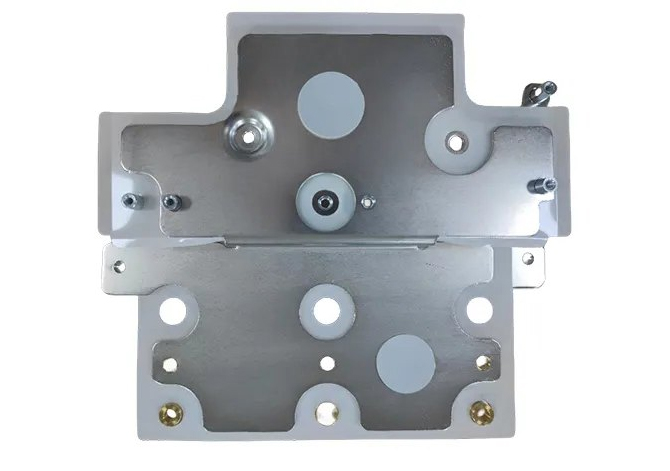
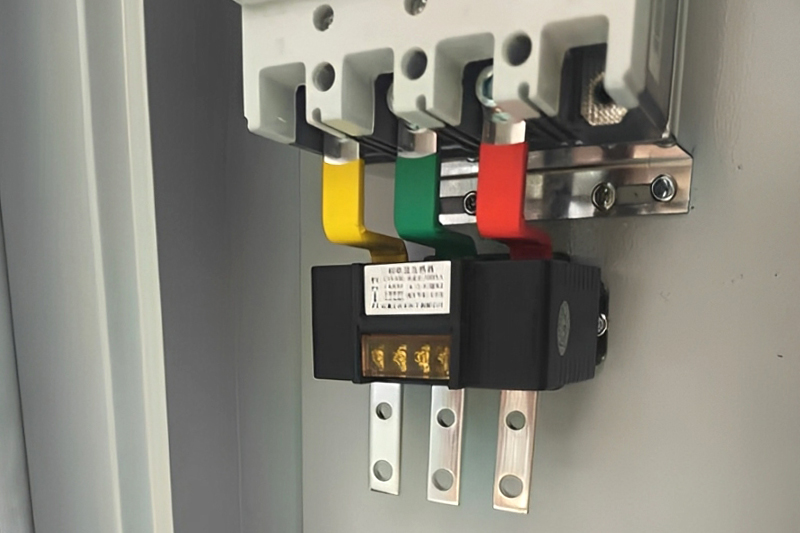
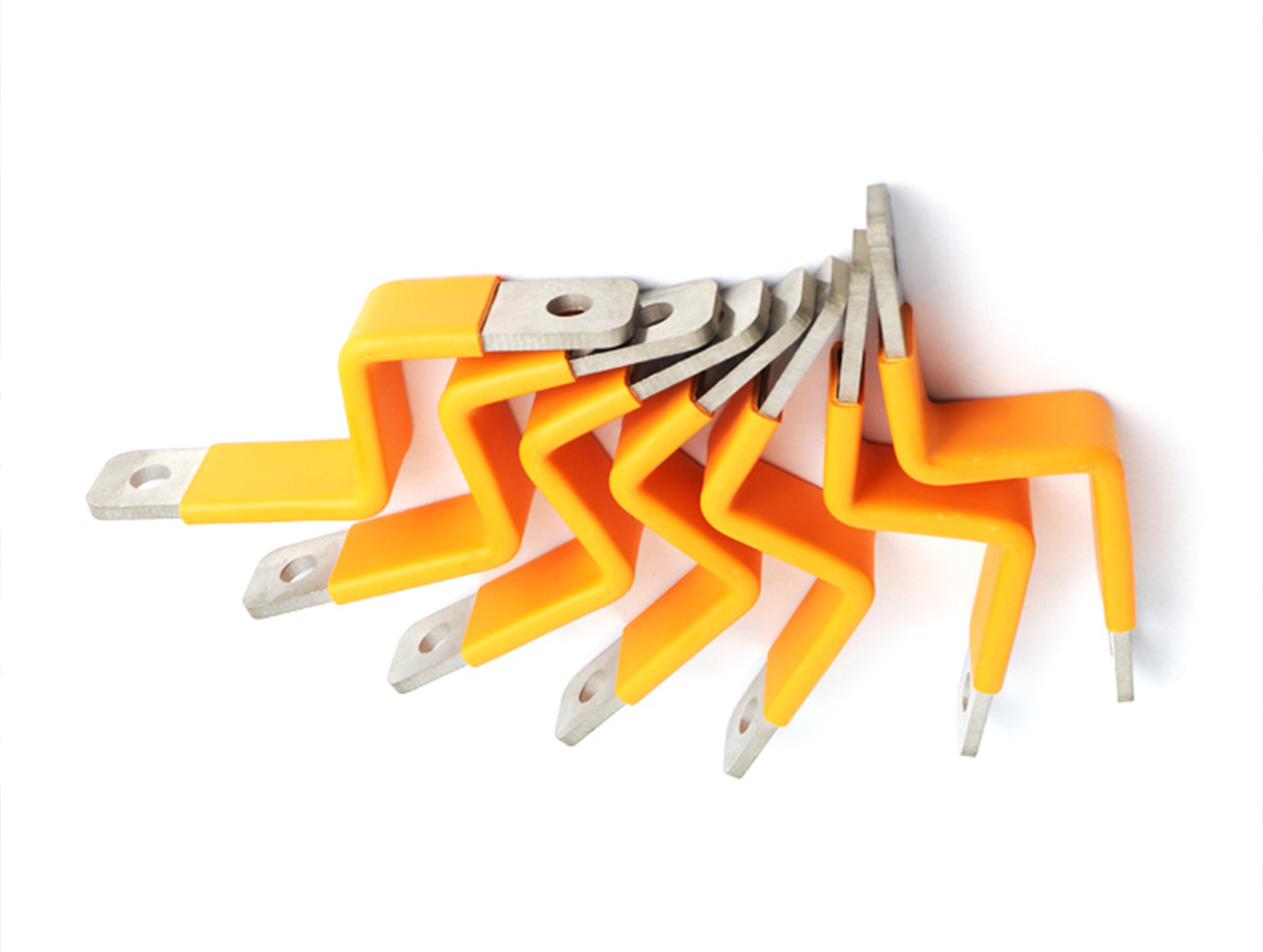
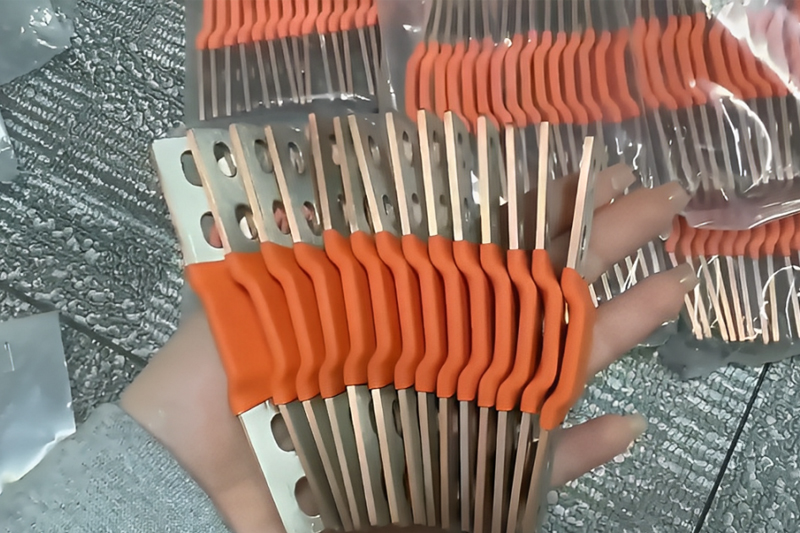
As a kobberskinne manufacturer, we are well aware of its central role in electrical systems. With its excellent electrical conductivity, mechanical strength and corrosion resistance, copper busbar has become a key component in industry, construction and substations. In this article, from the pre-installation preparation to post maintenance, systematic analysis of the technical aspects of copper busbar installation, to help customers achieve safe and efficient electrical system construction.
1. Planning and preparation before installation
a. Design drawings
- According to the needs of the electrical system, define the direction, length and location of the support point of the busbar, and prioritize the straight path to reduce resistance and energy loss.
- If it is necessary to cross the building expansion joints or long distance laying (more than 80 meters), it is necessary to reserve expansion joints (spacing 50-60 meters) to cope with thermal expansion and contraction.
- Hard busbars (rectangular/tubular) are suitable for indoor fixed scenarios, while soft busbars are suitable for outdoor flexible connections, and enclosed bus ducts are mostly used for high-current intensive power distribution.
b. Material and tool inspection
- Copper busbar acceptance: check whether the surface is straight without scratches and oxidized layer, and the bending degree per unit length should be less than 2mm.
- Accessory matching: support frame, connector, insulation sleeve, etc. need to be consistent with the busbar specifications, hot-dip galvanized bolts and torque wrenches are necessary tools.
- Insulation test: Before installation, the insulation resistance of each section of busbar should be more than 20MΩ, and the whole process is detected by 500V megohmmeter.
c. Environmental assessment
- Avoid high temperature, humidity or corrosive areas, outdoor installation needs to consider windproof, rainproof measures, if necessary, anodized copper busbar or coated with a protective layer.
2. Steps of copper busbar installation
a. Support structure construction
Bracket type: Horizontal installation using angle steel boom or channel steel bracket, vertical installation needs to be configured with spring bracket to cushion the vibration.
Fixed spacing: hard bus horizontal bracket spacing ≤ 2.5 meters, vertical bracket ≤ 3 meters; closed busway each section needs at least one fixed point, corner 0.4-0.6 meters within the additional bracket.
b. Busbar processing and connection
Cutting and straightening: use special cutters to cut, straighten the flat bending/vertical bending error per meter is less than 3mm and 2mm respectively.
Welding process (hard busbar):
- Bevel angle of 65-75 °, argon arc welding shielding gas purity ≥ 99%, after welding the weld needs to be smooth and burr-free.
- Welding position should avoid the support point and connection at least 50mm, the same phase bus weld should be staggered arrangement.
Bolt connection:
- The contact surface should be polished to remove the oxidized layer, coated with electric power composite grease, the bolt should be threaded in from the bottom upward, and the torque wrench should be tightened to 70±6N-m, with 2-3 buckles exposed.
- When connecting the enclosed bus duct, it is necessary to align the shell and lock the waterproof cover plate, and the insulating sleeve at the joint needs to be completely covered.
c. Insulation and grounding
Each section of busbar needs to be connected with an insulating sleeve, and the inside of the closed busway is filled with PTFE material to ensure that the insulation resistance is ≥10MΩ.
Grounding requirements: at least 2 places of the whole section busbar should be reliably connected with the protective conductor, and the grounding resistance should be ≤4Ω; the end of the branch busbar should be grounded separately.
d. Key factors for Installation
Through the wall/floor processing: vertical through the need to set up waterproof platform (height ≥ 50mm) and fire blocking, bracket reinforced with channel steel.
Enclosed bus duct plug-in box installation: the bottom edge is 1.4 meters from the ground, 300mm above the plug-in box to add a fixed bracket, the switch in the box needs to be disconnected after power supply.
3. Safety standards and quality acceptance
A. Operation safety
- Personnel need to wear insulated gloves, helmets, work after disconnection, high-risk areas set up warning signs.
- Multi-point lashing (2 points for single span and 3 points for multiple spans) is used for hoisting, and cable is used to assist positioning to avoid collision and deformation.
B. Acceptance standard
- Straightness deviation ≤1.5‰, full-length error ≤20mm; phase sequence arrangement should be in line with the specification (L1 yellow, L2 green, L3 red, N light blue).
- Industrial frequency withstand voltage test: 1kV voltage for 1 minute without breakdown, insulation resistance ≥0.5MΩ (low voltage) or ≥10MΩ (high voltage).
4. Operation and maintenance and fault prevention
Daily maintenance
- Quarterly inspection of joint tightness, insulation integrity, using infrared thermometer to monitor the temperature rise (ΔT ≤ 40K).
- Regularly clean up the busbar surface dust, corrosive environments need to increase the frequency of protective coating inspections.
Common problems
- Partial overheating: check the contact surface oxidation or loose bolts, regrind and tighten to standard torque.
- Insulation degradation: replace the damaged casing, humid environment can be added dehumidification device.
5. Advantages and trends of copper busbar installation
The high current-carrying capacity (up to 20,000A) and low skin effect of copper busbar make it a gradual replacement of traditional cables in high-current scenarios. In the future, pre-insulated tubular busbar, intelligent monitoring systems (such as temperature sensing probe integration) will become the mainstream of the technology to further enhance the installation efficiency and safety.
Konklusion
Kobberskinne installation is the core of reliable operation of the electrical system, which needs to strictly follow the design specifications and operating procedures. Through scientific planning, accurate construction and continuous maintenance, the performance advantages of copper busbar can be maximized. For customized installation solutions or technical support, please contact our professional team.
Product Categories
Related Post
Why can’t a copper busbar and an aluminum busbar be directly connected?
[email protected]2025-12-08T02:54:03+00:00december 8th, 2025|0 Comments
Introduction Copper busbars and aluminum busbars are the two most commonly used conductive materials in the field of power systems and industrial distribution. Due to differences in cost, resource availability, and technical requirements, they often

How Do You Calculate the Size of a Copper Busbar?
[email protected]2025-06-06T06:54:57+00:00juni 6th, 2025|0 Comments
1. Introduction to Busbar Sizing Accurate copper busbar sizing is vital for secure, dependable, and effective electric circulation. Busbars disperse high currents in switchgear and panelboards. Inappropriate sizing reasons extreme warmth, power loss, voltage
10 Essential Tips for Working with Copper Busbars
[email protected]2025-06-03T06:35:28+00:00juni 3rd, 2025|0 Comments
In modern power systems, copper busbars have actually become a core element in power transmission and distribution because of their superb electric conductivity, rust resistance and mechanical strength. As a specialist manufacturer of copper
A Guide to Maintaining Copper Busbars Effectively
[email protected]2025-05-28T06:09:36+00:00maj 28th, 2025|0 Comments
As a core component of power transmission systems, copper busbars are an important choice for industry due to their high electrical conductivity, corrosion resistance and mechanical strength. However, the durability of its performance is
How to Install Copper Bus Bars for Electrical Systems
[email protected]2025-05-27T07:25:44+00:00maj 27th, 2025|0 Comments
As a copper busbar manufacturer, we are well aware of its central role in electrical systems. With its excellent electrical conductivity, mechanical strength and corrosion resistance, copper busbar has become a key component in
Everything you need to know about copper busbars
[email protected]2025-05-19T02:55:47+00:00maj 15th, 2025|0 Comments
Nam lacinia arcu tortor, nec luctus nibh dignissim eu nulla sit amet maximus.
TAG KONTAKT
Vi leverer alle tilpassede samleskinner
Relaterede indlæg
Introduction Copper busbars and aluminum busbars are the two most commonly used conductive materials in the field of power systems and industrial distribution. Due to differences in cost, resource availability, and technical requirements, they often need to be connected and used in practical applications. However, directly connecting copper aluminum busbars can pose serious safety hazards.


 Danish
  English
  Arabic
  German
  Spanish
  French
  Russian
  Japanese
  Italian
  Vietnamese
  Turkish
  Dutch
Dutch  Portuguese
  Thai
Thai  Swedish
  Korean
  Greek
Greek  Polish
  Estonian
  Esperanto
  Hindi
Hindi  Indonesian
  Latvian