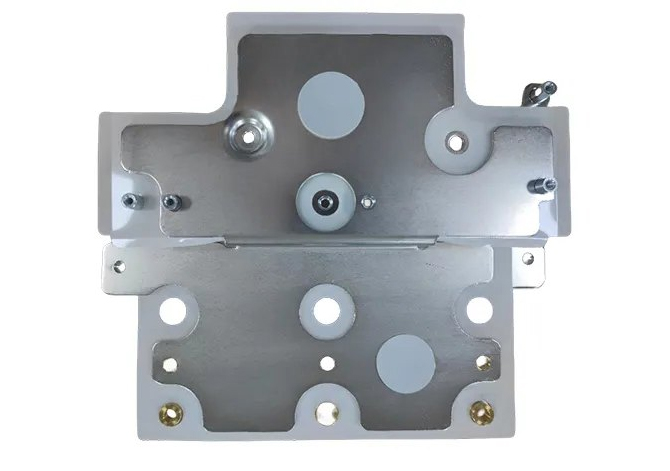
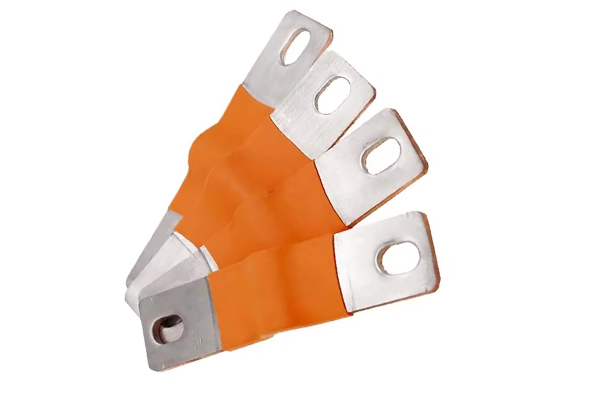
Fleksebla Izolita Busbar Por Bateria Konekto
√ Facile fleksiĝas kaj formas por kongrui kun limigitaj spacoj kaj kompleksaj aranĝoj.
√ Reduktas la riskon de kurtaj cirkvitoj kaj elektraj misfunkciadoj.
√ Fortika konstruo eltenas mekanikan streĉon
√ Elportas signifajn nunajn ŝarĝojn, idealajn por bateriosistemoj.
Our flexible insulated bus bars are specifically designed for battery connections, offering exceptional electrical performance and safety. Flexible insulated busbar is a kind of power supply and distribution equipment made of flexible conductor compounded with multi-layer insulating material, which combines the current-carrying capacity of traditional busbar and the flexibility of cable. Its core feature lies in the special process to realize large current transmission while adapting to the complex installation environment, such as narrow space, humid environment and so on.
| Produkta Tipo | Fleksebla Izolita Busbar |
|---|---|
| Kupra Grado: | Kupro, Nikela Kupro |
| PVC (polivinila klorido): | Fleksebla, kostefika kaj facile apliki. |
| Epoksio: | Provizas malmolan, daŭran tegaĵon kun bonegaj izolaj propraĵoj. |
| Silicono: | Proponas alttemperaturan reziston kaj flekseblecon. |
| Varmoŝrumpa tubo: | Ĝi ŝrumpas malloze ĉirkaŭ la busbar kiam varmigite, provizante firmen. |
| Pulvora Tegaĵo: | Aplikita kiel pulvoro kaj poste resanigita por formi solidan, protektan tavolon. |
| Funkcia temperaturo: | -36°C ~ 65°C |
| Kaŭĉuko: | Provizas bonan elektran izoladon kaj mekanikan protekton. |
| Apliko: | bateriokonektoj, elektrodistribuo, sunaj invetiloj, kaj ventoturbinaj sistemoj ktp. |
| Load Capacity: | 125A-6000A (up to 12000A |
| Taksita Tensio: | 600V-1000V (AC)/750V-1500V (DC |
| Bend radius: | Minimum 6 times the diameter of the busbar, adapted to the complex wiring |
| Insulation Resistance: | ≥15000MΩ (3.5kV withstand voltage test without breakdown) |
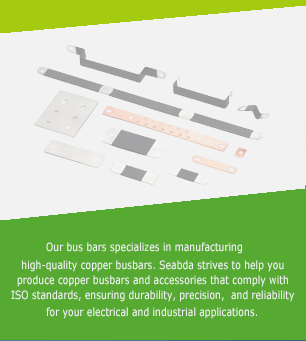
Ĉefa Fleksebla Izolita Busbar Fabrikisto
As a manufacturer of flexible insulated busbars, we specialized in innovative solutions for battery connections and power distribution systems. Our busbars are designed to offer superior electrical performance, high flexibility, and robust insulation to ensure safety and reliability in various applications.
Product structure of flexible insulated busbars
- Conductor layer: composed of flexible copper wire rows or tinned copper tape, providing high conductivity and flexibility.
- Wrapping layer: Polyester film or PTFE tape is used to wrap the conductor, enhancing insulation and anti-electromagnetic interference.
- Insulation Layer: The main insulating materials include polyvinyl chloride (PVC), cross-linked polyethylene (XLPE) or silicone rubber, with a thickness of 1.8-2.1mm, providing electrical isolation.
- Armor Layer: Interlocking metal armor (e.g., stainless steel tape) provides mechanical protection against external damage.
- Sheath layer: The outer layer is made of flame retardant and corrosion resistant material (such as halogen free PVC), with protection level up to IP68.
Production process of flexible insulated busbars
1. Conductor processing
- Copper/aluminum is drawn into fine wires by wire drawing machine and annealed to enhance flexibility.
- The stranding process weaves multiple strands of conductors into flexible copper wire rows to enhance current-carrying capacity.
2. Insulation treatment
- Wrapping layer: polyester film or mica tape is wrapped by automatic wrapping machine to reduce partial discharge.
- Extrusion molding: PVC or XLPE evenly cover the conductor through high temperature extruder, thickness error ≤ 0.1mm.
3. Armor and sheath
- The metal armor layer wraps the insulating layer through interlocking technology to enhance the compressive strength (can withstand 50kA short-circuit current).
- The outer sheath adopts co-extrusion technology to ensure weather resistance and flame retardancy.
4. Testing and Packaging
- Voltage withstand test: 3.5kV frequency withstand voltage for 1 minute without breakdown.
- Intelligent detection: integrated current/temperature sensor, support real-time online monitoring.
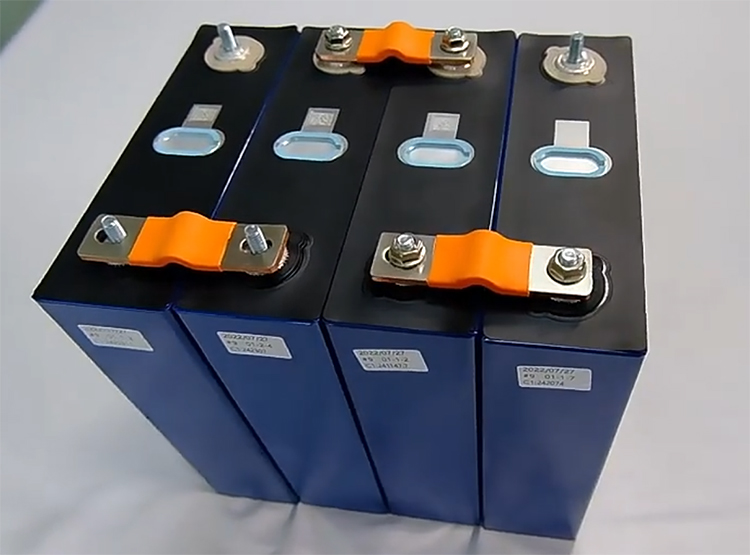
Kio estas izolita busbar?
Insulated busbar is a power transmission and distribution equipment that realizes electrical isolation by wrapping insulating material outside the conductor, which is different from the bare rigid busbar. Its classification includes:
- Flexible insulated busbar: adopting multi-layer flexible conductor and insulation structure, suitable for dynamic or complex environment.
- Tubular insulated busbar: copper tube as conductor, covered with PTFE insulation, used in high-voltage scenarios (e.g. substations).
- Enclosed busway: metal shell embedded insulated busbar, mostly used in building power distribution.
Ŝlosilaj Trajtoj kaj Profitoj
- Energy efficient: Large surface area of the conductor, low skin effect, reducing line loss by more than 30%.
- Safe and reliable: 3.5kV voltage without breakdown, insulation resistance ≥ 15000MΩ, support for outdoor wet environment.
- Convenient installation: Flexible structure without customized elbow, installation efficiency increased by 60%.
- Cost optimization: No intermediate joints, construction costs reduced by 50%, maintenance-free for life.
Kiel izoli busbaron?
Izola busbar implicas apliki protektan tavolon ĉirkaŭ la kondukta materialo por malhelpi elektrajn kurtcirkvitojn, protekti kontraŭ mediaj faktoroj kaj certigi sekuran uzadon. Jen oftaj metodoj por izoli busbaron:
1. Material selection
- High temperature scenario: PTFE (temperature resistance 340℃) or silicone rubber (temperature resistance 200℃).
- Environmental scenario: halogen-free flame retardant materials (oxygen index ≥ 30%).
2. Technology
- Multi-layer winding: alternately winding semi-conductive tape and insulating tape to eliminate electric field concentration.
- Vacuum impregnation: filling epoxy resin for tubular busbars to enhance insulation strength.
- Co-extrusion molding: synchronous extrusion of conductor shielding layer and main insulation layer to reduce interface defects.
3. Liquid Insulation
Likvaj izolaj komponaĵoj povas esti aplikitaj al la busbar por senjunta kaj fleksebla izola tavolo.
Paŝoj:
- Pura Busbar: Certigu, ke la busbar surfaco estas pura.
- Apliki Likvan Izolaĵon: Brosu, ŝprucigu aŭ trempu la busbaron en la likva izolaj komponaĵoj.
- Sekigi kaj Resanigi: Lasu la komponaĵon sekiĝi kaj resanigi laŭ la instrukcioj de la fabrikanto.

 Esperanto
  English
  Arabic
  German
  Spanish
  French
  Russian
  Danish
  Japanese
  Italian
  Vietnamese
  Turkish
  Dutch
Dutch  Portuguese
  Thai
Thai  Swedish
  Korean
  Greek
Greek  Polish
  Estonian
  Hindi
Hindi  Indonesian
  Latvian