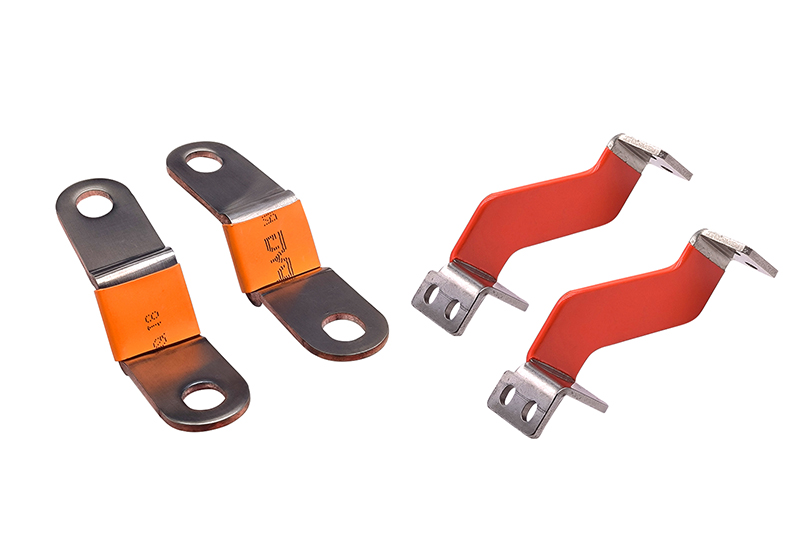
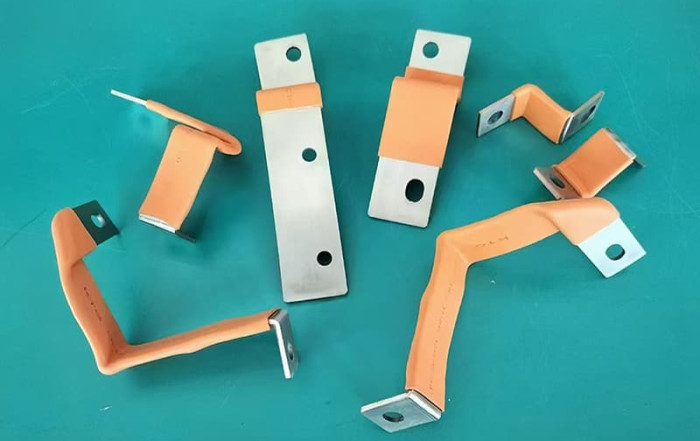
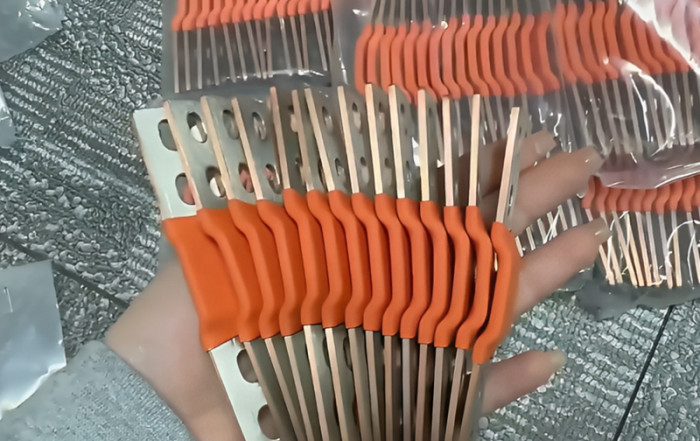
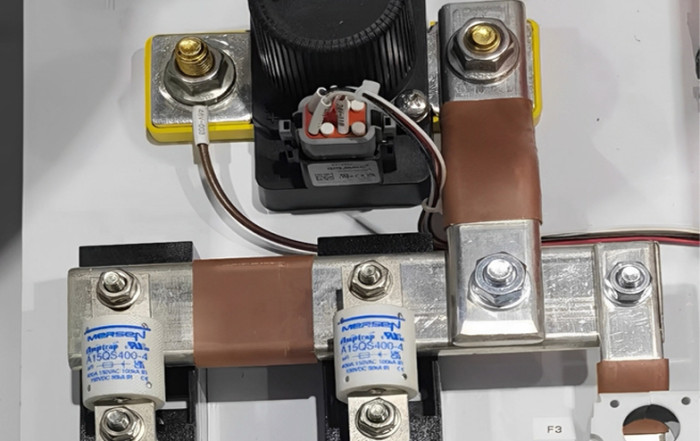
As a important component of the power transmission system, kupra busbaro plays an irreplaceable role in the new energy revolution, smart grid construction and Industry 4.0 process. This article will systematically analyze the technical characteristics, production process, application scenarios and market trends of copper busbar, and reveal its core value in the fields of electric power, transportation and new energy through 10 sets of comparative tables and authoritative industry data. The article integrates the latest global technical reports and industry standards (GB/T 5585.1-2005) to provide readers with a comprehensive guide that is both professional and practical.
What is Copper Busbar?
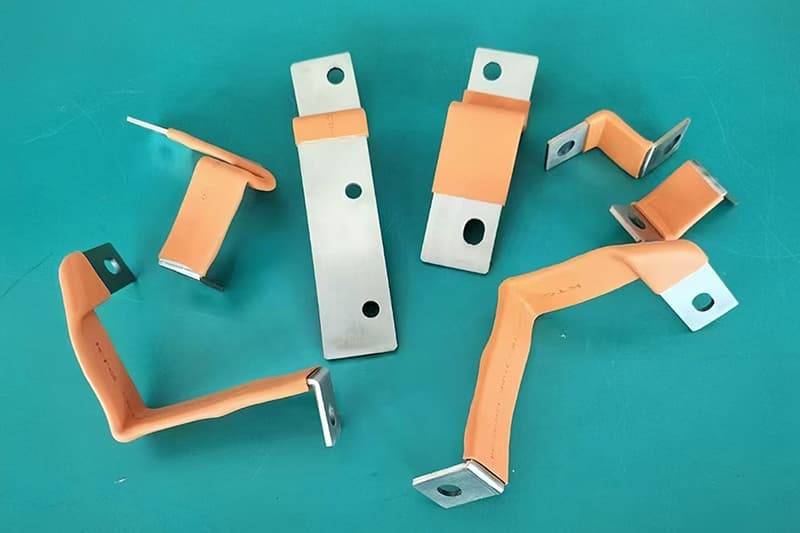
Copper busbar is made of high-purity copper (≥99.95%) as raw material, through extrusion, drawing and other processes made of flat or round conductive materials, to undertake the task of large-current transmission, is the “vascular network” of the power system. Its core advantages include:
- Conductivity: The conductivity of copper (100% IACS) far exceeds that of aluminum (61% IACS), with a resistivity of only 0.01777 Ω-mm²/m (hard state);
- Mechanical properties: tensile strength up to 206 MPa (soft state), elongation 35%;
- Corrosion resistance: natural oxide film can withstand humidity, acid fog environment, life expectancy of up to 30 years.
Classification and Industry Standards
| Dimensions | Tajpu | Parametroj | Apliko |
|---|---|---|---|
| Conductive | Nuda Kupra Busbar | Without Insulation, Conductivity 100% IACS | Substation, Industrial Distribution Cabinets |
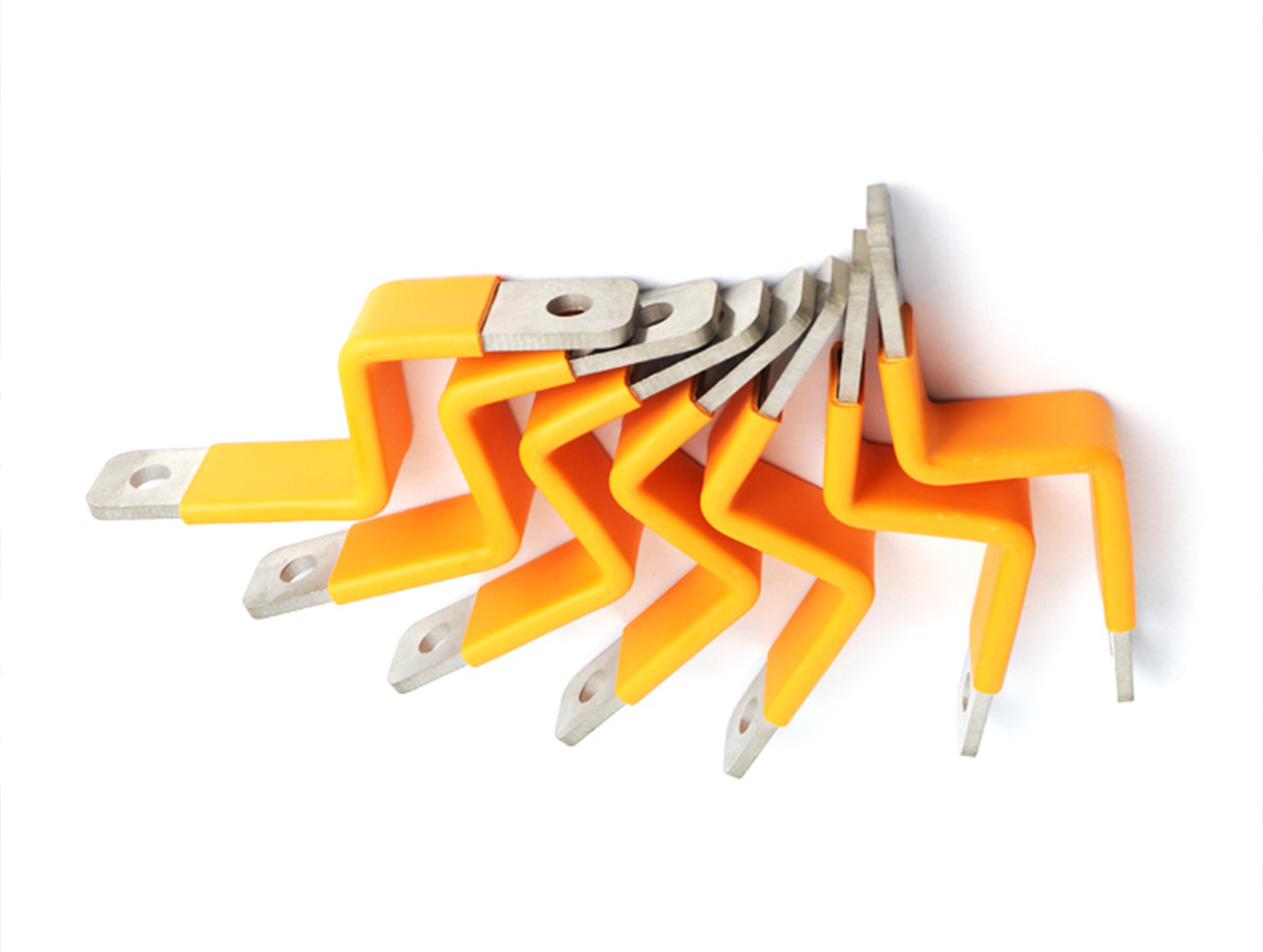
| Izolitaj kupraj busbaroj | Polyethylene/cross-linked polyethylene insulation, withstanding 1-35 kV | High voltage power transmission, railroads | |
| Section Shape | Rektangula | Heavy Ratio > 10, Current Carrying Capacity up to 4000A | Data Centers, New Energy Generation |
| Round | Diameter 10-200 mm, bending radius ≥ 10 times the thickness | Ship, Aerospace | |
| Process Standards | GB/T 5585.1-2005 | Resistivity ≤ 0.01777 Ω-mm²/m | Domestic General |
| IEC 6028 | Load Capacity Calculation Models | International Projects |
Copper busbar VS aluminum busbar
Physical and Chemical Properties Comparison
| Indikiloj | Kupra busbaro | Aluminia busbaro | Advantage difference |
|---|---|---|---|
| Density (g/cm³) | 8.89 | 8.89 | 2.703 | Aluminum is 60% lighter |
| Conductivity (%IAC) | 100 | 61 | Copper is 64% more efficient |
| 401 | 237 | Copper is 69% more efficient in dissipating heat | |
| Tirezo-forto (MPa) | 206 | 68.6 | 200% Higher Mechanical Strength of Copper |
| Price ($/t) | 75,720 | 0,150 | Aluminum is 73% cheaper |
Difference in the production process
1. Traditional process pain points
- High defect rate: risk of insulation breakdown due to burrs and buckling (failure rate ↑15%);
- High energy consumption: power consumption of annealing process accounts for 30% of production costs;
- Environmental issues: lubricant volatilization pollution (VOCs emission exceeds the standard by 2 times).
2. Continuous extrusion technology
| Indikiloj | Traditional process | Continuous extrusion process | Improvement effect |
|---|---|---|---|
| Surface Defect Rate | 8-12% | <0.5% | Quality Conformity ↑90% | Grain Size (μm) |
| Grain size (μm) | 50-100 | 10-2 | Mechanical strength ↑30% |
| Production cycle | 72 hrs | 8 hrs | Efficiency ↑ 800% |
| Energy Consumption (kWh/ton) | 1,200 | 650 | Carbon Emission Reduction 46% |
Application Scenarios: From Power Infrastructure to Space Exploration
Electricity system
- Smart Grid: copper busbar + fiber optic sensor for real-time temperature monitoring (accuracy ±1℃);
- New energy: photovoltaic power stations with copper busbar demand increased by 18% annually.
Fervoja transporto:
- Subway traction system: rectangular copper busbar width-thickness ratio of 20:1, 40% increase in current-carrying density;
- High-speed rail: copper-nickel alloy busbar temperature -50 ℃ ~ 200 ℃, adapted to the polar climate.
Frontier fields:
- Nuclear fusion device: oxygen-free copper busbar carrying 1 MA current, magnetic field stability of 99.99%;
- Space station: gold-plated copper busbar radiation resistance increased by 300%.
Konkludo
Kupra busbaro as an important part of the modern energy system, is experiencing from the material (such as copper-silver alloy), process (continuous extrusion) to the application of the expansion (space power network) change. For enterprises, to grasp the three major trends of high performance (conductivity > 102% IACS), lightweight (composite materials accounted for 30%) and intelligent (IoT integration rate > 40%) will become the key to seize the market.

Product Categories
〉 Stana kovrita kupra busdrinkejo
〉 Nikelkovrita kupra busdrinkejo
Related Post
Why can’t a copper busbar and an aluminum busbar be directly connected?
[email protected]2025-12-08T02:54:03+00:00Decembro 8th, 2025|0 Comments
Introduction Copper busbars and aluminum busbars are the two most commonly used conductive materials in the field of power systems and industrial distribution. Due to differences in cost, resource availability, and technical requirements, they often
How Do You Calculate the Size of a Copper Busbar?
[email protected]2025-06-06T06:54:57+00:00Junio 6th, 2025|0 Comments
1. Introduction to Busbar Sizing Accurate copper busbar sizing is vital for secure, dependable, and effective electric circulation. Busbars disperse high currents in switchgear and panelboards. Inappropriate sizing reasons extreme warmth, power loss, voltage
10 Essential Tips for Working with Copper Busbars
[email protected]2025-06-03T06:35:28+00:00Junio 3rd, 2025|0 Comments
In modern power systems, copper busbars have actually become a core element in power transmission and distribution because of their superb electric conductivity, rust resistance and mechanical strength. As a specialist manufacturer of copper
A Guide to Maintaining Copper Busbars Effectively
[email protected]2025-05-28T06:09:36+00:00Majo 28th, 2025|0 Comments
As a core component of power transmission systems, copper busbars are an important choice for industry due to their high electrical conductivity, corrosion resistance and mechanical strength. However, the durability of its performance is
How to Install Copper Bus Bars for Electrical Systems
[email protected]2025-05-27T07:25:44+00:00Majo 27th, 2025|0 Comments
As a copper busbar manufacturer, we are well aware of its central role in electrical systems. With its excellent electrical conductivity, mechanical strength and corrosion resistance, copper busbar has become a key component in
Everything you need to know about copper busbars
[email protected]2025-05-19T02:55:47+00:00Majo 15th, 2025|0 Comments
Nam lacinia arcu tortor, nec luctus nibh dignissim eu nulla sit amet maximus.
CONTACTU
Ni Liveras Iun ajn Agordajn Busbarojn
Rilataj Afiŝoj
Introduction Copper busbars and aluminum busbars are the two most commonly used conductive materials in the field of power systems and industrial distribution. Due to differences in cost, resource availability, and technical requirements, they often need to be connected and used in practical applications. However, directly connecting copper aluminum busbars can pose serious safety hazards.