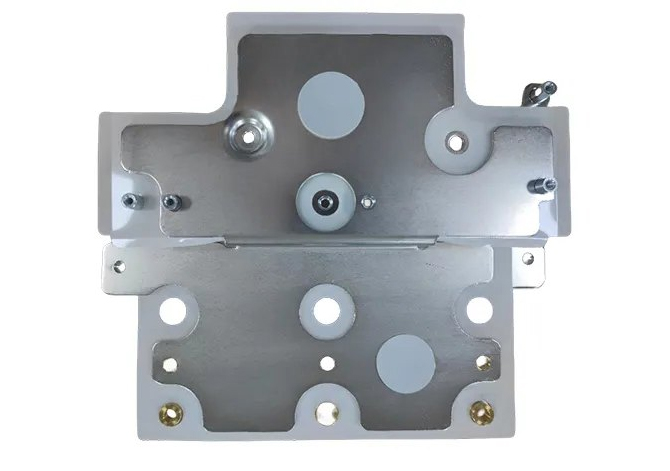
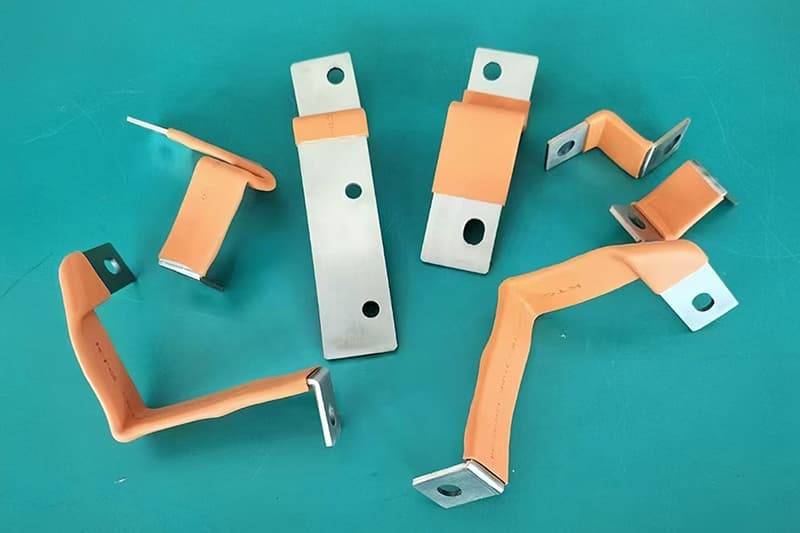
Enkonduko
Kupro busbaroj kaj aluminiaj busbaroj are the two most commonly used conductive materials in the field of power systems and industrial distribution. Due to differences in cost, resource availability, and technical requirements, they often need to be connected and used in practical applications. However, directly connecting copper aluminum busbars can pose serious safety hazards. This article will delve into the issue of direct connection between copper and aluminum busbars, analyze the scientific principles behind it, and provide safe and reliable connection solutions to help engineers and technicians avoid potential risks.
1. Electrochemical corrosion: the destructive effect of primary battery effect
When copper and aluminum come into direct contact, the contact surface easily forms an electrolyte under the action of moisture, carbon dioxide, and other impurities in the air, thus forming a complete primary battery system.
In this primary battery, aluminum becomes the negative electrode due to its more active chemical properties, while copper becomes the positive electrode due to its more stable chemical properties. This polarity difference causes aluminum atoms to easily lose electrons and form aluminum ions, thereby accelerating the oxidation and corrosion of aluminum.
The intuitive manifestation of electrochemical corrosion is the formation of a layer of gray-white substance (aluminum oxide) on the contact surface. This oxide film is not only non-conductive but also continuously thickens over time, leading to a sharp increase in contact resistance. In humid or corrosive environments, this process can accelerate significantly and cause serious deterioration of the connection point performance in a short period of time.
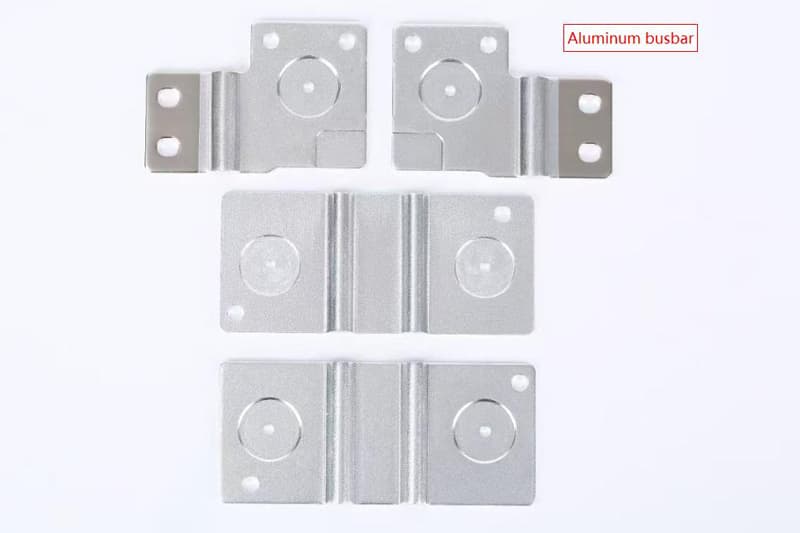
2. Differences in physical properties: mismatch between thermal expansion and mechanical properties
In addition to electrochemical corrosion issues, direct connection of copper and aluminum busbars also faces the challenge of mismatched physical properties. The thermal expansion coefficients of copper and aluminum are significantly different, with aluminum having a thermal expansion coefficient approximately 36% higher than copper.
When current passes through the connection point, heat is generated due to the resistance effect, causing metal expansion; After power failure and cooling, it will shrink again. This repeated cycle of heating and cooling will cause displacement and gaps between the contact surfaces of the two metals, further increasing the contact resistance.
The elastic modulus of copper is about 110-130 GPa, while that of aluminum is about 70 GPa. This difference in stiffness results in inconsistent deformation behavior of the two materials under temperature changes or external forces. Aluminum busbars are more prone to plastic deformation, resulting in insufficient connection pressure and loose contact points.
The hardness of copper is much higher than that of aluminum. When directly connected, the softer surface of the aluminum busbar is easily cut or embedded by copper, reducing the effective contact area. After long-term operation, aluminum busbars may still experience stress relaxation, further reducing the stability of the connection points.
3. Connection point heating: a safety hazard in a vicious cycle
As the contact resistance increases, a large amount of Joule heating is generated when the current passes through the connection point, resulting in an abnormal increase in temperature. When the working temperature exceeds 75°C and lasts for a long time, the insulation material polyvinyl chloride will decompose into hydrogen chloride gas , which will further corrode the conductor and form a vicious cycle.
The vicious cycle of heat generation and mutual corrosion promotion is the main reason for the failure of copper-aluminum connection points. High temperature accelerates the oxidation rate of aluminum, and the thickening of the oxide layer further increases the contact resistance, leading to a continued increase in temperature.
When the temperature at the connection point is too high, it may cause serious accidents such as insulation material melting, smoking, and even fire. Statistics show that a considerable proportion of electrical fires are caused by overheating of connection points.
Overheating connection points can also reduce the system’s short-circuit protection capability. An increase in contact resistance will limit the short-circuit current, causing the protective device to fail to operate in a timely manner, prolonging the duration of the fault, and expanding the scope of the accident.
4. Norms and Standards: Industry Safety Requirements
Regarding the issue of copper aluminum connections, relevant national regulations have clearly defined the requirements for safe connections. The “Code for Construction and Acceptance of Busbar Devices in Electrical Equipment Installation Engineering” provides clear requirements for different metal connections: Copper-to-copper connections can be directly connected in a dry room but need to be tinned in humid or corrosive environments; aluminum can be directly connected to aluminum; Copper and aluminum should be tinned with copper conductors in a dry room, and copper aluminum transition plates should be used in outdoor or high-humidity environments.
The specification emphasizes that the treatment of the overlapping surface at the copper aluminum connection is crucial. When using a copper aluminum transition plate, the copper end should be tinned to reduce the potential difference and improve connection stability.
For cable connections, it is recommended to use specialized connection devices such as copper aluminum connection tubes or copper aluminum terminals according to regulations. These specialized devices achieve reliable transition between copper and aluminum through special processes, effectively reducing electrochemical corrosion.
5. Secure Connection Solution: A Professional and Reliable Solution
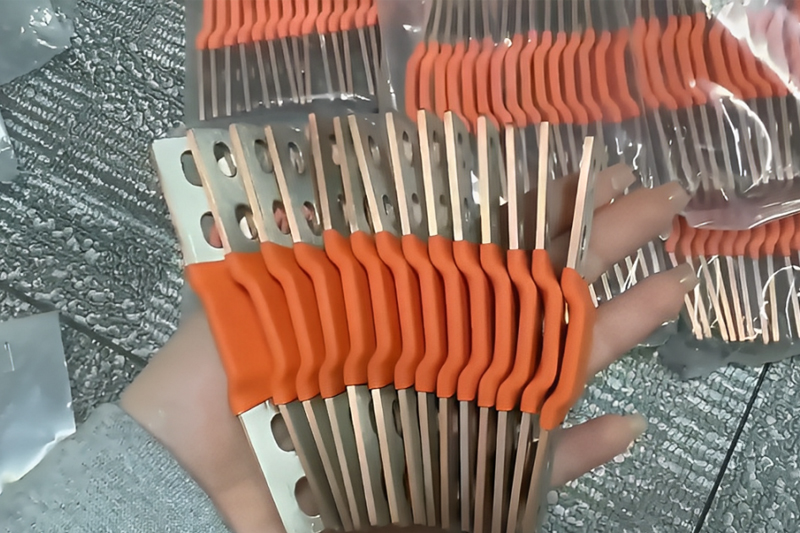
Copper aluminum transition plates (or copper-aluminum transition terminals) are currently the safest and most reliable connection solution. This device uses special processes such as flash welding to permanently bond copper and aluminum together, forming a metallurgical bond at the interface, effectively isolating air and moisture, and preventing electrochemical corrosion.
Tin coating the copper busbar connection area in a dry environment is an economical and effective solution. The standard electrode potential of tin (-0.14 V) is between copper and aluminum, which can reduce the contact potential difference. The tin coating can also prevent oxidation of copper conductors and improve connection stability.
Applying conductive paste (electric composite grease) on the contact surface can effectively improve the connection performance. Conductive paste is composed of metal powder and organic grease. Although its electrical resistivity is not high, it can fill the micro voids of the contact surface, form a tunnel effect , and improve conductivity. At the same time, it can isolate oxygen and moisture and inhibit corrosion.
For high-standard applications, the new material of copper aluminum composite busbar can be used. It is based on aluminum and coated with copper on the outer layer, achieving atomic-level bonding through special processes, combining the lightweight and low cost of aluminum with the excellent conductivity of copper.
Konkludo
The main reason why copper busbars and aluminum busbars cannot be directly connected is due to the significant differences in electrochemical corrosion and physical properties between them. Direct connection can cause serious accidents such as contact point oxidation, heating, and even fire.
The key to ensuring the safety of copper aluminum connections lies in adopting appropriate transition schemes, such as copper aluminum transition plates, tin coating treatment , or using specialized connection devices , and strictly following the specifications for construction. Only by paying attention to these technical details can we ensure the long-term safe and stable operation of the power system.
Product Categories
〉 Stana kovrita kupra busdrinkejo
〉 Nikelkovrita kupra busdrinkejo
Related Post
Why can’t a copper busbar and an aluminum busbar be directly connected?
[email protected]2025-12-08T02:54:03+00:00Decembro 8th, 2025|0 Comments
Introduction Copper busbars and aluminum busbars are the two most commonly used conductive materials in the field of power systems and industrial distribution. Due to differences in cost, resource availability, and technical requirements, they often
How to Prepare for a Big Win at Tez888 Casino
Developer Ismail2025-10-04T21:44:04+00:00Oktobro 4th, 2025|0 Comments
When aiming for a significant payout at Tez888 casino, one crucial step often overlooked is thorough receipt checking and verification. Properly managing your transaction records not only ensures transparency but also plays a vital role
Tips and Tricks for Successful Betting on Bettilt
Developer Ismail2025-08-17T05:29:18+00:00Aŭgusto 17th, 2025|0 Comments
When engaging in online betting, particularly on platforms like bettilt, it's crucial to incorporate strategies such as receipt checking, tax optimization, and thorough verification to maximize your success. These elements ensure that your betting activities

How Do You Calculate the Size of a Copper Busbar?
[email protected]2025-06-06T06:54:57+00:00Junio 6th, 2025|0 Comments
1. Introduction to Busbar Sizing Accurate copper busbar sizing is vital for secure, dependable, and effective electric circulation. Busbars disperse high currents in switchgear and panelboards. Inappropriate sizing reasons extreme warmth, power loss, voltage
10 Essential Tips for Working with Copper Busbars
[email protected]2025-06-03T06:35:28+00:00Junio 3rd, 2025|0 Comments
In modern power systems, copper busbars have actually become a core element in power transmission and distribution because of their superb electric conductivity, rust resistance and mechanical strength. As a specialist manufacturer of copper
A Guide to Maintaining Copper Busbars Effectively
[email protected]2025-05-28T06:09:36+00:00Majo 28th, 2025|0 Comments
As a core component of power transmission systems, copper busbars are an important choice for industry due to their high electrical conductivity, corrosion resistance and mechanical strength. However, the durability of its performance is
CONTACTU
Ni Liveras Iun ajn Agordajn Busbarojn
Rilataj Afiŝoj
When aiming for a significant payout at Tez888 casino, one crucial step often overlooked is thorough receipt checking and verification. Properly managing your transaction records not only ensures transparency but also plays a vital role in tax optimization. Understanding the legal framework surrounding gambling winnings and maintaining accurate documentation will help you navigate potential audits
-
When engaging in online betting, particularly on platforms like bettilt, it’s crucial to incorporate strategies such as receipt checking, tax optimization, and thorough verification to maximize your success. These elements ensure that your betting activities remain transparent, compliant with legal requirements, and financially efficient. By focusing on these areas, bettors can safeguard their investments and

 Esperanto
  English
  Arabic
  German
  Spanish
  French
  Russian
  Danish
  Japanese
  Italian
  Vietnamese
  Turkish
  Dutch
Dutch  Portuguese
  Thai
Thai  Swedish
  Korean
  Greek
Greek  Polish
  Estonian
  Hindi
Hindi  Indonesian
  Latvian