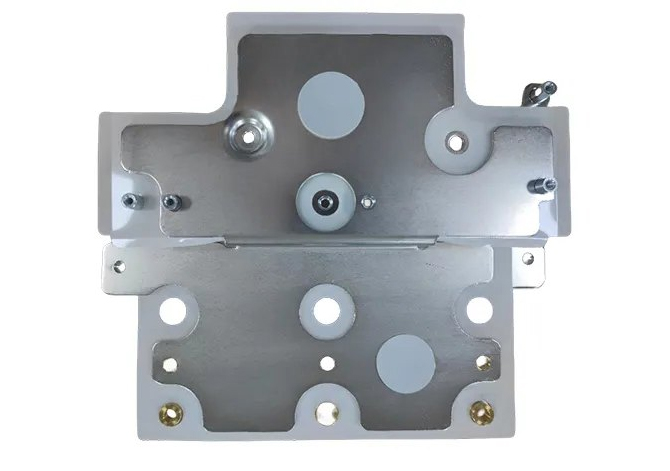
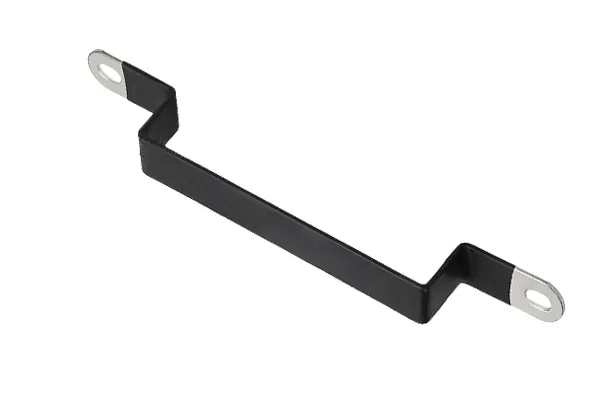
Our factory tin plated copper bus bars are engineered to deliver exceptional conductivity, corrosion resistance, and longevity. Covered with a tin layer on the surface of a pure copper busbar through electroplating or a hot plating process, which is widely used in electric power systems, new energy equipment, rail transportation, communication base stations, and other fields. Its core advantage is that it combines the high conductivity of copper with the corrosion resistance of tin and is suitable for high-current transmission and high-frequency signal shielding scenarios.
| Item Tipo: | stan tegita kupra busdrinkejo |
|---|---|
| Materiala bazo: | Kupro (C11000 aŭ C10100) |
| Tegaĵo: | Stano (mata aŭ hela finpoluro) |
| Larĝo: | 10 mm ĝis 200 mm |
| Dikeco: | 2 mm ĝis 20 mm |
| Longo: | Agordigebla, kutime ĝis 6 metroj |
| Kondukto: | ≥ 98% IACS (Internacia Kura Kupra Normo) |
| Rezisto: | Malalta kontaktorezisto pro stana tegaĵo |
| Tirezo-forto: | 200-400 MPa (depende de la specifa alojo kaj humoro) |
| Plilongigo: | 30-40% (depende de la specifa alojo kaj humoro) |
| Malmoleco: | 40-80 HV (Vickers Malmoleco) |
| Stana Tegaĵo-Dikeco: | 3 ĝis 15 mikronoj (adaptebla) |
| Korodrezisto: | Bonega, pro la stana tegaĵo |
| Funkcia temperaturo: | -55 °C ĝis +105 °C (taŭga por plej multaj elektraj aplikoj) |
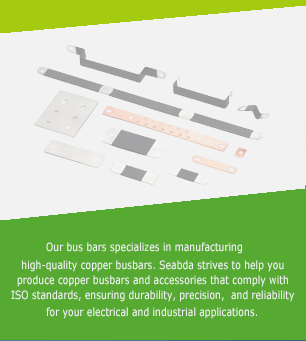
Ĉefa Stano-tegita kupra busstango Fabrikisto
Nia fabriko specialiĝas pri fabrikado de altkvalitaj stanitaj kupraj busoj. Niaj produktoj havas plibonigitan korodan reziston, bonegan elektran konduktivecon kaj plibonigitan soldeblecon. Kun agordeblaj dimensioj kaj konformeco al ISO kaj industriaj normoj, ni certigas fidindajn kaj daŭrajn busstangojn por larĝa gamo de elektraj kaj industriaj aplikoj. Fidu nin por supera rendimento kaj escepta kvalito en ĉiu busdrinkejo, kiun ni produktas.
Parametroj
1. Electrical performanc
- Rated current: 250A to 5000A (adjusted according to cross-section and wire diameter).
- Conductivity: Tinned copper purity ≥ 99.95%, resistivity ≤ 0.01777 Ω-mm²/m (hard state).
- Voltage withstand level: frequency withstand voltage 42kV (dry test), impact withstand voltage 75 kV.
2. Physical Characteristics
- Single wire diameter: 0.05mm to 0.30mm (braided); cross-section range 1.5-6000mm².
- Thickness of tin plating: usually 0.5-2.0 μm (conventional plating), special requirements up to 6 μm or more.
- Mechanical strength: hard state busbar tensile strength ≥200N/mm², soft state elongation ≥35%.
3. Environmental adaptability
- Temperature range: -30℃ to 105℃, some high-temperature-resistant models can reach 200℃.
- Protection grade: IP54 (dustproof and waterproof).
Kiel stanigi kupran busstangon?
1. Copper pretreatment
- Drawing and annealing: High purity copper rods are drawn to the target wire diameter, and the annealing temperature is controlled at 400-550°C to optimize the ductility.
- Acid washing to remove oxidized layer: Use acidic solution (such as hydrochloric acid or flux) to remove surface oxides to ensure plating adhesion.
2. Tin plating process
- Hot-dip plating/electroplating: Copper wires are immersed in a tin furnace (250-260°C) or electroplating bath to form a uniform plating layer. Cooling and cleaning: Water or air cooling is used to remove the surface oxides.
- Cooling and Cleaning: After water or air cooling, clean the residue, add shaft guide oil to prevent the generation of tin ash.
3. Post-treatment and inspection
- Annealing: 600-800℃ annealing to eliminate stress and improve flexibility.
- Quality inspection: including conductivity test, plating thickness measurement (such as X-ray fluorescence method) and corrosion resistance test.
Kiom dika estas la stantegita kupra busbar?
- Conventional applications: 0.5-2.0μm, balancing cost and performance.
- High protection requirements: such as power equipment or marine environment, the thickness of the coating can be more than 6μm.
Kial stano sur kupraj busoj?
Stana tegaĵo sur kupraj busstangoj servas multoblajn celojn. Unue, ĝi plibonigas la korodan reziston de la kupro, plilongigante ĝian vivdaŭron kaj certigante longdaŭran agadon, precipe en humidaj aŭ korodaj medioj. Due, stana tegaĵo disponigas pli glatan surfacan finaĵon, reduktante surfacajn neregulaĵojn kaj plibonigante elektran kontakton kaj konduktivecon. Aldone, stana tegaĵo povas malhelpi oksigenadon de la kupra surfaco, konservante ĝian integrecon kaj elektrajn trajtojn laŭlonge de la tempo. Ĝenerale, stanplatado ofertas plibonigitan fortikecon, konduktivecon kaj fidindecon por kupraj busoj en diversaj aplikoj.
Stanitaj kupraj busdrinkejoj ofertas plurajn avantaĝojn:
1. Anti-oxidation and corrosion resistance
- The tin layer isolates copper from oxygen and moisture, avoiding the generation of copper green (Cu₂(OH)₂CO₃) with poor electrical conductivity, and prolonging the life of the busbar.
2. Improve conductive stability
- Tin plating reduces contact resistance (by about 10-15%), especially in high-frequency or high-current scenarios to reduce energy loss.
3. Enhanced solderability
- Tin has a low melting point (232°C), which makes solder joints easier to form and stronger, making it suitable for automated soldering processes.
4. Adapt to complex environments
- Resistant to salt spray, acid and alkali, suitable for chemical, marine and other corrosive environments.
5. Economy and environmental protection
- Compared with pure silver plating, tin plating cost is lower, and tin non-toxic in line with RoHS standards.
Tin-plated copper bus bars application:
- Power system: transformer, switchgear connection, extra high voltage transmission.
- New energy vehicles: battery pack connection, charging pile internal conductor.
- Communication equipment: 5G base station, data center high frequency signal shielding.

 Esperanto
  English
  Arabic
  German
  Spanish
  French
  Russian
  Danish
  Japanese
  Italian
  Vietnamese
  Turkish
  Dutch
Dutch  Portuguese
  Thai
Thai  Swedish
  Korean
  Greek
Greek  Polish
  Estonian
  Hindi
Hindi  Indonesian
  Latvian