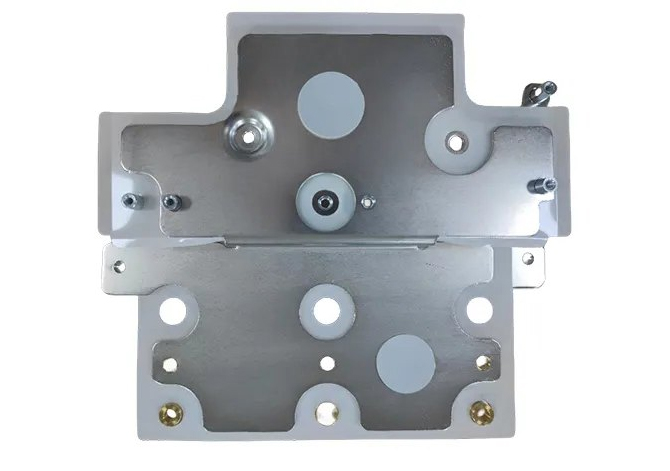
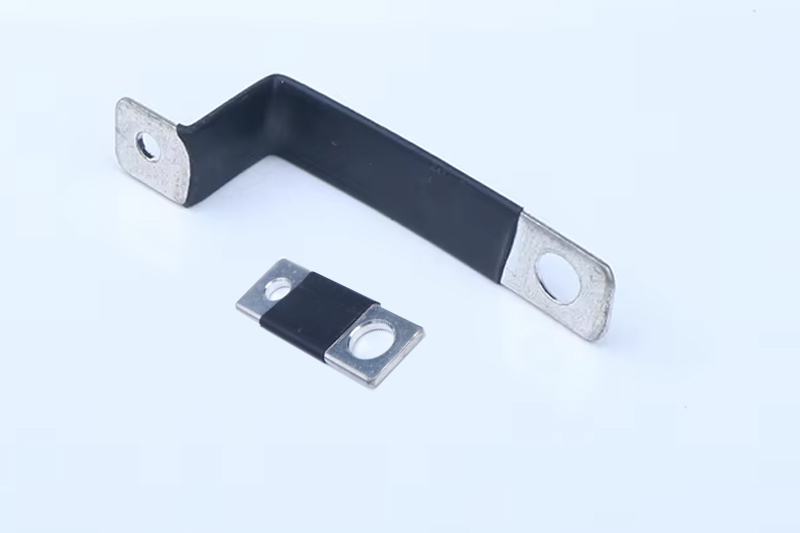
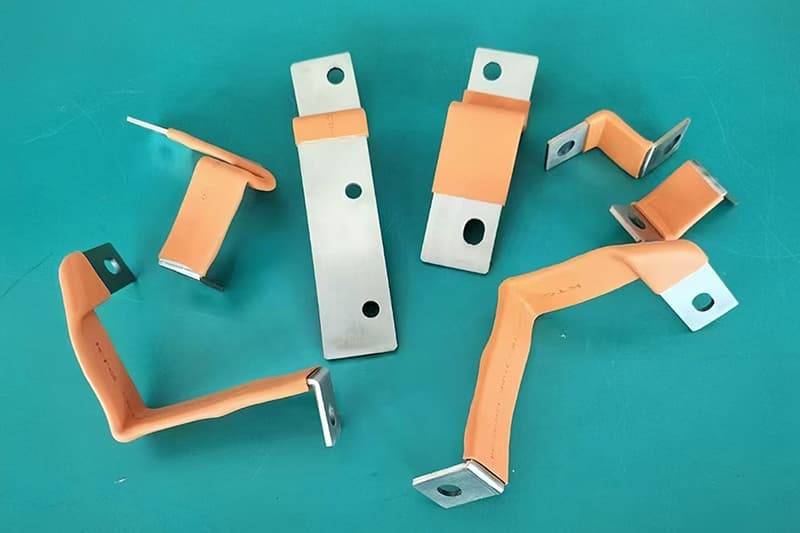
With the rapid development of the new energy industry, the high-current scenario requires increasingly stringent performance of conductive components. With its excellent conductivity, corrosion resistance, and solderability, Barra colectora de cobre estañado has become the core component of new energy vehicles, photovoltaic power generation, and other fields. This article starts from the scientific principles of tin-plating process, combined with 7 technical dimensions, in-depth analysis of the selection criteria and application strategy of the tinned copper busbar, and authoritative data comparison to provide enterprises with landing solutions.
- Mejora de la conductividad y optimización de la estabilidad
- The conductivity of copper itself is as high as 58 S/m, but the conductivity of copper oxide on the surface decreases significantly. After tin plating, tin oxide (SnO₂) has better conductivity than copper oxide (CuO), which can reduce the contact resistance by up to 30%. Experimental data show that the temperature rise of tin-plated copper busbars is 15-20% lower than that of bare copper busbars(under the same current), which significantly reduces power loss.
- Mejora de la resistencia a la corrosión a pasos agigantados
In the salt spray test, the thickness of the tin-plated layer ≥ 25 25μm copper busbar can withstand 1000 hours without corrosion, far more than the limit of 72 hours of bare copper. For example, in coastal photovoltaic power plants, the service life of tinned copper busbars can be extended to more than 15 years, reducing maintenance costs by 40%.
- Mejora del proceso de soldadura
Cuando la rugosidad superficial (valor Ra) del estañado mate se controla entre 0,8 y 1,6 μm, la resistencia de la soldadura aumenta en más de 50%, logrando una conexión fiable sin fundente. El Supercargador Tesla utiliza este proceso para triplicar la eficiencia de la soldadura.
2. Proceso de estañado
| Tipo de proceso |
Espesor del recubrimiento (μm) |
Conductividad (%IACS) |
Escenarios |
Índice de costo (cobre desnudo = 1) |
| Lata brillante |
8-12 |
85-90 |
Cuadros de distribución, piezas exteriores |
1.8 |
| Estaño mate (soldable) |
12-15 |
80-85 |
Piezas de conector, soldadura de PCB |
2.2 |
| Lata de inmersión en caliente |
25-40 |
75-80 |
Equipos, entornos químicos |
3.5 |
- Lata brillante: equilibrio entre estética y función
Adecuado para gabinetes de distribución de energía de centros de datos y otros escenarios que requieren un alto nivel de apariencia, con un brillo de espejo (medido en un ángulo de 60°) de 90GU o más, pero se deben evitar las aplicaciones de soldadura.
- Estaño mate: la solución definitiva para conexiones industriales
La resistencia a altas temperaturas se puede aumentar a 200 °C recubriendo una capa base de níquel (espesor de 2-5 μm), que se utiliza en los módulos de batería Ningde Times, lo que reduce la tasa de soldadura defectuosa a 0,021 TP3T.
- Estaño por inmersión en caliente: una barrera protectora para entornos extremos
In offshore wind power projects, 40μm hot-dip tinned copper busbars are 10 times more resistant to sulfide corrosion than bare copper, which is especially suitable for industrial environments containing H₂S.
3. Espesor del material del revestimiento
- Selección de espesor
- Ambiente seco interior: 12,5 μm (cumple con el estándar de nivel 4 de prueba de niebla salina GB/T 2423.17)
- Entorno húmedo/industrial: 25 μm (aprobó la prueba de grado severo IEC 60068-2-11)
- Ambiente químico/marino: ≥30 μm (consulte la norma NACE TM0172)
- Irreemplazabilidad del cobre puro C110
C110 copper busbars with copper content ≥99.9%, conductivity up to 101% IACS, and bending formability 3 times higher than brass are the best substrates for the tin-plating process. An ultra-high voltage substation project was measured to show that the C110 copper busbar of the current-carrying capacity of 22% higher than the alloy copper.
4. Control de calidad
- Prueba de uniformidad de recubrimiento
El espectrómetro de fluorescencia de rayos X (XRF) se utiliza para el mapeo de espesor y requiere una desviación de ≤±10% (consulte la norma ASTM B568).
- Prueba de unión
Pasar la prueba de flexión (flexión de 180° sin despegarse) y la prueba de choque térmico (ciclo de -40 °C ~ 150 °C durante 5 veces) estipuladas por la norma ISO 2819.
- Actualización del proceso de protección ambiental
Las empresas líderes han adoptado procesos de estañado sin cianuro (por ejemplo, sistemas de citrato), que reducen la toxicidad de las aguas residuales en 90% y cumplen con los estándares RoHS 3.0.
5. Aplicación industrial
- Sistema de alto voltaje para vehículos de nueva energía
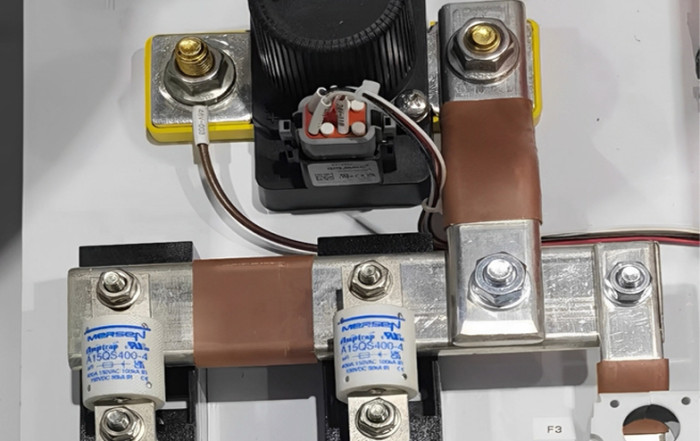
The BYD blade battery module adopts matte tin copper busbars, with contact resistance stabilized at below 0.15 mΩ, supporting 600 A continuous current.
- Optimización de la topología del inversor fotovoltaico
Sunny Power’s latest string inverter uses tinned copper busbars to increase the power density to 1.5W/cm³, and the efficiency breaks through 99%.
Resumir
El avance tecnológico de barra colectora de cobre estañado busbars is reshaping the competitive landscape of the new energy industry. From the quantum-level optimization of electrical conductivity to the reliability of extreme environments, the scientific selection of plating processes and thicknesses has become the core strategy of cost reduction and efficiency. With the strategic deployment of high-end materials, the tinned copper busbar will accelerate to aerospace, smart grid and other cutting-edge areas of penetration, opening a new era of conductive components.



 Spanish
  English
  Arabic
  German
  French
  Russian
  Danish
  Japanese
  Italian
  Vietnamese
  Turkish
  Dutch
Dutch  Portuguese
  Thai
Thai  Swedish
  Korean
  Greek
Greek  Polish
  Estonian
  Esperanto
  Hindi
Hindi  Indonesian
  Latvian