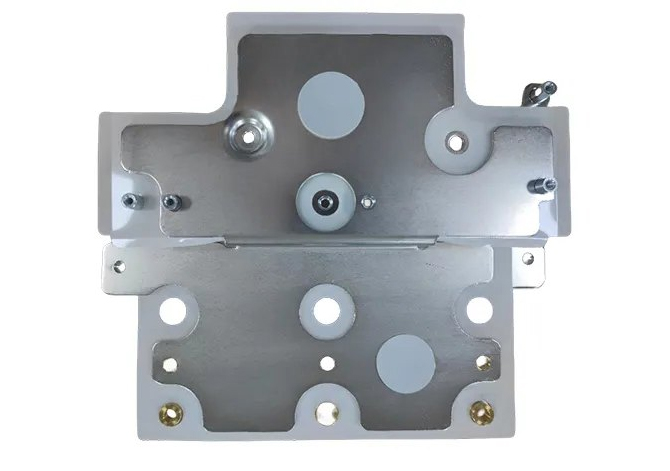
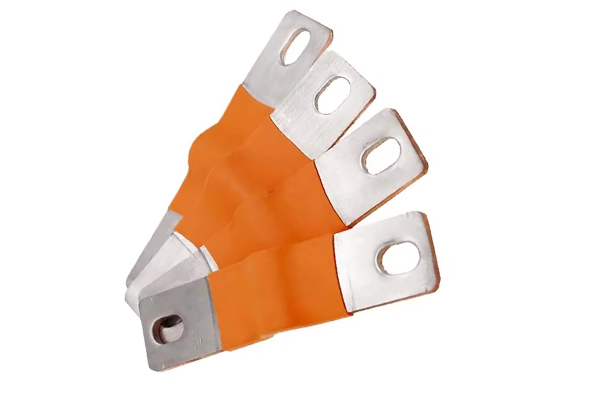
Barra colectora aislada flexible para conexión de baterías
√ Se dobla y se adapta fácilmente para adaptarse a espacios reducidos y diseños complejos.
√ Reduce el riesgo de cortocircuitos y fallos eléctricos.
√ Construcción robusta que soporta tensiones mecánicas.
√ Soporta cargas de corriente importantes, ideal para sistemas de baterías.
Our flexible insulated bus bars are specifically designed for battery connections, offering exceptional electrical performance and safety. Flexible insulated busbar is a kind of power supply and distribution equipment made of flexible conductor compounded with multi-layer insulating material, which combines the current-carrying capacity of traditional busbar and the flexibility of cable. Its core feature lies in the special process to realize large current transmission while adapting to the complex installation environment, such as narrow space, humid environment and so on.
| Tipo de producto | Barra colectora aislada flexible |
|---|---|
| Grado de cobre: | Cobre, níquel cobre |
| PVC (cloruro de polivinilo): | Flexible, rentable y fácil de aplicar. |
| Epoxy: | Proporciona un revestimiento duro y duradero con excelentes propiedades aislantes. |
| Silicona: | Ofrece resistencia a altas temperaturas y flexibilidad. |
| Tubo termorretráctil: | Se contrae firmemente alrededor de la barra colectora cuando se calienta, proporcionando un ajuste perfecto. |
| Recubrimiento en polvo: | Se aplica como polvo y luego se cura para formar una capa protectora sólida. |
| Temperatura de funcionamiento: | -36 °C ~ 65 °C |
| Goma: | Proporciona buen aislamiento eléctrico y protección mecánica. |
| Solicitud: | Conexiones de baterías, distribución de energía, inversores solares y sistemas de turbinas eólicas, etc. |
| Load Capacity: | 125A-6000A (up to 12000A |
| Voltaje nominal: | 600V-1000V (AC)/750V-1500V (DC |
| Bend radius: | Minimum 6 times the diameter of the busbar, adapted to the complex wiring |
| Insulation Resistance: | ≥15000MΩ (3.5kV withstand voltage test without breakdown) |
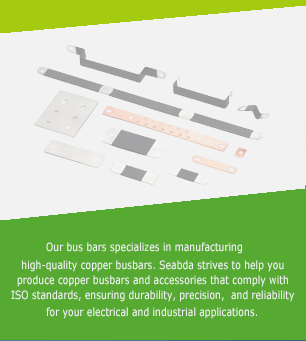
Fabricante líder de barras colectoras aisladas flexibles
As a manufacturer of flexible insulated busbars, we specialized in innovative solutions for battery connections and power distribution systems. Our busbars are designed to offer superior electrical performance, high flexibility, and robust insulation to ensure safety and reliability in various applications.
Product structure of flexible insulated busbars
- Conductor layer: composed of flexible copper wire rows or tinned copper tape, providing high conductivity and flexibility.
- Wrapping layer: Polyester film or PTFE tape is used to wrap the conductor, enhancing insulation and anti-electromagnetic interference.
- Insulation Layer: The main insulating materials include polyvinyl chloride (PVC), cross-linked polyethylene (XLPE) or silicone rubber, with a thickness of 1.8-2.1mm, providing electrical isolation.
- Armor Layer: Interlocking metal armor (e.g., stainless steel tape) provides mechanical protection against external damage.
- Sheath layer: The outer layer is made of flame retardant and corrosion resistant material (such as halogen free PVC), with protection level up to IP68.
Production process of flexible insulated busbars
1. Conductor processing
- Copper/aluminum is drawn into fine wires by wire drawing machine and annealed to enhance flexibility.
- The stranding process weaves multiple strands of conductors into flexible copper wire rows to enhance current-carrying capacity.
2. Insulation treatment
- Wrapping layer: polyester film or mica tape is wrapped by automatic wrapping machine to reduce partial discharge.
- Extrusion molding: PVC or XLPE evenly cover the conductor through high temperature extruder, thickness error ≤ 0.1mm.
3. Armor and sheath
- The metal armor layer wraps the insulating layer through interlocking technology to enhance the compressive strength (can withstand 50kA short-circuit current).
- The outer sheath adopts co-extrusion technology to ensure weather resistance and flame retardancy.
4. Testing and Packaging
- Voltage withstand test: 3.5kV frequency withstand voltage for 1 minute without breakdown.
- Intelligent detection: integrated current/temperature sensor, support real-time online monitoring.
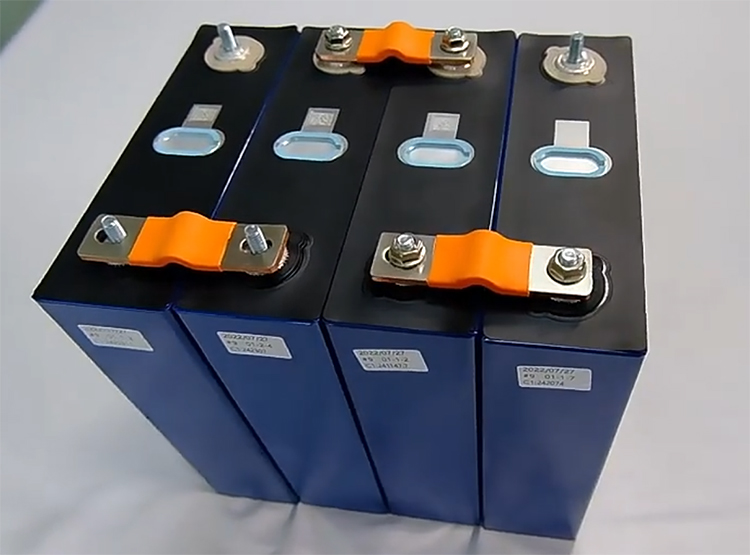
¿Qué es una barra colectora aislada?
Insulated busbar is a power transmission and distribution equipment that realizes electrical isolation by wrapping insulating material outside the conductor, which is different from the bare rigid busbar. Its classification includes:
- Flexible insulated busbar: adopting multi-layer flexible conductor and insulation structure, suitable for dynamic or complex environment.
- Tubular insulated busbar: copper tube as conductor, covered with PTFE insulation, used in high-voltage scenarios (e.g. substations).
- Enclosed busway: metal shell embedded insulated busbar, mostly used in building power distribution.
Principales características y beneficios
- Eficiente energéticamente: Large surface area of the conductor, low skin effect, reducing line loss by more than 30%.
- Seguro y confiable: 3.5kV voltage without breakdown, insulation resistance ≥ 15000MΩ, support for outdoor wet environment.
- Convenient installation: Flexible structure without customized elbow, installation efficiency increased by 60%.
- Cost optimization: No intermediate joints, construction costs reduced by 50%, maintenance-free for life.
¿Cómo aislar una barra colectora?
El aislamiento de una barra colectora implica aplicar una capa protectora alrededor del material conductor para evitar cortocircuitos eléctricos, proteger contra factores ambientales y garantizar una manipulación segura. A continuación, se indican algunos métodos habituales para aislar una barra colectora:
1. Material selection
- High temperature scenario: PTFE (temperature resistance 340℃) or silicone rubber (temperature resistance 200℃).
- Environmental scenario: halogen-free flame retardant materials (oxygen index ≥ 30%).
2. Technology
- Multi-layer winding: alternately winding semi-conductive tape and insulating tape to eliminate electric field concentration.
- Vacuum impregnation: filling epoxy resin for tubular busbars to enhance insulation strength.
- Co-extrusion molding: synchronous extrusion of conductor shielding layer and main insulation layer to reduce interface defects.
3. Liquid Insulation
Se pueden aplicar compuestos aislantes líquidos a la barra colectora para obtener una capa aislante flexible y sin uniones.
Pasos:
- Barra colectora limpia: asegúrese de que la superficie de la barra colectora esté limpia.
- Aplicar aislamiento líquido: Cepille, rocíe o sumerja la barra colectora en el compuesto de aislamiento líquido.
- Secar y curar: Deje que el compuesto se seque y se cure de acuerdo con las instrucciones del fabricante.

 Spanish
  English
  Arabic
  German
  French
  Russian
  Danish
  Japanese
  Italian
  Vietnamese
  Turkish
  Dutch
Dutch  Portuguese
  Thai
Thai  Swedish
  Korean
  Greek
Greek  Polish
  Estonian
  Esperanto
  Hindi
Hindi  Indonesian
  Latvian