
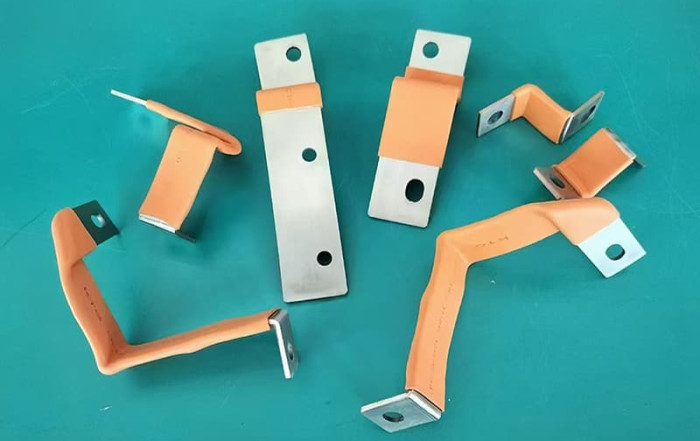
Under the wave of the new energy revolution and intelligent manufacturing, the copper busbar, as the core conductive material of the electrical system, has a direct impact on the safety and efficiency of the equipment due to its performance difference. With different physical properties and application scenarios, flexible copper busbars and solid copper busbars have become key components in the fields of power transmission, new energy vehicles, and industrial equipment. In this paper, from the material science, performance parameters, economy, and other ten dimensions of comparative analysis, combined with authoritative industry data and cases, to reveal the essential differences and synergistic value of the two for engineering design and selection to provide systematic reference.
What are materials and production process?
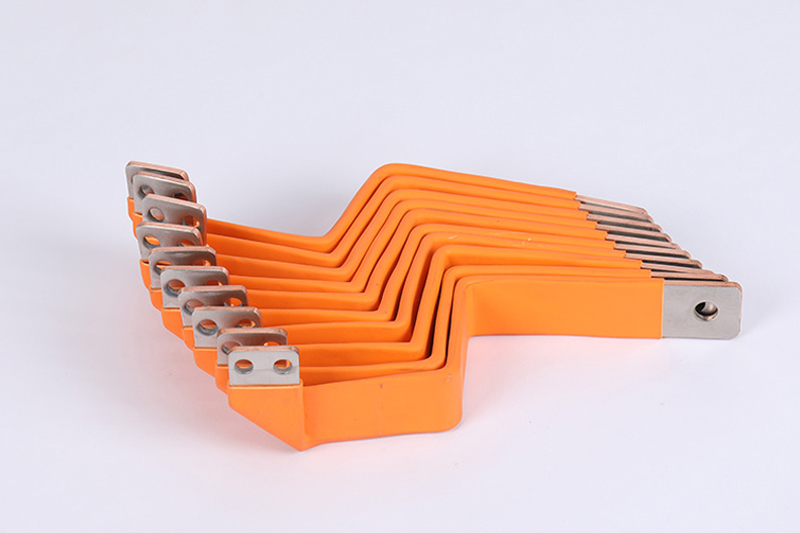
The core difference between flexible copper and solid copper begins with the annealing process. Flexible copper busbar through the high-temperature annealing (about 400-700 ℃) to eliminate internal stress so that the copper grain rearrangement forms a more uniform structure. This process gives it a hardness value as low as 20-40 HV, while solid copper busbars , due to the unannealed treatment, can reach a hardness of 80-120 HV. For example, Jiangsu KMET points out that the elongation of flexible copper busbars can reach more than 40%, while solid copper busbars are only 10-20%.
How is electrical conductivity?
Although both conductivities are more than 98% IACS (International Annealed Copper Standard), the flexible copper busbar, due to multi-stranded filaments or layered structure, has an effective surface area that is 30%-50% higher than the solid copper busbar. Under the skin effect, the high-frequency current is more concentrated in the surface layer of the conductor, and the current-carrying capacity of the flexible copper busbar can be increased by 15%-25% compared with the same cross-sectional area of the solid copper busbar (measured data: 1000A soft copper busbar vs. 850A solid copper busbar ). The dense structure of solid copper is more stable in DC scenarios, which is suitable for high-current static transmission.
| Parameters | Flexible Copper Busbar | Solid Copper Busbar |
|---|---|---|
| Conductivity | ≥99.9% IACS | ≥99.6% IACS |
| Typical Current Carrying Capacity | 1000A(50mm²) | 850A(50mm²) |
| Frequency Range | 1kHz-10MHz | 0-60Hz |
| Convergence Depth (60Hz) | 8.5mm | 8.5mm |
How is mechanical Strength?
The tensile strength of solid copper (250-400 MPa) is significantly higher than that of flexible copper (200-250 MPa), but it performs very differently under dynamic loading. Tests by Foshan City Zolt Electric show that only 0.2% fatigue damage occurs after 100,000 bending cycles for soft copper busbars, while the risk of fracture for solid copper busbars under the same conditions reaches 80%. This characteristic makes it the preferred choice for battery pack connections in new energy vehicles – the frequency range of vehicle vibration (5-200 Hz) requires materials that are resistant to micro-motion wear.
How is thermal Management?
The multi-layer structure of flexible copper busbars creates a natural heat dissipation channel, and its thermal conductivity can reach 380 W/(m-K), which is about 5%-8% higher than that of solid copper busbars. In the Tesla Model S battery module, the soft copper busbar reduces the operating temperature by 15°C through the copper foil stacking design, effectively extending the life of the battery cell. Solid copper busbar in the high-temperature environment (>150 ℃) due to the strong stability of the grain boundary, more suitable for transformer windings and other static high-heat scenes.
How is installation adaptability?
Flexible copper busbar can absorb ±3mm assembly tolerance, while solid copper busbar only allows ±0.5mm error. The case of Kunshan Xiaowei Cloud shows that the installation efficiency of the battery pack production line using flexible copper busbar increased by 40%, and the rework rate decreased from 12% to 0.5%. Although the rigid structure of solid copper busbars requires precision machining, zero-gap docking can be realized in fixed scenarios such as high-voltage switchgear.
How is life cycle costing?
The initial cost of flexible copper busbars is 30%-50% higher than that of solid copper busbars (in terms of 50mm² specifications, soft copper busbars are about $20/m, and solid copper busbars are ¥80/m). However, according to the calculation of Qijia.com, its maintenance cycle is extended by more than 3 times, and the total cost can be reduced by 28% in 10 years. Solid copper busbars have a low procurement cost advantage in the distribution room and other low vibration scenarios are still competitive.
Corrosion resistance
Flexible copper busbar: Due to the low density of the grain boundary, chemical corrosion resistance is weak; it needs to be tinned or coated with an insulating layer (such as silicone or PVC) to enhance the protection. The dense surface layer of solid copper busbars can naturally resist 80% of industrial corrosive media and can be used in chemical equipment without additional treatment.
Process complexity
Flexible copper busbars need to use polymer diffusion welding (temperature 500-800 ℃, pressure 10-50 MPa) to achieve metallurgical bonding between the layers of copper foil, a process more time-consuming than the solid copper busbars of stamping and bending 3-5 times more. However, the technology can be customized with shaped cross sections, such as the 3D braided flexible copper busbars used in Tesla 4680 batteries, with a 60% increase in space utilization.
Environmental adaptability
Flexible copper busbars in -40°C still maintain flexibility (elongation at break> 35%), while solid copper busbars below -20°C are embrittled. But in a >200 ℃ environment (such as an electric arc furnace electrode), a solid copper busbar of oxidation resistance is better and has a longer life than a flexible copper busbar, extending it 2 times.
Future trends
The industry is exploring flexible and solid composite copper busbars (such as core solid copper + surface flexible copper), both with high current-carrying and anti-vibration characteristics. A patent published by Ningde Times shows that the structure can reduce battery connection impedance by 18% and increase cycle life to 6,000 times. In addition, new materials such as graphene-coated copper busbars (25% higher conductivity) will reshape the industry landscape.
Conclusion
The essence of the competition between flexible copper busbar and solid copper busbar is the dialectical unity of flexible conduction and rigid support. In new energy, 5G base stations, smart grids, and other emerging fields, flexible copper busbars dominate by virtue of dynamic adaptability, while traditional electric power and heavy industry still rely on the stable output of solid copper busbars. In the future, the integration of the two innovations will promote the conductive materials into a new era of “rigid-flexible.” Engineering designers need to consider the current characteristics, mechanical loads, environmental factors, and full-cycle costs to choose the optimal solution.
Related Post
Why can’t a copper busbar and an aluminum busbar be directly connected?
[email protected]2025-12-08T02:54:03+00:00December 8th, 2025|0 Comments
Introduction Copper busbars and aluminum busbars are the two most commonly used conductive materials in the field of power systems and industrial distribution. Due to differences in cost, resource availability, and technical requirements, they often
How to Prepare for a Big Win at Tez888 Casino
Developer Ismail2025-10-04T21:44:04+00:00October 4th, 2025|0 Comments
When aiming for a significant payout at Tez888 casino, one crucial step often overlooked is thorough receipt checking and verification. Properly managing your transaction records not only ensures transparency but also plays a vital role
Tips and Tricks for Successful Betting on Bettilt
Developer Ismail2025-08-17T05:29:18+00:00August 17th, 2025|0 Comments
When engaging in online betting, particularly on platforms like bettilt, it's crucial to incorporate strategies such as receipt checking, tax optimization, and thorough verification to maximize your success. These elements ensure that your betting activities

How Do You Calculate the Size of a Copper Busbar?
[email protected]2025-06-06T06:54:57+00:00June 6th, 2025|0 Comments
1. Introduction to Busbar Sizing Accurate copper busbar sizing is vital for secure, dependable, and effective electric circulation. Busbars disperse high currents in switchgear and panelboards. Inappropriate sizing reasons extreme warmth, power loss, voltage
10 Essential Tips for Working with Copper Busbars
[email protected]2025-06-03T06:35:28+00:00June 3rd, 2025|0 Comments
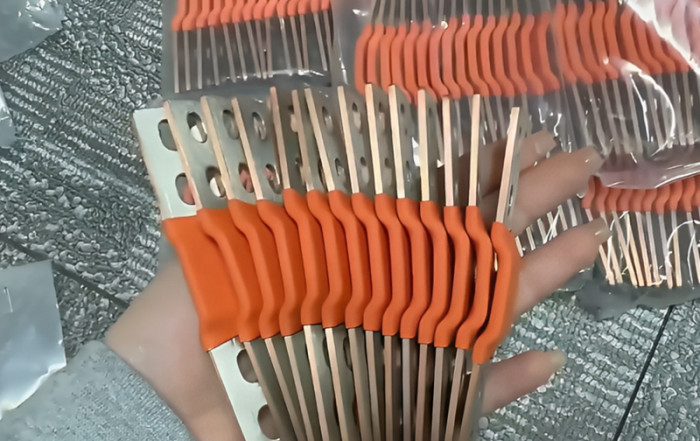
In modern power systems, copper busbars have actually become a core element in power transmission and distribution because of their superb electric conductivity, rust resistance and mechanical strength. As a specialist manufacturer of copper
A Guide to Maintaining Copper Busbars Effectively
[email protected]2025-05-28T06:09:36+00:00May 28th, 2025|0 Comments
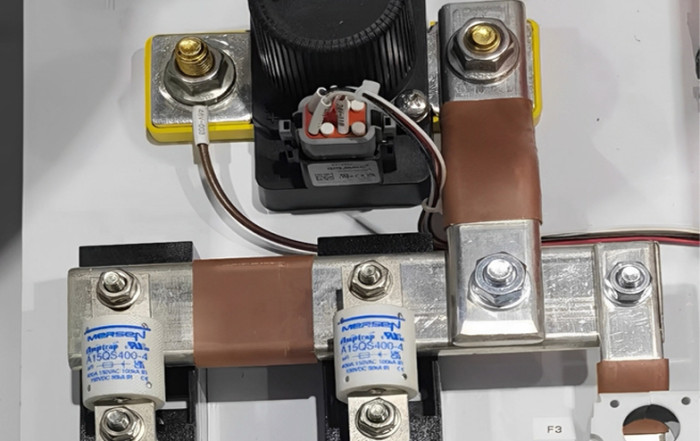
As a core component of power transmission systems, copper busbars are an important choice for industry due to their high electrical conductivity, corrosion resistance and mechanical strength. However, the durability of its performance is
Get IN TOUCH
We Deliver Any Customize Busbars
Related Posts
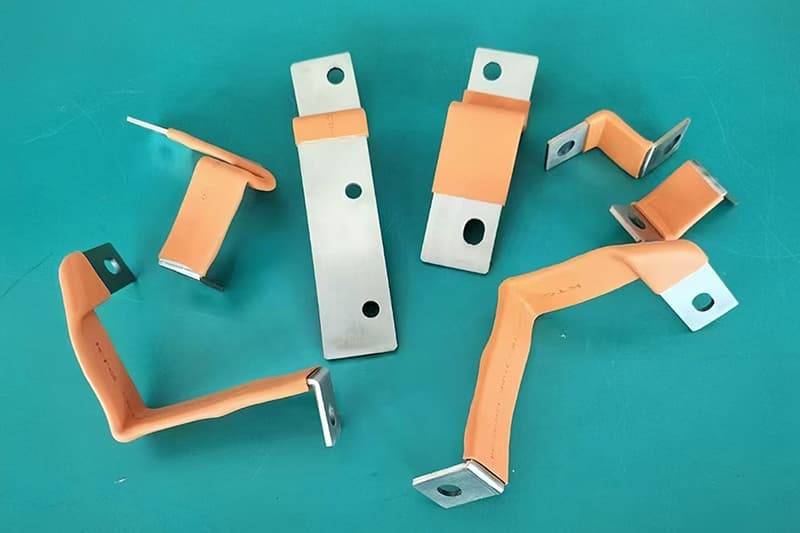
Introduction Copper busbars and aluminum busbars are the two most commonly used conductive materials in the field of power systems and industrial distribution. Due to differences in cost, resource availability, and technical requirements, they often need to be connected and used in practical applications. However, directly connecting copper aluminum busbars can pose serious safety hazards.

When aiming for a significant payout at Tez888 casino, one crucial step often overlooked is thorough receipt checking and verification. Properly managing your transaction records not only ensures transparency but also plays a vital role in tax optimization. Understanding the legal framework surrounding gambling winnings and maintaining accurate documentation will help you navigate potential audits
-
When engaging in online betting, particularly on platforms like bettilt, it’s crucial to incorporate strategies such as receipt checking, tax optimization, and thorough verification to maximize your success. These elements ensure that your betting activities remain transparent, compliant with legal requirements, and financially efficient. By focusing on these areas, bettors can safeguard their investments and

 English
  Arabic
  German
  Spanish
  French
  Russian
  Danish
  Japanese
  Italian
  Vietnamese
  Turkish
  Dutch
Dutch  Portuguese
  Thai
Thai  Swedish
  Korean
  Greek
Greek  Polish
  Estonian
  Esperanto
  Hindi
Hindi  Indonesian
  Latvian