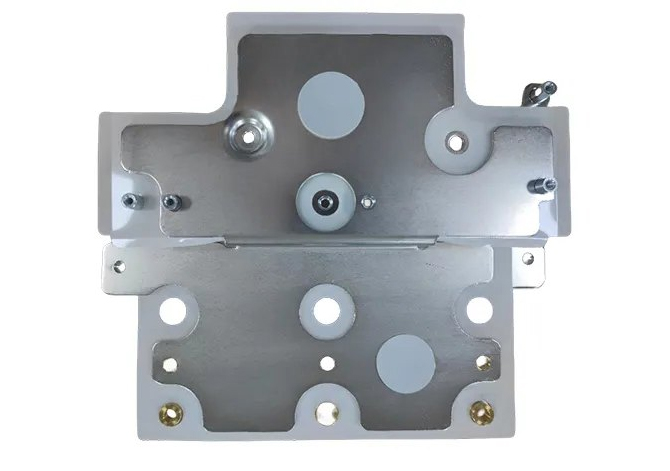
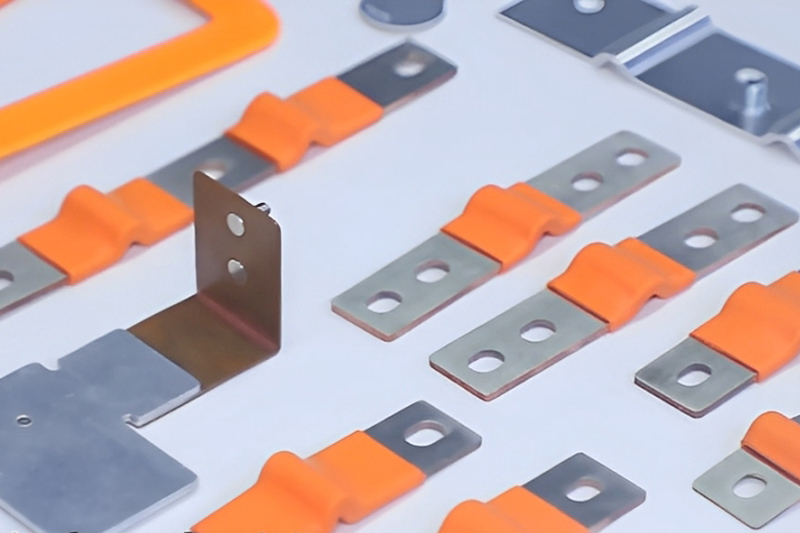
Under the background of new energy revolution and accelerated construction of smart grid, flexible busbar is reshaping the pattern of high-current power transmission and distribution by virtue of its breakthrough advantages, such as single load capacity up to 6300A, reduction of 90% of joint failures, and improvement of construction efficiency by 60%, etc. This article systematically analyzes the technical characteristics, design points and industry applications of flexible busbar. This article systematically analyzes the technical characteristics, design points and industry applications of flexible busbar, combined with the national grid project cases and data from authoritative institutions, to provide engineering decision makers with a complete guide from the principle of cognition to practice landing.
1. Technical Definition and Core Value of Flexible Busbar
a.Structural breakthrough: the integration of cable and busbar innovation
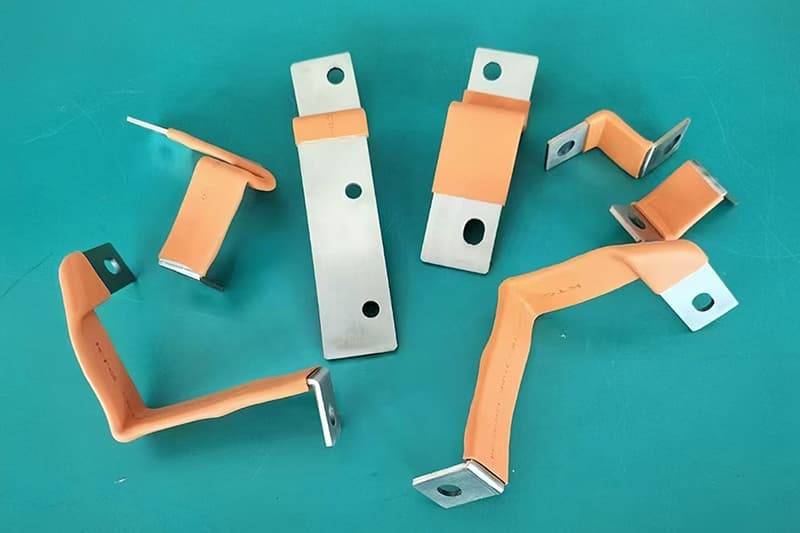
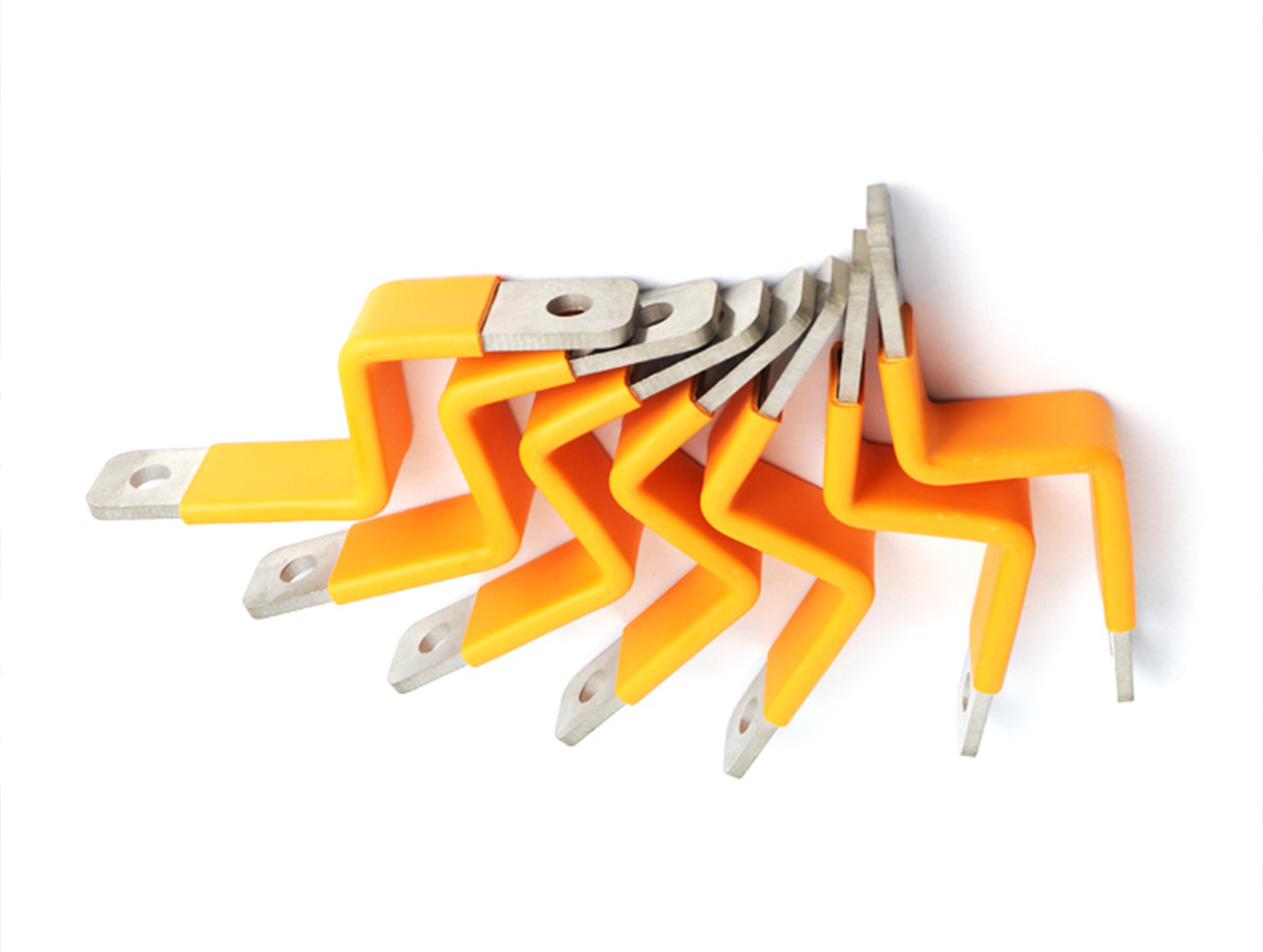
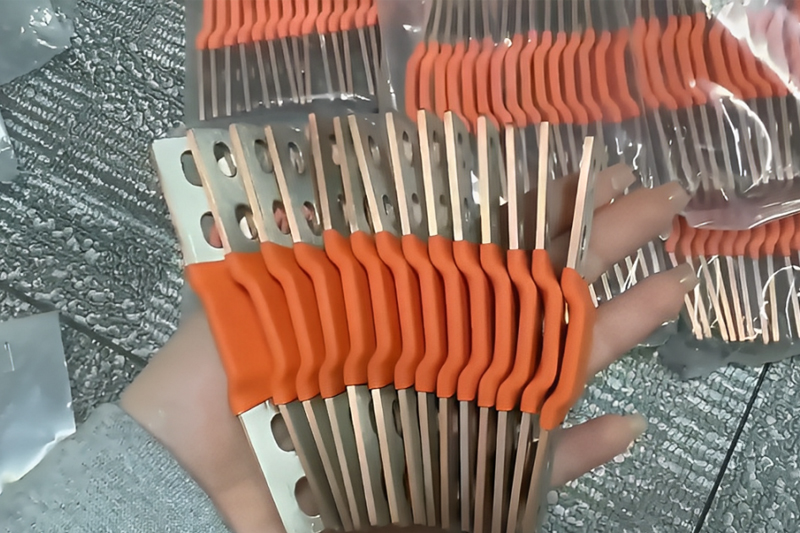
Flexible busbar adopts high-purity copper wire row conductor as the core, and realizes performance upgrades through a multi-layer composite structure:
- Conductor layer: 0.2mm ultra-thin copper tape stacking technology; current density increased by 30%
- Insulation layer: three-layer co-extruded cross-linked polyethylene (XLPE), temperature resistance level of 125 ℃
- Armor layer: stainless steel woven mesh, tensile strength >500N/mm²
- Protection layer: flame retardant polyurethane (PU) material, UL94 V-0 certified
| Parameters | Conventional Busway | Multi-Patch Cable | Flexible Busbar |
|---|---|---|---|
| Single Load Capacity(A) | 4000 | 1600*4 | 6300 |
| Number of joints/100m | 33 | 48 | 0-2 |
| Construction Cycle (Days) | 15 | 12 | 5 |
| Full Life Cycle Cost | $700k | $120k | $90k |
b.Disruptive Advantage Matrix
- Safety and reliability: Passed IEC 61439 full set of tests, short-circuit withstand capability of 100kA/1s.
- Space economy: cross-section utilization rate increased by 40%, bridge filling rate <30%.
- Environmental adaptability: IP68 protection level, -40°C~120°C wide temperature range operation.
- Cost reduction and efficiency: the construction cycle is shortened by 60%, and the whole life cycle maintenance cost is reduced by 55%.
2. Technical Decision Points of Flexible Busbar Design
a. Golden rule of conductor selection
According to the IEEE 835-2024 standard, the recommended formula for calculating current-carrying capacity:
Where:
- ( K ): material factor (copper = 1.0, aluminum = 0.61)
- ( S ): conductor cross-sectional area (mm2)
- ( T ): allowable temperature rise (°C))
Engineering practice recommendation:
- Photovoltaic power stations: Prefer copper conductors, corrosion resistance class C5 is required
- Data centers: low-smoke halogen-free type, smoke density <15%
- Marine power: the armor layer needs to pass the salt spray test >2000 hours
b. Dynamic Stability Design
For vibration scenarios such as wind farms, it needs to be adopted:
- Three-dimensional damping bracket: vibration attenuation rate>65% (GB/T 2423.10)
- Bellows connector: axial compensation ±15mm, radial swing angle 30°
3. Industry Application Mapping and Implementation Strategy
A.Key players in the new energy revolution
- Optical storage and charging integration: In the Ningde Times supercharging station project, the flexible busbar realizes 600A DC fast charging for a single pile, and the charging efficiency is improved by 25%
- Offshore wind power: waterproof flexible busbar is used in Three Gorges Yangjiang project, with transmission distance exceeding 3km and loss <1.5%
Midea’s intelligent manufacturing base is transformed by flexible busbar:
- 300% increase in production line power capacity
- Fault response time shortened from 4 hours to 15 minutes.
- Annual electricity cost savings of $0.7 million
4. Industry Trends and Technological Innovation
a. Material Technology Breakthroughs
- Nano-copper composites: conductivity increased to 108% IACS, cost reduced by 40% (CAS 2025 annual report)
- Intelligent sensing layer: embedded distributed fiber optic sensors, real-time temperature/deformation monitoring
b. Standard System Evolution
- GB/T 7251.8-2025: new flexible busbar seismic grade standard (seismic intensity 9 degrees)
- UL 857: 2000V DC system certification to be included in 2026
5. Implementation Path Suggestions
- planning stage: conduct full life cycle cost analysis (LCCA), focusing on evaluating space compression benefits and O&M cost savings
- design phase: use BIM+digital twin technology to simulate complex path laying schemes
- Construction phase: Prefer prefabricated joints to reduce the difficulty of on-site construction.
Conclusion Flexible busbar is triggering a paradigm revolution in the field of power transmission and distribution, and its spatial adaptability, energy efficiency performance and full-cycle economy have been verified in benchmark projects such as the China-Korea Industrial Park and the Smart Grid in Xiong’an New Area. It is predicted that the field will maintain a compound growth rate of 23.6% from 2025 to 2030, and engineering decision makers are advised to grasp the technology window and accelerate the upgrade of power infrastructure.
Related Post
Why can’t a copper busbar and an aluminum busbar be directly connected?
[email protected]2025-12-08T02:54:03+00:00December 8th, 2025|0 Comments
Introduction Copper busbars and aluminum busbars are the two most commonly used conductive materials in the field of power systems and industrial distribution. Due to differences in cost, resource availability, and technical requirements, they often

How Do You Calculate the Size of a Copper Busbar?
[email protected]2025-06-06T06:54:57+00:00June 6th, 2025|0 Comments
1. Introduction to Busbar Sizing Accurate copper busbar sizing is vital for secure, dependable, and effective electric circulation. Busbars disperse high currents in switchgear and panelboards. Inappropriate sizing reasons extreme warmth, power loss, voltage
10 Essential Tips for Working with Copper Busbars
[email protected]2025-06-03T06:35:28+00:00June 3rd, 2025|0 Comments
In modern power systems, copper busbars have actually become a core element in power transmission and distribution because of their superb electric conductivity, rust resistance and mechanical strength. As a specialist manufacturer of copper
A Guide to Maintaining Copper Busbars Effectively
[email protected]2025-05-28T06:09:36+00:00May 28th, 2025|0 Comments
As a core component of power transmission systems, copper busbars are an important choice for industry due to their high electrical conductivity, corrosion resistance and mechanical strength. However, the durability of its performance is
How to Install Copper Bus Bars for Electrical Systems
[email protected]2025-05-27T07:25:44+00:00May 27th, 2025|0 Comments
As a copper busbar manufacturer, we are well aware of its central role in electrical systems. With its excellent electrical conductivity, mechanical strength and corrosion resistance, copper busbar has become a key component in
Everything you need to know about copper busbars
[email protected]2025-05-19T02:55:47+00:00May 15th, 2025|0 Comments
Nam lacinia arcu tortor, nec luctus nibh dignissim eu nulla sit amet maximus.
Get IN TOUCH
We Deliver Any Customize Busbars
Related Posts
Introduction Copper busbars and aluminum busbars are the two most commonly used conductive materials in the field of power systems and industrial distribution. Due to differences in cost, resource availability, and technical requirements, they often need to be connected and used in practical applications. However, directly connecting copper aluminum busbars can pose serious safety hazards.


 English
  Arabic
  German
  Spanish
  French
  Russian
  Danish
  Japanese
  Italian
  Vietnamese
  Turkish
  Dutch
Dutch  Portuguese
  Thai
Thai  Swedish
  Korean
  Greek
Greek  Polish
  Estonian
  Esperanto
  Hindi
Hindi  Indonesian
  Latvian