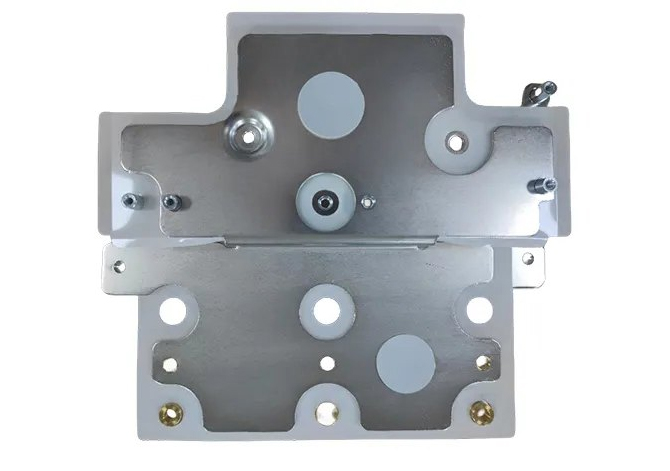
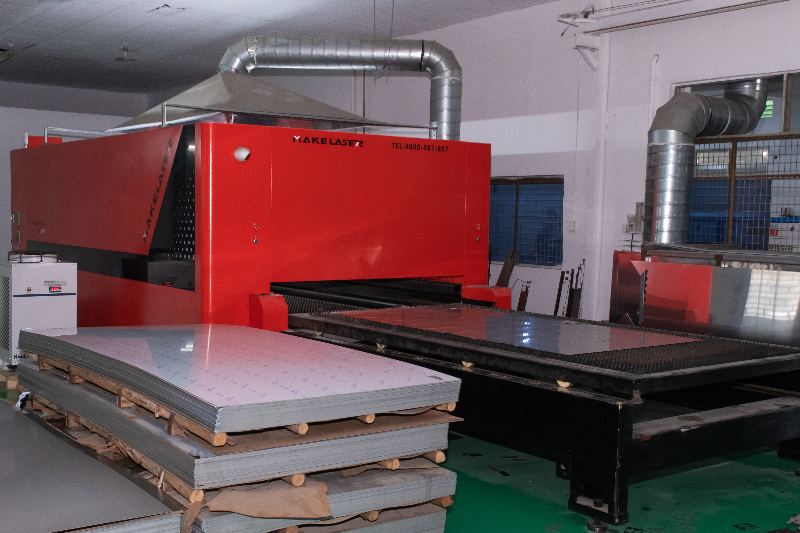
As the core carrier of the power transmission system, the manufacturing process of the jeu de barres en cuivre directly affects the stability of the power grid and equipment life. In this paper, from the material science, processing technology, and quality inspection of three dimensions, the system combines copper busbar manufacturing with 8 key technologies, combined with international standards and industry cutting-edge data (such as GB/T 5585.1-2005 and IEC 60287), revealing high conductivity and high mechanical strength busbar manufacturing logic, and through the performance of comparative tables and process parameter analysis, it provides practical guidance for power equipment manufacturers. Guidance.
Step 1. Material Selection
Copper purity determines electrical conductivity and mechanical strength
Copper busbars need to use electrolytic copper or oxygen-free copper; purity needs to be ≥ 99.95%; silver content control in 0.002%-0.02% can improve creep resistance. Experiments have shown that for every 0.1% reduction in copper purity, the conductivity decreased by about 1.2% IACS (International Annealed Copper Standard), while the loss of tensile strength was up to 5%.
Step 2. Melting process
Charcoal Covering Method for Efficient Deoxidation
When melting in an IF furnace, the surface of the copper liquid needs to be covered with a charcoal layer 135mm thick to reduce the oxygen content to less than ppm and to avoid localized resistance increase caused by copper oxide inclusions. The temperature needs to be precisely controlled at 1145-1155℃ (), and the copper liquid is conveyed through the submerged structure to reduce the bubble residue.
Step 3. Molding process
Continuous extrusion technology to improve the rate of formation
After crystallization in the continuous casting machine, copper rods are continuously extruded at 490°C, with frictional heat replacing external heating, saving energy by 30%. The cross-sectional shrinkage of the extruded copper billet is ≤3%, and the material utilization rate reaches 95%, which is better than 85% in the traditional forging process.
| Process type | Completion rate | Energy consumption (kWh/t) | Surface roughness (Ra/μm) |
|---|---|---|---|
| Continuous Extrusion | 95% | 120 | 1.6 |
| Conventional Forging | 85% | 180 | 3.2 |
Step 4. Precision Machining
CNC machining ensures ±0.5mm accuracy
When using a three-in-one busbar processing machine (punching + bending + cutting), the error of the punching center distance ≤ 0.5 mm, the bending radius needs to be ≥ 2.5 times the width of the busbar. Surface roughness needs to be ≤ Ra1.6, and enhanced corrosion resistance needs to be enhanced through galvanization (10-20 μm) or chemical polishing.
Step 5. Bending Process
Cold bending process to avoid lattice damage
Copper busbars need to be formed by cold bending; the heating temperature is strictly prohibited from exceeding 250℃ (). Vertical bending and flat bending of the curvature need to be ≤ 2 mm/m and 3mm/m, respectively; after bending, it needs to be annealed, with residual stress reduction of 60% ().
Step 6. Connection Technology
Torque wrench to guarantee contact reliability
Bolt tightening force needs to comply with the standards of Table 9 , M12 bolt recommended torque of 45-50 N-m). Contact resistance can be reduced to 0.15 μΩ-m² after embossing treatment on the contact surface, which is 40% less than the untreated surface ().
Step 7. Insulation Treatment
Double-layer heat-shrink tubing improves insulation level
Radiation cross-linked polyolefin heat-shrinkable tubing (temperature resistant to 125°C) is used with a thickness of ≥1.2mm and a shrinkage rate of ≥50%. Comparative tests show that the breakdown voltage of double-layer heat-shrinkable tubing reaches 35 kV/mm, which is 80% higher than single-layer.
Step 8. Quality Inspection
Four-dimensional testing system to ensure product consistency
- Electrical properties: conductivity ≥ 100.3% IACS (), insulation resistance ≥ 1000Ω / V ()
- Mechanical properties: hardness ≥ 85HB, bending times ≥ 120 times ()
- Dimensional inspection: three-dimensional laser scanner accuracy ± 0.05mm
- Metallographic analysis: grain size grade ≥6 (ASTM E112)
Conclusion
Barre omnibus en cuivre manufacturing is a fusion of material science and precision machining, which requires the establishment of standardized processes in purity control, molding process, and connection technology. Through the introduction of automated equipment (and real-time monitoring systems), the product qualification rate can be significantly improved. In the future, with the application of copper-silver composites, the current-carrying capacity of copper busbars is expected to exceed 6,000 A/cm², promoting the upgrading of the smart grid.
Product Categories
〉 Barre omnibus en cuivre étamé
〉 Barre omnibus en cuivre nickelé
〉 Barre omnibus en cuivre plaqué argent
〉 Barre omnibus flexible en cuivre
〉 Barre omnibus flexible laminée
Related Post
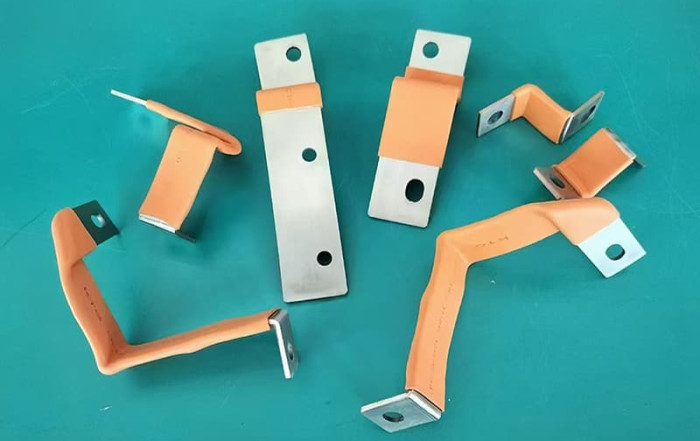
Why can’t a copper busbar and an aluminum busbar be directly connected?
[email protected]2025-12-08T02:54:03+00:00décembre 8th, 2025|0 Comments
Introduction Copper busbars and aluminum busbars are the two most commonly used conductive materials in the field of power systems and industrial distribution. Due to differences in cost, resource availability, and technical requirements, they often

How Do You Calculate the Size of a Copper Busbar?
[email protected]2025-06-06T06:54:57+00:00juin 6th, 2025|0 Comments
1. Introduction to Busbar Sizing Accurate copper busbar sizing is vital for secure, dependable, and effective electric circulation. Busbars disperse high currents in switchgear and panelboards. Inappropriate sizing reasons extreme warmth, power loss, voltage
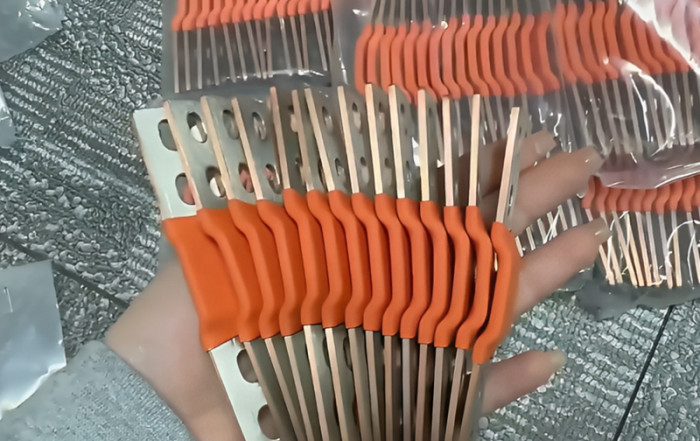
10 Essential Tips for Working with Copper Busbars
[email protected]2025-06-03T06:35:28+00:00juin 3rd, 2025|0 Comments
In modern power systems, copper busbars have actually become a core element in power transmission and distribution because of their superb electric conductivity, rust resistance and mechanical strength. As a specialist manufacturer of copper
A Guide to Maintaining Copper Busbars Effectively
[email protected]2025-05-28T06:09:36+00:00mai 28th, 2025|0 Comments
As a core component of power transmission systems, copper busbars are an important choice for industry due to their high electrical conductivity, corrosion resistance and mechanical strength. However, the durability of its performance is
How to Install Copper Bus Bars for Electrical Systems
[email protected]2025-05-27T07:25:44+00:00mai 27th, 2025|0 Comments
As a copper busbar manufacturer, we are well aware of its central role in electrical systems. With its excellent electrical conductivity, mechanical strength and corrosion resistance, copper busbar has become a key component in
Everything you need to know about copper busbars
[email protected]2025-05-19T02:55:47+00:00mai 15th, 2025|0 Comments
Nam lacinia arcu tortor, nec luctus nibh dignissim eu nulla sit amet maximus.
Entrer en contact
Nous livrons toutes les barres omnibus personnalisées
Articles Similaires
Nam lacinia arcu tortor, nec luctus nibh dignissim eu nulla sit amet maximus.

Nam lacinia arcu tortor, nec luctus nibh dignissim eu nulla sit amet maximus.
Nam lacinia arcu tortor, nec luctus nibh dignissim eu nulla sit amet maximus.
Nam lacinia arcu tortor, nec luctus nibh dignissim eu nulla sit amet maximus.

 French
  English
  Arabic
  German
  Spanish
  Russian
  Danish
  Japanese
  Italian
  Vietnamese
  Turkish
  Dutch
Dutch  Portuguese
  Thai
Thai  Swedish
  Korean
  Greek
Greek  Polish
  Estonian
  Esperanto
  Hindi
Hindi  Indonesian
  Latvian