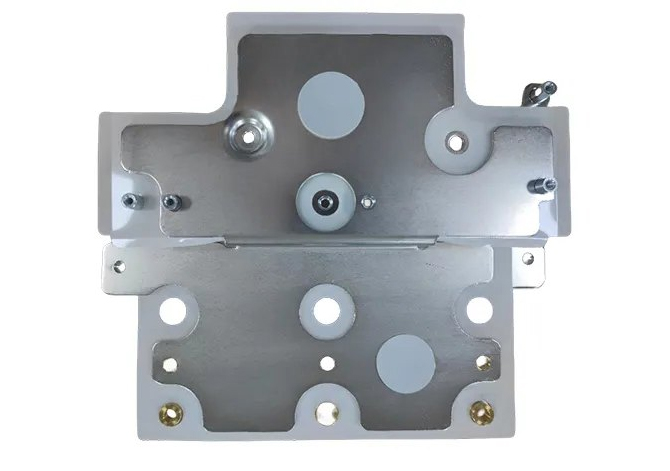
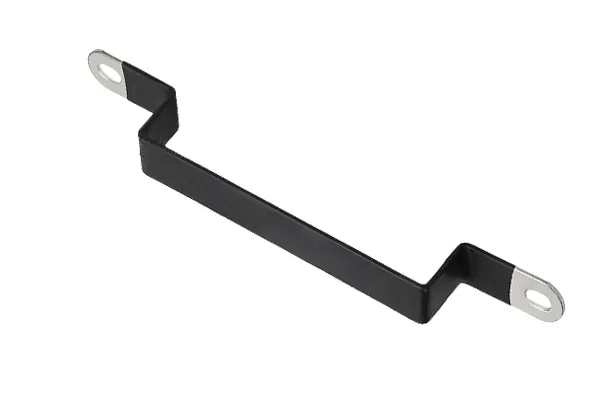
Batang bus tembaga berlapis timah khusus
√ Inti tembaga memastikan distribusi daya yang efisien.
√ Meningkatkan kinerja kelistrikan.
√ Tahan terhadap keausan dan kerusakan mekanis.
√ Ideal untuk distribusi listrik, peralatan sakelar, dan banyak lagi.
√ Memenuhi standar kualitas dan keandalan industri.
Our factory tin plated copper bus bars are engineered to deliver exceptional conductivity, corrosion resistance, and longevity. Covered with a tin layer on the surface of a pure copper busbar through electroplating or a hot plating process, which is widely used in electric power systems, new energy equipment, rail transportation, communication base stations, and other fields. Its core advantage is that it combines the high conductivity of copper with the corrosion resistance of tin and is suitable for high-current transmission and high-frequency signal shielding scenarios.
| Tipe Barang: | batang bus tembaga berlapis timah |
|---|---|
| Bahan dasar: | Tembaga (C11000 atau C10100) |
| Lapisan: | Timah (dengan hasil akhir matte atau cerah) |
| Lebar: | 10mm sampai 200mm |
| Ketebalan: | 2mm sampai 20mm |
| Panjang: | Dapat disesuaikan, biasanya hingga 6 meter |
| Daya konduksi: | ≥ 98% IACS (Standar Tembaga Anil Internasional) |
| Perlawanan: | Resistensi kontak rendah karena pelapisan timah |
| Kekuatan Tarik: | 200-400 MPa (tergantung pada paduan dan temper tertentu) |
| Pemanjangan: | 30-40% (tergantung pada paduan dan temper tertentu) |
| Kekerasan: | 40-80 HV (Kekerasan Vickers) |
| Ketebalan Lapisan Timah: | 3 hingga 15 mikron (dapat disesuaikan) |
| Ketahanan Korosi: | Sangat baik, karena lapisan timahnya |
| Suhu Operasional: | -55°C hingga +105°C (cocok untuk sebagian besar aplikasi listrik) |
Produsen Bus Bar Tembaga Berlapis Timah Terkemuka
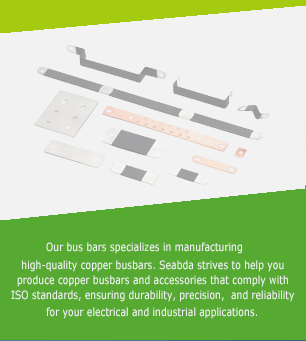
Pabrik kami mengkhususkan diri dalam pembuatan busbar tembaga berlapis timah berkualitas tinggi. Produk kami memiliki ketahanan korosi yang lebih baik, konduktivitas listrik yang sangat baik, dan kemampuan solder yang lebih baik. Dengan dimensi yang dapat disesuaikan dan kepatuhan terhadap standar ISO dan industri, kami memastikan busbar yang andal dan tahan lama untuk berbagai aplikasi listrik dan industri. Percayakan kepada kami untuk kinerja yang unggul dan kualitas yang luar biasa di setiap busbar yang kami produksi.
Parameter
1. Electrical performanc
- Rated current: 250A to 5000A (adjusted according to cross-section and wire diameter).
- Conductivity: Tinned copper purity ≥ 99.95%, resistivity ≤ 0.01777 Ω-mm²/m (hard state).
- Voltage withstand level: frequency withstand voltage 42kV (dry test), impact withstand voltage 75 kV.
2. Physical Characteristics
- Single wire diameter: 0.05mm to 0.30mm (braided); cross-section range 1.5-6000mm².
- Thickness of tin plating: usually 0.5-2.0 μm (conventional plating), special requirements up to 6 μm or more.
- Mechanical strength: hard state busbar tensile strength ≥200N/mm², soft state elongation ≥35%.
3. Environmental adaptability
- Temperature range: -30℃ to 105℃, some high-temperature-resistant models can reach 200℃.
- Protection grade: IP54 (dustproof and waterproof).
Bagaimana cara melapisi bus bar tembaga dengan timah?
1. Copper pretreatment
- Drawing and annealing: High purity copper rods are drawn to the target wire diameter, and the annealing temperature is controlled at 400-550°C to optimize the ductility.
- Acid washing to remove oxidized layer: Use acidic solution (such as hydrochloric acid or flux) to remove surface oxides to ensure plating adhesion.
2. Tin plating process
- Hot-dip plating/electroplating: Copper wires are immersed in a tin furnace (250-260°C) or electroplating bath to form a uniform plating layer. Cooling and cleaning: Water or air cooling is used to remove the surface oxides.
- Cooling and Cleaning: After water or air cooling, clean the residue, add shaft guide oil to prevent the generation of tin ash.
3. Post-treatment and inspection
- Annealing: 600-800℃ annealing to eliminate stress and improve flexibility.
- Quality inspection: including conductivity test, plating thickness measurement (such as X-ray fluorescence method) and corrosion resistance test.
Berapa tebal busbar tembaga berlapis timah?
- Conventional applications: 0.5-2.0μm, balancing cost and performance.
- High protection requirements: such as power equipment or marine environment, the thickness of the coating can be more than 6μm.
Mengapa pelapisan timah pada batang bus tembaga?
Pelapisan timah pada busbar tembaga memiliki banyak tujuan. Pertama, pelapisan timah meningkatkan ketahanan korosi tembaga, memperpanjang masa pakainya, dan memastikan kinerja jangka panjang, terutama di lingkungan yang lembap atau korosif. Kedua, pelapisan timah memberikan hasil akhir permukaan yang lebih halus, mengurangi ketidakteraturan permukaan, dan meningkatkan kontak dan konduktivitas listrik. Selain itu, pelapisan timah dapat mencegah oksidasi permukaan tembaga, menjaga integritas dan sifat listriknya dari waktu ke waktu. Secara keseluruhan, pelapisan timah menawarkan peningkatan daya tahan, konduktivitas, dan keandalan untuk busbar tembaga dalam berbagai aplikasi.
Batang bus tembaga berlapis timah menawarkan beberapa keuntungan:
1. Anti-oxidation and corrosion resistance
- The tin layer isolates copper from oxygen and moisture, avoiding the generation of copper green (Cu₂(OH)₂CO₃) with poor electrical conductivity, and prolonging the life of the busbar.
2. Improve conductive stability
- Tin plating reduces contact resistance (by about 10-15%), especially in high-frequency or high-current scenarios to reduce energy loss.
3. Enhanced solderability
- Tin has a low melting point (232°C), which makes solder joints easier to form and stronger, making it suitable for automated soldering processes.
4. Adapt to complex environments
- Resistant to salt spray, acid and alkali, suitable for chemical, marine and other corrosive environments.
5. Economy and environmental protection
- Compared with pure silver plating, tin plating cost is lower, and tin non-toxic in line with RoHS standards.
Tin-plated copper bus bars application:
- Power system: transformer, switchgear connection, extra high voltage transmission.
- New energy vehicles: battery pack connection, charging pile internal conductor.
- Communication equipment: 5G base station, data center high frequency signal shielding.

 Indonesian
  English
  Arabic
  German
  Spanish
  French
  Russian
  Danish
  Japanese
  Italian
  Vietnamese
  Turkish
  Dutch
Dutch  Portuguese
  Thai
Thai  Swedish
  Korean
  Greek
Greek  Polish
  Estonian
  Esperanto
  Hindi
Hindi  Latvian