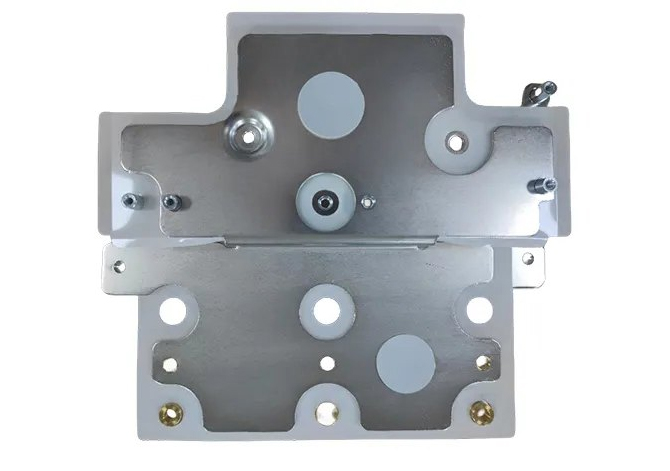
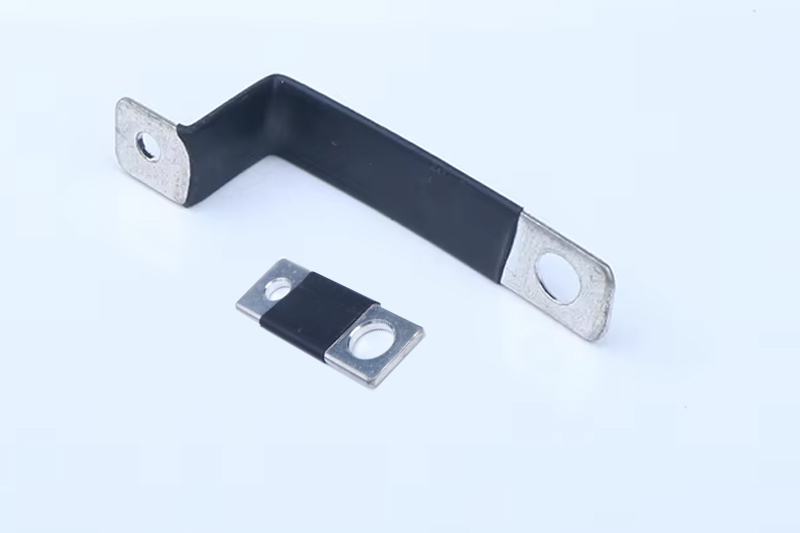
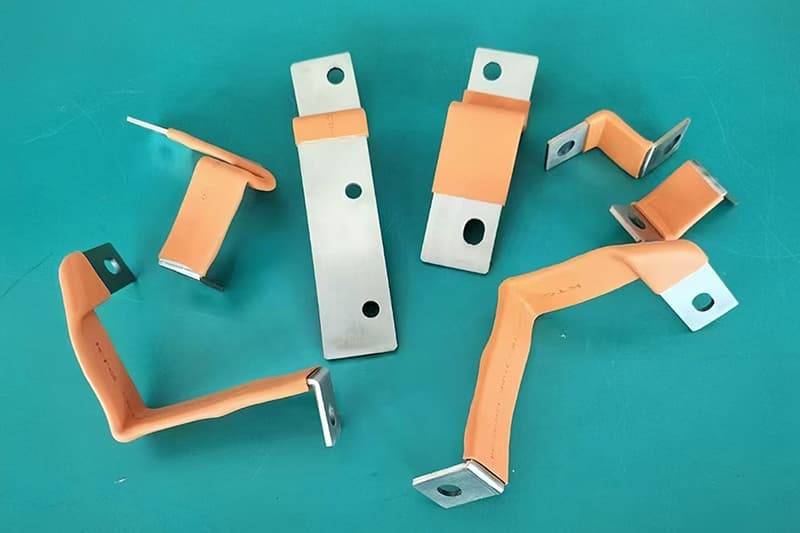
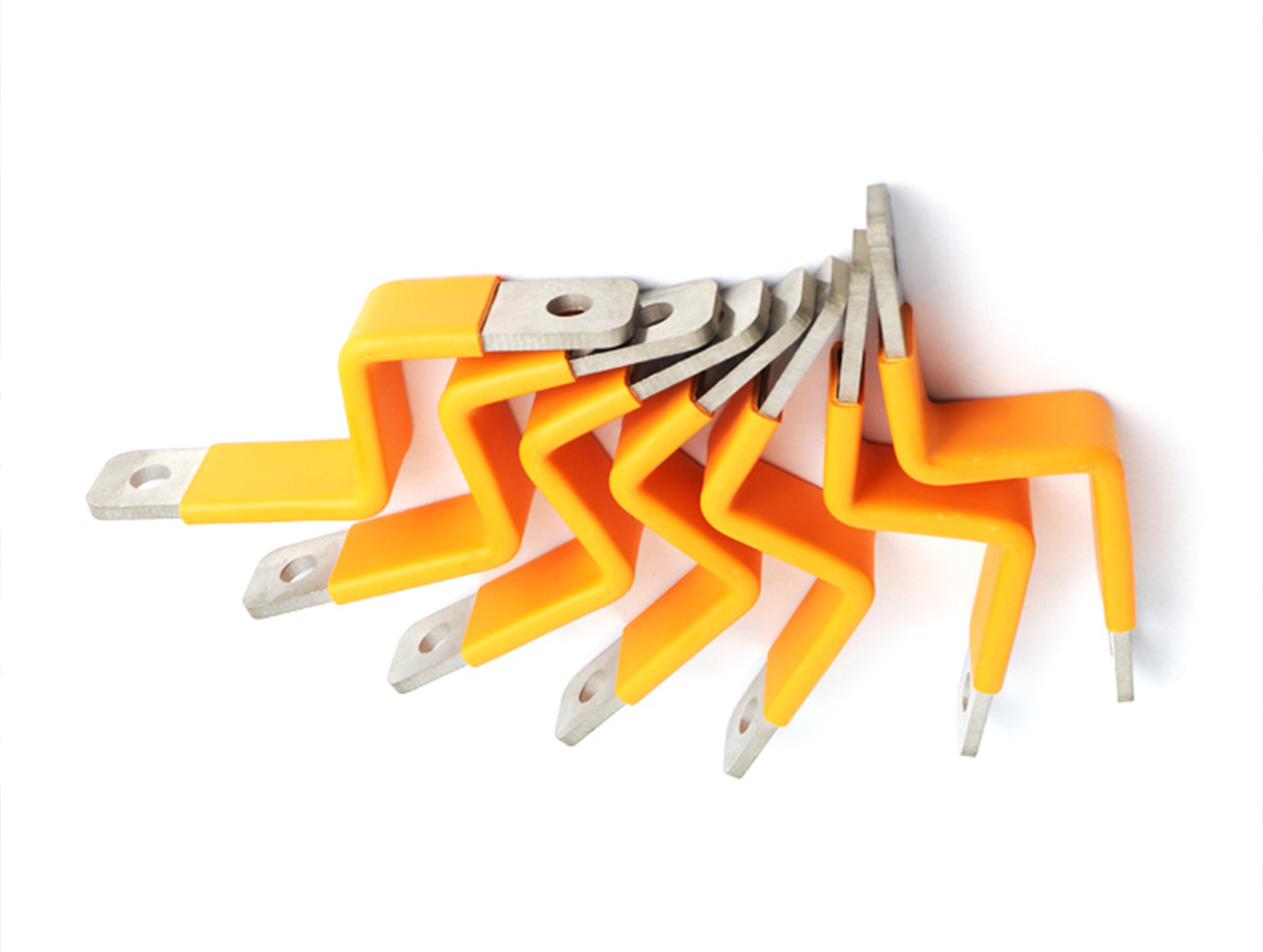
With the rapid development of the new energy industry, the high-current scenario requires increasingly stringent performance of conductive components. With its excellent conductivity, corrosion resistance, and solderability, Busbar tembaga berlapis timah has become the core component of new energy vehicles, photovoltaic power generation, and other fields. This article starts from the scientific principles of tin-plating process, combined with 7 technical dimensions, in-depth analysis of the selection criteria and application strategy of the tinned copper busbar, and authoritative data comparison to provide enterprises with landing solutions.
- Peningkatan konduktivitas dan pengoptimalan stabilitas
- The conductivity of copper itself is as high as 58 S/m, but the conductivity of copper oxide on the surface decreases significantly. After tin plating, tin oxide (SnO₂) has better conductivity than copper oxide (CuO), which can reduce the contact resistance by up to 30%. Experimental data show that the temperature rise of tin-plated copper busbars is 15-20% lower than that of bare copper busbars(under the same current), which significantly reduces power loss.
- Peningkatan ketahanan korosi secara pesat
In the salt spray test, the thickness of the tin-plated layer ≥ 25 25μm copper busbar can withstand 1000 hours without corrosion, far more than the limit of 72 hours of bare copper. For example, in coastal photovoltaic power plants, the service life of tinned copper busbars can be extended to more than 15 years, reducing maintenance costs by 40%.
- Peningkatan proses penyolderan
Bila kekasaran permukaan (nilai Ra) pelapisan timah matte dikontrol pada 0,8-1,6 μm, kekuatan ikatan penyolderan meningkat lebih dari 50%, dan sambungan yang andal dapat terwujud tanpa fluks. Tesla Supercharger menggunakan proses ini untuk meningkatkan efisiensi pengelasan hingga 3 kali lipat.
2. Proses pelapisan timah
| Jenis Proses |
Ketebalan Pelapisan (μm) |
Konduktivitas (%IACS) |
Skenario |
Indeks Biaya (Tembaga Telanjang = 1) |
| Timah Cerah |
8-12 |
85-90 |
Papan Sakelar, Bagian Luar |
1.8 |
| Timah Matte (Dapat Disolder) |
12-15 |
80-85 |
Potongan Konektor, Penyolderan PCB |
2.2 |
| Kaleng Celup Panas |
25-40 |
75-80 |
Peralatan, Lingkungan Kimia |
3.5 |
- Bright Tin: Menyeimbangkan Estetika dan Fungsi
Cocok untuk kabinet distribusi daya pusat data dan skenario lain yang memerlukan tingkat penampilan tinggi, dengan kilap cermin (diukur pada sudut 60°) 90GU atau lebih, tetapi aplikasi penyolderan perlu dihindari.
- Timah matte: solusi terbaik untuk sambungan industri
Ketahanan terhadap suhu tinggi dapat ditingkatkan hingga 200°C dengan melapisi lapisan dasar nikel (ketebalan 2-5μm), yang digunakan dalam modul baterai Ningde Times, mengurangi tingkat penyolderan yang rusak hingga 0,02%.
- Kaleng celup panas: penghalang pelindung untuk lingkungan ekstrem
In offshore wind power projects, 40μm hot-dip tinned copper busbars are 10 times more resistant to sulfide corrosion than bare copper, which is especially suitable for industrial environments containing H₂S.
3. Ketebalan bahan pelapisan
- Pemilihan ketebalan
- Lingkungan kering dalam ruangan: 12,5μm (memenuhi standar uji semprotan garam GB/T 2423.17 level 4)
- Lingkungan lembab/industri: 25μm (lulus uji tingkat berat IEC 60068-2-11)
- Lingkungan kimia/laut: ≥30μm (lihat standar NACE TM0172)
- Ketidaktergantikan tembaga murni C110
C110 copper busbars with copper content ≥99.9%, conductivity up to 101% IACS, and bending formability 3 times higher than brass are the best substrates for the tin-plating process. An ultra-high voltage substation project was measured to show that the C110 copper busbar of the current-carrying capacity of 22% higher than the alloy copper.
4. Kontrol kualitas
- Uji keseragaman pelapisan
Spektrometer fluoresensi sinar-X (XRF) digunakan untuk pemetaan ketebalan, memerlukan deviasi ≤±10% (lihat standar ASTM B568).
- Uji ikatan
Lulus uji tekukan (tekukan 180° tanpa terkelupas) dan uji kejut termal (siklus -40°C~150°C selama 5 kali) yang ditetapkan oleh ISO 2819.
- Peningkatan proses perlindungan lingkungan
Perusahaan terkemuka telah mengadopsi proses pelapisan timah bebas sianida (misalnya sistem sitrat), yang mengurangi toksisitas air limbah sebesar 90% dan mematuhi standar RoHS 3.0.
5. Aplikasi Industri
- Sistem tegangan tinggi untuk kendaraan energi baru
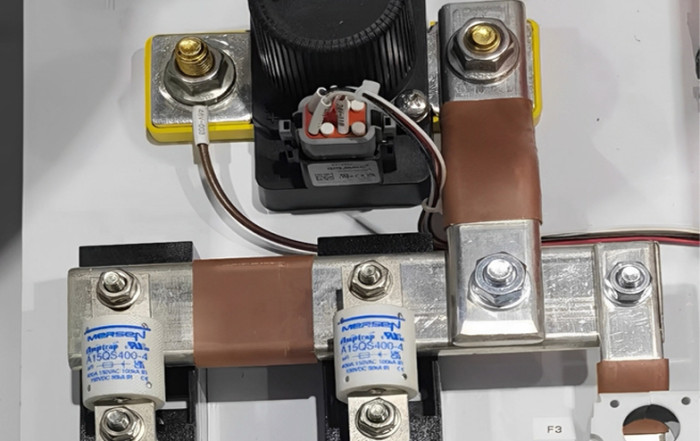
The BYD blade battery module adopts matte tin copper busbars, with contact resistance stabilized at below 0.15 mΩ, supporting 600 A continuous current.
- Optimasi Topologi Inverter PV
Sunny Power’s latest string inverter uses tinned copper busbars to increase the power density to 1.5W/cm³, and the efficiency breaks through 99%.
Meringkaskan
Terobosan teknologi busbar tembaga kaleng busbars is reshaping the competitive landscape of the new energy industry. From the quantum-level optimization of electrical conductivity to the reliability of extreme environments, the scientific selection of plating processes and thicknesses has become the core strategy of cost reduction and efficiency. With the strategic deployment of high-end materials, the tinned copper busbar will accelerate to aerospace, smart grid and other cutting-edge areas of penetration, opening a new era of conductive components.


 Indonesian
  English
  Arabic
  German
  Spanish
  French
  Russian
  Danish
  Japanese
  Italian
  Vietnamese
  Turkish
  Dutch
Dutch  Portuguese
  Thai
Thai  Swedish
  Korean
  Greek
Greek  Polish
  Estonian
  Esperanto
  Hindi
Hindi  Latvian