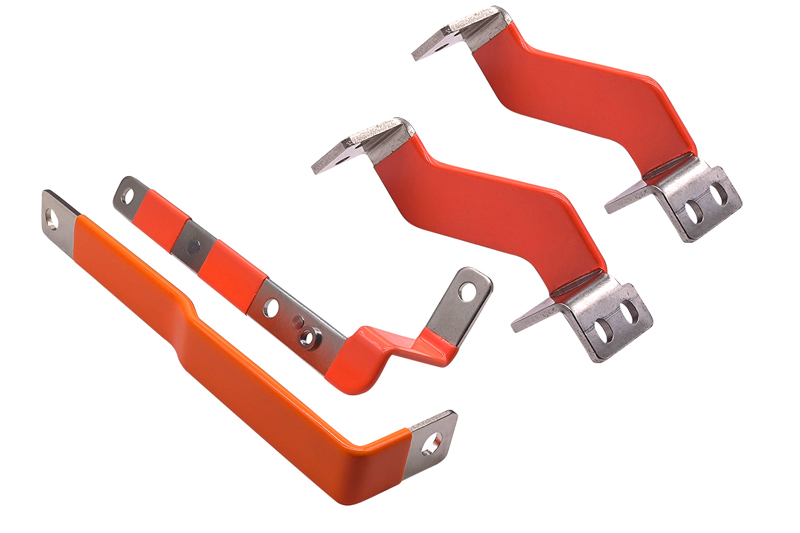
In the field of power transmission, copper bus bars as “energy arteries” undertake more than 90% of the distribution cabinet conductive tasks. This article analyzes the conductivity, safety level, application scenarios, and other five dimensions of insulated/non-insulated copper busbars and combines the IEEE standards and practice cases of domestic leading enterprises to reveal the differences in the functional positioning of the two in the power system. The study shows that uninsulated copper busbar dominates the primary circuit by virtue of the current density advantage of 2.68 A/mm², while insulated copper busbar realizes the breakthrough of 42 kV voltage resistance through PTFE and other materials to become the safety guard of the secondary circuit.
Difference in Conductivity
Uninsulated copper busbars are made of high-purity copper, with a current density of 2.68-2.12 A/mm², and its rectangular cross-section design realizes natural heat dissipation by increasing the surface area, which is especially suitable for high-current transmission scenarios of more than 4000 A. In contrast, insulated copper busbar, due to increased impedance of the surface coating, in the same cross-sectional area, reduces the download flow by about 15%, but through the hollow tubular structure, innovation can be controlled by the skin effect coefficient of KF ≤ 1, significantly better than the rectangular copper busbar of KF ≥ 1.8.
| Parameters | Uninsulated copper busbar | Insulated copper busbar |
|---|---|---|
| Current Density (A/mm²) | 2.68 (Ф100×5mm) | 2.12 (with insulation) |
| Temperature Rise(ΔT) | ≥70K | ≤40K |
| Resistance to short-circuit current (kA/4s) | 160 | 200 |
Difference in safety protection system
Uninsulated copper busbars rely on a 125mm air insulation distance (IEC 61439-2 standard); there is a risk of leakage in wet environments. And our insulated copper busbar adopts three layers of protection:
- 0.5mm PTFE substrate (temperature resistance -250℃~+250℃)
- grounded copper tape shielding layer (surface potential zero)
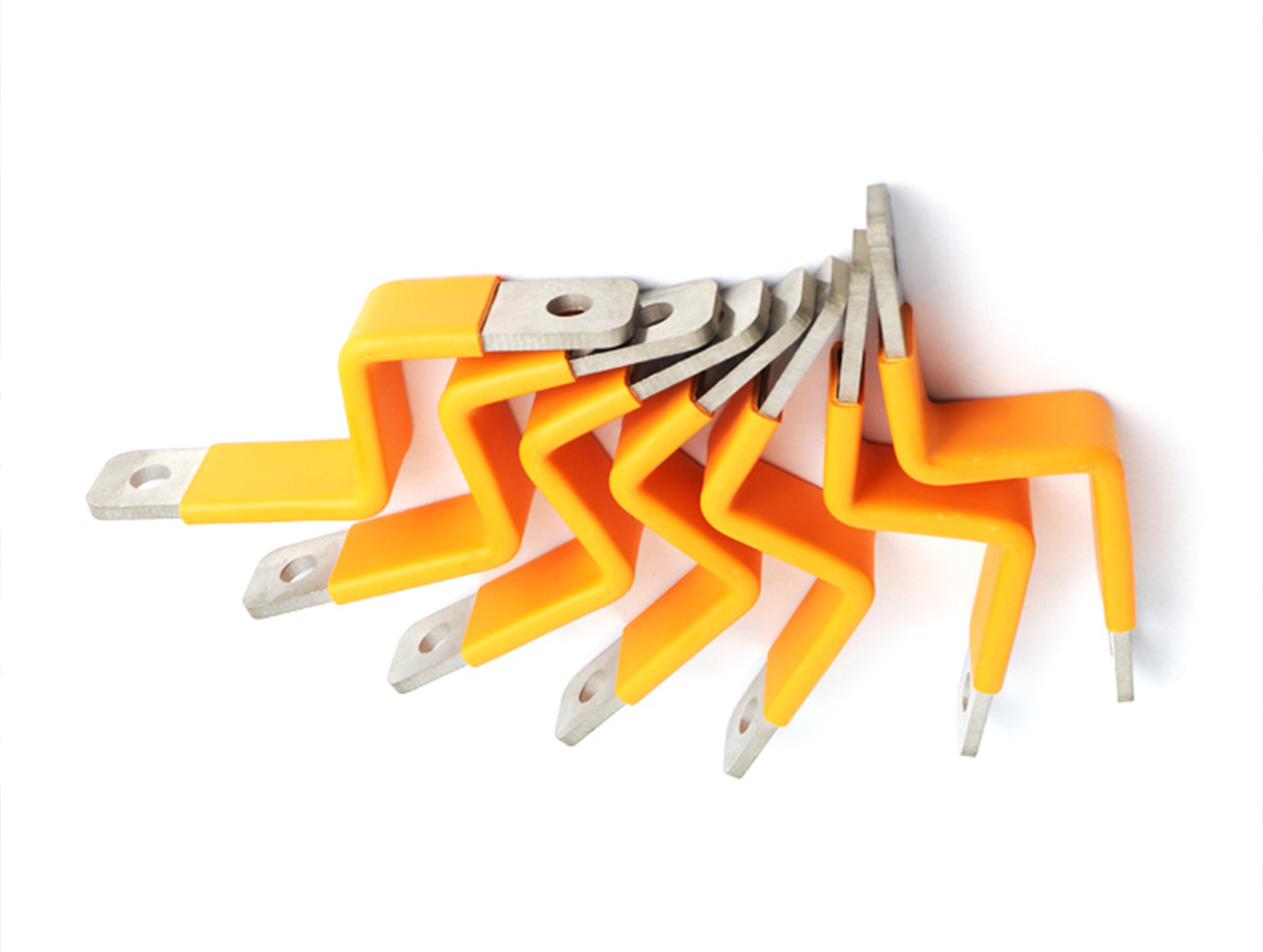
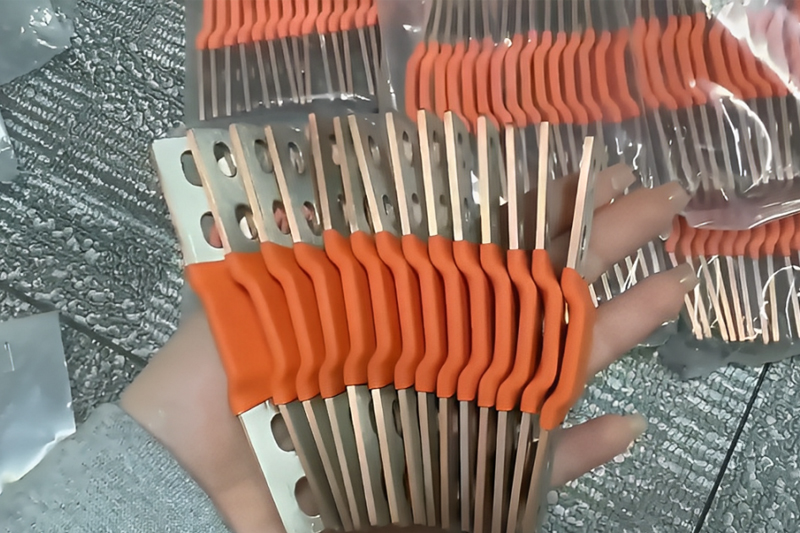
- Epoxy resin coating (resistance to 50 kV IF voltage), realizing all-weather protection. Experiments show that the copper busbars coated with 2mm epoxy resin can still pass the 50 kV withstand voltage test when the cross spacing is 0mm .
Difference in Application Scenarios
Primary circuit preferred:
Uninsulated copper busbars dominate scenarios such as 110 kV substations, with the advantages:
- No support required for spans up to 9 meters
- 294 MPa mechanical strength to guarantee seismic performance (compared to 196 MPa for insulated copper).
- Suitable for distribution rooms with plenty of space.
Secondary circuit innovation:
Insulated copper busbars expand application boundaries through technology iteration:
- Battery packs for new energy vehicles (6000A current-carrying capacity).
- Arc-proof design for photovoltaic inverters .
- Compact switchgear (air clearance reduced from 125mm to 65mm).
Difference in Cost
Although the procurement cost of insulated copper busbar is 30-50% higher, its value is reflected in:
- Reduced maintenance costs: avoiding the risk of blowing out ceramic vials (72% reduction in failure rate,)
- Space saving benefits: 40.5 kV switchgear size reduced by 40%
- Difference in service life: insulated copper busbar design life ≥ 30 years, far more than the bare copper busbar of 15-20 years
Technology Trend
Industry data shows:
- Material breakthrough: graphene-coated copper busbars will increase conductivity by 20% and realize self-insulation.
- Technological innovation: Electrostatic spraying replaces heat-shrinkable tubing, resulting in an insulation layer thickness error of ≤0.1mm.
- Standard upgrade: IEEE C37.20.2 mandates the use of epoxy vulcanized insulated copper wire in critical areas.
Conclusion
In the wave of power system upgrading, insulated and uninsulated copper busbars are not substitutes but complementary functions. It is recommended to prioritize the use of large cross-section bare copper busbars in the primary circuit (current-carrying capacity > 4000 A scenario), and insulated copper busbars are used to build a double protection system in crowded places, new energy facilities, and other scenarios. With the implementation of the new GB/T 5585.1-2025 national standard, the insulated copper busbar market share is expected to grow from the current 35% to 52% in 2028.
Related Post
Why can’t a copper busbar and an aluminum busbar be directly connected?
[email protected]2025-12-08T02:54:03+00:00December 8th, 2025|0 Comments
Introduction Copper busbars and aluminum busbars are the two most commonly used conductive materials in the field of power systems and industrial distribution. Due to differences in cost, resource availability, and technical requirements, they often

How Do You Calculate the Size of a Copper Busbar?
[email protected]2025-06-06T06:54:57+00:00June 6th, 2025|0 Comments
1. Introduction to Busbar Sizing Accurate copper busbar sizing is vital for secure, dependable, and effective electric circulation. Busbars disperse high currents in switchgear and panelboards. Inappropriate sizing reasons extreme warmth, power loss, voltage
10 Essential Tips for Working with Copper Busbars
[email protected]2025-06-03T06:35:28+00:00June 3rd, 2025|0 Comments
In modern power systems, copper busbars have actually become a core element in power transmission and distribution because of their superb electric conductivity, rust resistance and mechanical strength. As a specialist manufacturer of copper
A Guide to Maintaining Copper Busbars Effectively
[email protected]2025-05-28T06:09:36+00:00May 28th, 2025|0 Comments
As a core component of power transmission systems, copper busbars are an important choice for industry due to their high electrical conductivity, corrosion resistance and mechanical strength. However, the durability of its performance is
How to Install Copper Bus Bars for Electrical Systems
[email protected]2025-05-27T07:25:44+00:00May 27th, 2025|0 Comments
As a copper busbar manufacturer, we are well aware of its central role in electrical systems. With its excellent electrical conductivity, mechanical strength and corrosion resistance, copper busbar has become a key component in
Everything you need to know about copper busbars
[email protected]2025-05-19T02:55:47+00:00May 15th, 2025|0 Comments
Nam lacinia arcu tortor, nec luctus nibh dignissim eu nulla sit amet maximus.
Get IN TOUCH
We Deliver Any Customize Busbars
Related Posts
Introduction Copper busbars and aluminum busbars are the two most commonly used conductive materials in the field of power systems and industrial distribution. Due to differences in cost, resource availability, and technical requirements, they often need to be connected and used in practical applications. However, directly connecting copper aluminum busbars can pose serious safety hazards.


 English
  Arabic
  German
  Spanish
  French
  Russian
  Danish
  Japanese
  Italian
  Vietnamese
  Turkish
  Dutch
Dutch  Portuguese
  Thai
Thai  Swedish
  Korean
  Greek
Greek  Polish
  Estonian
  Esperanto
  Hindi
Hindi  Indonesian
  Latvian