Flexible Copper Busbar Connector for EV Battery Packs
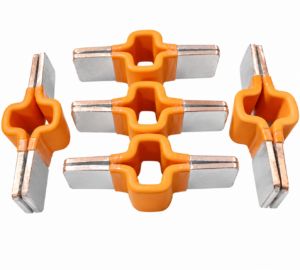
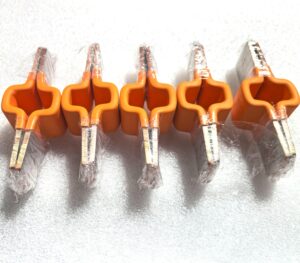
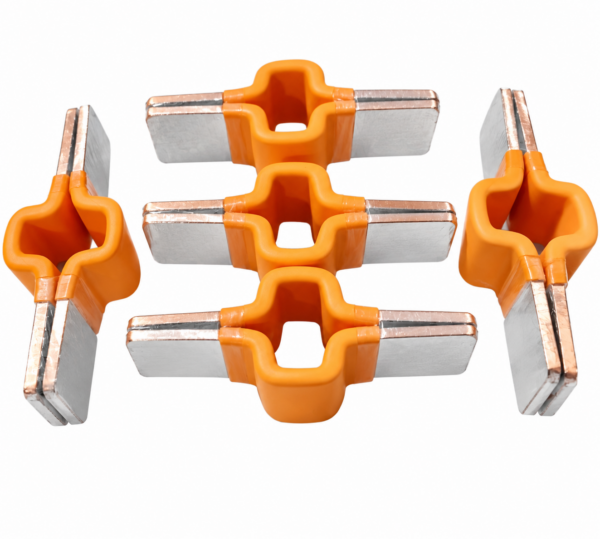
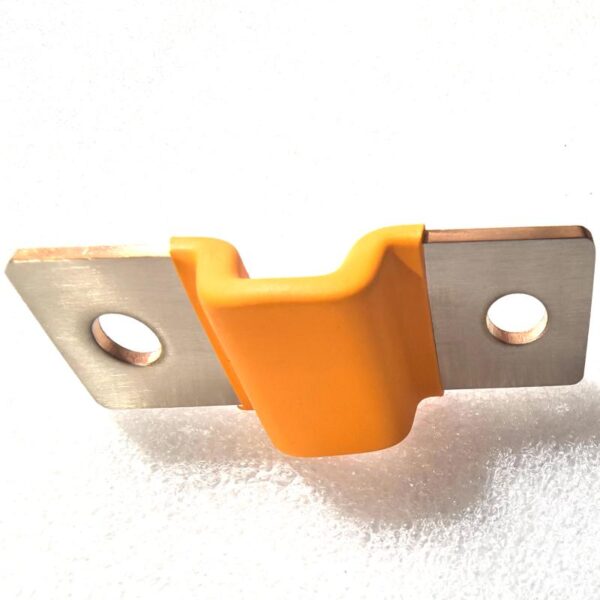
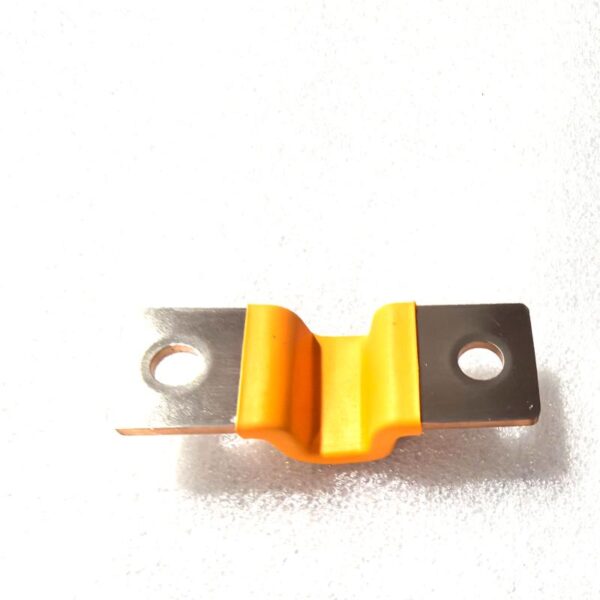
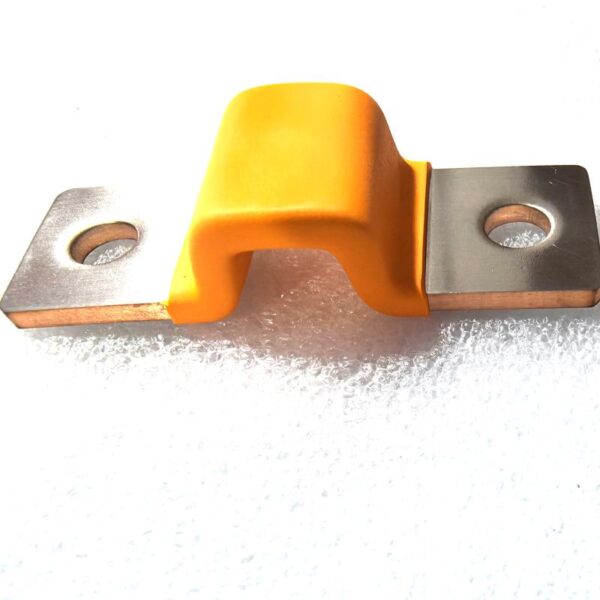
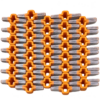
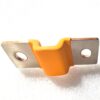
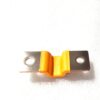
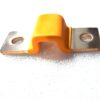
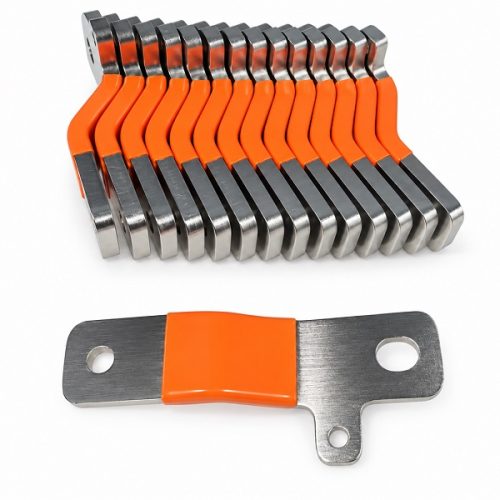
Flexible copper busbar connector featuring stacked copper conductors, flat metallic contact ends, and an orange insulating body. Designed for electrical connections in battery assemblies, with custom configurations for OEM integration.
Flexible Copper Busbar Connector for EV Battery Packs
Overmolded copper busbar connector featuring stacked copper conductors, flat metallic contact ends, and an orange insulating body. Designed for electrical connections in battery assemblies, with custom configurations for OEM integration.Overmolded copper busbar connector featuring stacked copper conductors, flat metallic contact ends, and an orange insulating body. Designed for electrical connections in battery assemblies, with custom configurations for OEM integration.Overmolded copper busbar connector featuring stacked copper conductors, flat metallic contact ends, and an orange insulating body. Designed for electrical connections in battery assemblies, with custom configurations for OEM integration.Overmolded copper busbar connector featuring stacked copper conductors, flat metallic contact ends, and an orange insulating body. Designed for electrical connections in battery assemblies, with custom configurations for OEM integration.Overmolded copper busbar connector featuring stacked copper conductors, flat metallic contact ends, and an orange insulating body. Designed for electrical connections in battery assemblies, with custom configurations for OEM integration.
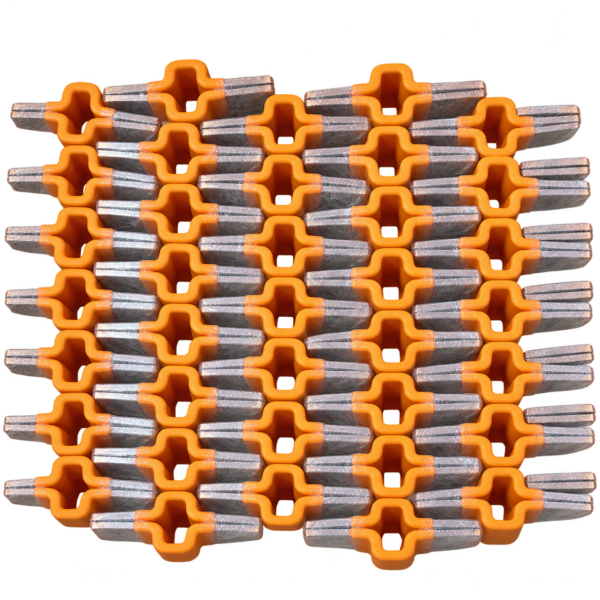
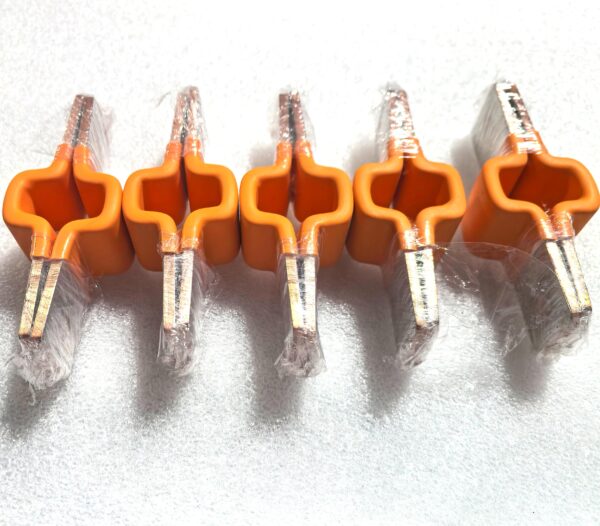
This overmolded copper busbar connector combines multiple stacked copper strips with a shaped orange insulating body. The layered conductor construction provides a conductive connection between exposed contact sections, while the molded insulation covers the central area. The assembly features flat metallic contact ends and a compact formed configuration suitable for integration into electrical equipment.
This connector design is applicable to EV battery packs, energy storage assemblies, and industrial power distribution equipment, subject to electrical and mechanical design verification. Custom busbar manufacturing can accommodate OEM drawings and application-specific requirements for conductor geometry, contact configuration, insulation design, and assembly interfaces.
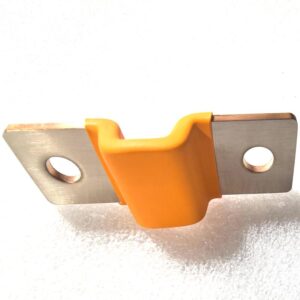
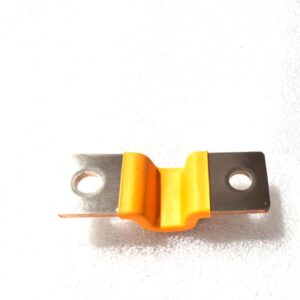
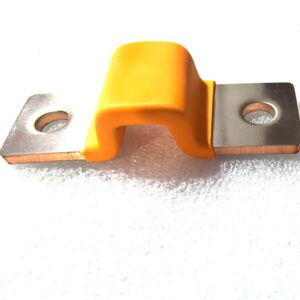
フレキシブル銅バスバー (also commonly called a flexible connector or battery connection strap). Based on its appearance, it is made of multiple thin copper sheets laminated together, with a tin or nickel plating on the surface. The middle section is wrapped in an orange insulating sleeve, and both ends have mounting holes. It is primarily used in battery packs or power distribution cabinets to connect battery cells and conduct current.
⚙️ Core Structure & Materials
Conductor Body: Constructed by laminating and welding multiple thin copper sheets. This structure gives it “flexibility,” allowing it to bend and adapt to different installation spacings. It can also absorb stress from vibration and thermal expansion/contraction during battery charging and discharging.
表面メッキ: The copper busbar is typically tin- or nickel-plated. This coating effectively prevents copper oxidation, maintains low contact resistance, and extends service life. The silver-white metal visible at both ends in the image is this plating.
Middle Insulating Sleeve: The orange part wrapped around the middle is usually an insulating material (such as epoxy coating or heat-shrink tubing), used to prevent accidental short circuits and provide electrical insulation protection.
🔋 Main Application Scenarios
New Energy Battery Packs: This is the most common application, used to connect cells such as lithium iron phosphate (LiFePO4) batteries. Common hole spacing specifications include 74mm.
Power Distribution Equipment: Used as busbar connectors in switchgear and distribution boxes to carry high currents and reduce contact resistance.
💡 Usage & Selection Tips
Confirm Hole Diameter and Spacing: The mounting holes in the image are typically M6 size. When selecting, confirm that the hole spacing (e.g., 74mm) matches the distance between battery cell terminals.
Pay Attention to Plating Quality: Plating quality directly determines contact resistance and oxidation resistance. Choosing products with uniform plating helps reduce heating and energy loss.
Bending Radius: Although flexible copper busbars can be bent, avoid excessive or repeated bending to prevent internal copper sheets from breaking and affecting conductivity.
商品カテゴリ
フレキシブル銅バスバー
製品タイプ
Insulated Copper Busbar Connector
Conductor Structure
Multilayer Stacked Copper Strips
断熱
Orange Molded Insulating Body
Configuration
Shaped Central Insulating Section with Flat Contact Ends