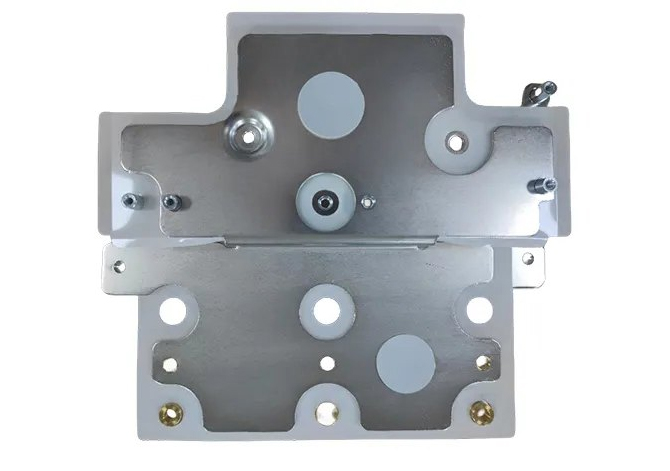
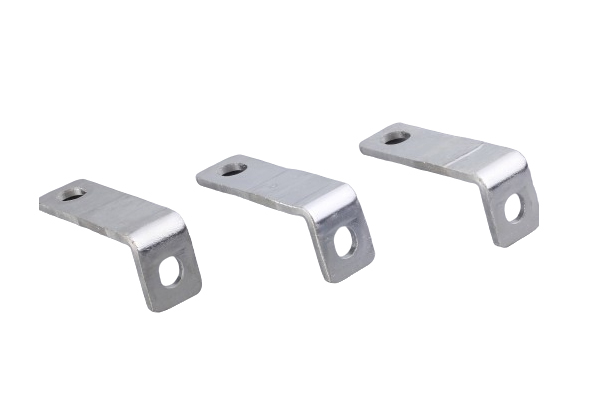
The silver plated copper busbar we manufacture is a kind of power transmission material with high-purity copper (such as oxygen-free copper or low-oxygen copper) as the substrate, and the surface is covered with silver layer through electroplating process. It combines the high conductivity of copper with the oxidation resistance of silver, and is widely used in high-precision and high-reliability scenarios such as electric power systems, communication equipment, new energy vehicles, aerospace, etc. It is especially suitable for high-frequency transmission and high-current environments.
| アイテムタイプ: | 銀メッキ銅バスバー |
|---|---|
| 素材ベース: | 銀メッキ層を備えた銅芯。 |
| 銀メッキの厚さ: | 通常、5〜15ミクロンの範囲です。 |
| 銅芯の厚さ: | 電流容量とアプリケーション要件によって異なります。 |
| 定格電圧: | 絶縁と設計に応じて、さまざまな電圧レベルに適しています。 |
| 長さ: | 電気システムの希望寸法に合わせてカスタマイズ可能です。 |
| 幅: | 特定のアプリケーションのニーズに基づいてカスタマイズ可能です。 |
| 現在の容量: | 厚さ、幅、材質特性によって決まります。 |
| 温度定格: | 通常 -50°C ~ 150°C の広い温度範囲で動作できます。 |
| 伸長: | 30-40%(特定の合金と焼き入れ度によって異なります) |
| 硬度: | 40-80 HV(ビッカース硬度) |
| 錫コーティングの厚さ: | 3~15ミクロン(カスタマイズ可能) |
| 表面仕上げ: | 銀メッキは優れた耐腐食性を提供し、電気伝導性を高めます。 |
| 用途: | 高い導電性と耐腐食性が求められる配電システム、電気パネル、配電装置、およびさまざまな産業用途に適しています。 |
銀メッキ銅バスバーの大手メーカー
当社は、さまざまな業界の厳しい要件を満たすようにカスタマイズされた高品質の銀メッキ銅バスバーの製造を専門としています。当社の銀メッキ銅バスバーは、優れた導電性、信頼性、耐久性を実現するように設計されています。精密なエンジニアリングと最先端の銀メッキ技術により、当社のバスバーは優れた電気性能を提供し、エネルギー損失を最小限に抑え、効率的な電力伝送を保証します。
1. conductor material:
- Copper purity ≥ 99.95% (e.g. T2 copper or high purity oxygen-free copper), surface silver plating layer thickness is usually 1-5μm.- Conductivity ≥ 97.6% IACS (International Annealed Copper Standard), better than ordinary copper busbar.
2. Electrical performance:
- Carrying capacity increased by more than 30% (due to the silver layer to reduce the contact resistance).- Temperature rise limit: Silver-plated busbar allows temperature rise up to 70K (bare copper is 60K), suitable for high load scenarios.
3. Physical properties:
- Tensile strength ≥15%, can withstand high-frequency vibration and mechanical shock.- Corrosion resistance: passed 1800 hours of salt spray test, suitable for humid, chemical, and other harsh environments.
4. Dimensional specifications:
- Common thickness 1.5-25mm, width 10-250mm, support customized shaped rows (such as C-type female rows).
Silver plated copper bus bar Production process:
1. Raw material processing:
- Copper rods are processed into copper strips by the top-induction method or cold-rolling process, and the surface is milled to remove the oxidized layer.
2. Pre-plating treatment:
- Alkaline etching: 50-80 ℃ sodium hydroxide solution to clean the oil.
- Acid cleaning activation: dilute sulfuric acid to remove oxides and enhance the adhesion of the plating layer.
3. Silver plating process:
- Pre-silver plating: current density 1-3A/dm², energized for 5-10 seconds to form the bottom layer.
- Main silver plating: current density 0.5-3A/dm², temperature 15-35 ℃, plating 1.5-2.5 hours, and the thickness of the silver layer is uniform.
4. Post-treatment:
- Dip anti-silver discoloration agent (such as benzotriazole) to prevent sulfidation and oxidation.
- Laser marking, automatic inspection, and packaging.
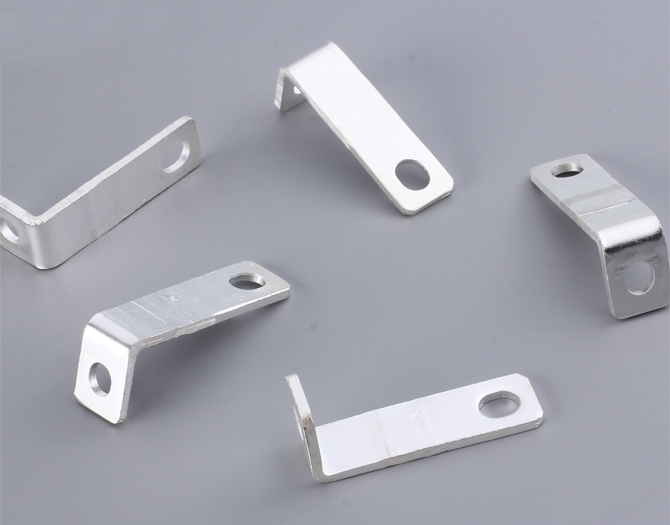
銀メッキ銅バスバーの特徴:
1. High conductivity: the conductivity of silver (6.3×10⁷ S/m) is higher than that of copper (5.96×10⁷ S/m), which reduces transmission losses.
2. Oxidation resistance: silver layer isolates copper from oxygen, avoiding the generation of copper oxide and keeping low contact resistance.
3. High-frequency adaptability: under skin effect, the silver layer improves the stability of high-frequency signal transmission, suitable for 5G, data center and other scenarios.
4. High Temperature Resistance: Support -65℃ to 250℃ working temperature, short time resistance 300℃, better than tinned copper row.
5. Environmentally friendly: Halogen-free materials, no release of toxic gases in case of fire, passes UL94 flame retardant standard.
バスバーはなぜ銀メッキされているのですか?
バスバーは、次のようないくつかの理由から、多くの場合銀メッキされます。
- Reduced contact resistance: silver conductivity is better than copper and tin; silver plating reduces contact resistance by 30%, improving current-carrying capacity and energy efficiency.
- Resistance to corrosion and oxidation: Silver is less susceptible to corrosion in humid, sulfur/chlorine environments, avoiding performance degradation caused by oxidation of the copper substrate.
- Optimization of high-frequency performance: high-frequency current is concentrated on the surface of the conductor (skin effect), and the silver layer reduces signal attenuation and ensures communication quality.
- Extended service life: the silver plating layer is wear-resistant, suitable for frequent plugging and unplugging scenarios (such as switchgear connectors), reducing maintenance costs.
- Temperature rise control: allows a higher temperature rise (70K vs. 60K for bare copper), adapting to the needs of high-current transmission.

 Japanese
  English
  Arabic
  German
  Spanish
  French
  Russian
  Danish
  Italian
  Vietnamese
  Turkish
  Dutch
Dutch  Portuguese
  Thai
Thai  Swedish
  Korean
  Greek
Greek  Polish
  Estonian
  Esperanto
  Hindi
Hindi  Indonesian
  Latvian