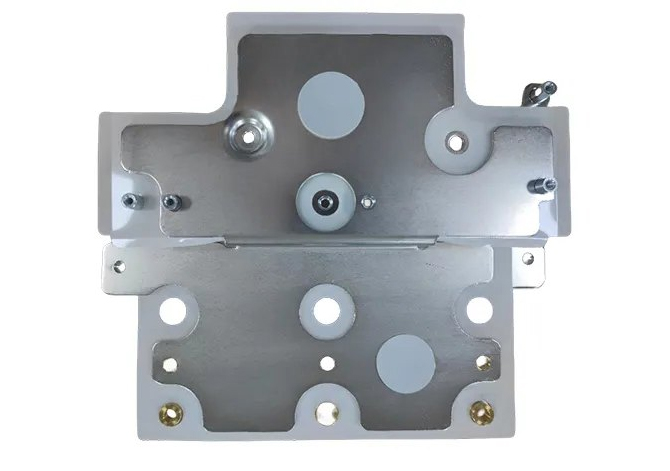
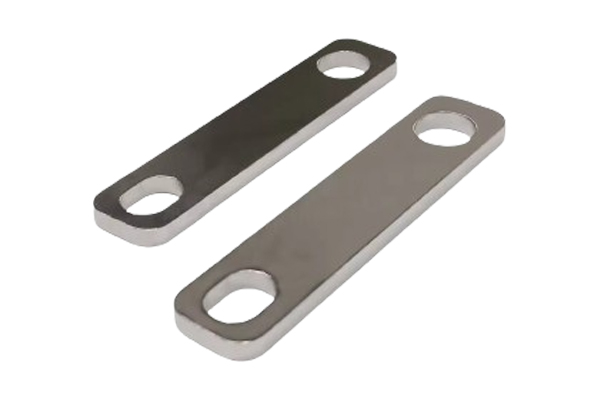
Our Tin-coated copper busbars is a key conductive component in new energy vehicle battery packs, which is mainly used to efficiently transmit high currents, connect battery monomers, reduce contact resistance, and adapt to complex working conditions. Its surface tinning treatment significantly improves oxidation and corrosion resistance, and is widely used in electric vehicle powertrain, charging pile and energy storage system.
| アイテムタイプ: | 錫メッキ銅バスバー カーバッテリーバスバー |
|---|---|
| 素材ベース: | High purity electrolytic copper (T2 copper, purity ≥99.9%) or aluminum, tin/nickel/silver plated surface. |
| コーティング: | ブリキ(マット仕上げまたは光沢仕上げ) |
| 寸法: | Typical width 20mm, thickness 3mm, length 200mm (can be customized); copper foil single layer thickness 0.03-0.3mm, support multi-layer stacking. |
| 絶縁: | PVC, polyimide or polyester resin, thickness 0.1-1.0mm, flame retardant grade UL94-V-0. |
| 抵抗率: | ≤0.00001Ω, conductivity ≥57%. |
| 導電率: | 高い電気伝導性を維持し、効率的な電力伝送を実現します。 |
| Rated voltage: | DC 1.0kVDC, maximum power up to 300kW |
| カスタマイズ: | 個々の自動車バッテリーのニーズに合わせて、さまざまなサイズ、形状、構成をご用意しています。 |
| 耐久性: | 自動車環境と機械的ストレスに耐える設計 |
| 安全性: | 安全なバッテリー操作のために信頼性の高い電気接続を提供します |
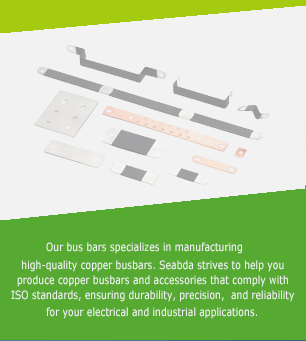
リーディング錫メッキ銅バスバー カーバッテリーバスバー
メーカー
自動車バッテリー用錫メッキ銅バスバーの大手メーカーとして、当社は自動車用途の厳しい要件を満たす高品質のソリューションを専門に提供しています。当社のバスバーは高級銅材を使用して丁寧に作られ、耐久性と耐腐食性を高めるために錫でコーティングされています。当社はイノベーションとカスタマイズを優先し、当社のバスバーが自動車バッテリーシステムの仕様に合わせて正確に設計され、信頼性の高い電気接続と最適なパフォーマンスを実現できるようにしています。卓越性と顧客満足への取り組みにより、当社はトップクラスのバスバーソリューションを求める自動車メーカーにとって信頼できるパートナーとなっています。錫メッキ銅バスバーの優先サプライヤーとして当社をお選びいただき、品質と信頼性の違いを体験してください。
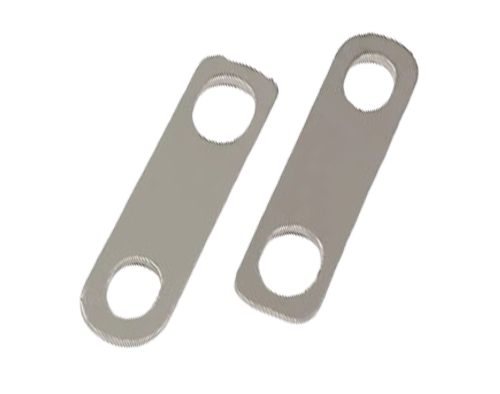
Tin Coated Copper Busbar Prodution Process:
1. Substrate pretreatment
- Unwinding and annealing: copper wire is stretched by wire drawing machine and then annealed, controlling the temperature at 400-550℃ to optimize the ductility.
- Pickling activation: Use acidic solution (such as tinning flux) to remove surface oxides and enhance the adhesion of plating.
2. Tin plating process
- Plating solution configuration: use stannic acid or tin chloride plating solution, temperature control 250-260 ℃ (to prevent oxidation and tin tumors).
- Plating process: Form a uniform tin layer by electrochemical deposition, the thickness of the layer is 3-12μm, and support salt spray test ≥ 240 hours.
3. Post-treatment and testing
- Cooling and insulation: air or air-cooled and wrapped with insulating materials (e.g. heat-shrink tubing or impregnated paint).
- Quality control: Test conductivity, plating thickness, insulation strength, complying with IATF 16949 and RoHS standards.
Tin Coated Copper Busbar Car battery Bus bar Feature:
バッテリー システムでは、バスバーはバッテリー パック内で電力を効率的に分配するための重要なコンポーネントとして機能します。バッテリーでのバスバーの使用方法は次のとおりです。
1. High conductivity and low loss
– Copper substrate combined with tin plating layer, taking into account the conductivity efficiency (close to pure copper) and surface oxidation resistance, reducing energy transmission loss.
2. Environmental resistance
– Tin-plated layer to isolate moisture, salt spray corrosion, suitable for automotive battery packs, high temperature, vibration environment.
3. Flexible design
– Multi-layer copper foil laminated structure supports multi-angle bending, suitable for complex battery module layout.
4. Integration and light weight
– Voltage/temperature sensor signal lines can be integrated to reduce overall weight (50% weight reduction compared to aluminum busbar).
Tin Coated Copper Busbar Car battery Bus bar Application:
- Power battery pack: cylindrical/square battery connection for Tesla, BMW and other models.
- Charging system: conductive module for high-voltage fast-charging pile, supporting 800V high-voltage platform.
- Energy storage system (BESS): low inductance and high reliability power distribution in energy storage batteries.
バッテリーにおけるバスバーの用途は何ですか?
バッテリー システムでは、バスバーはバッテリー パック内で電力を効率的に分配するための重要なコンポーネントとして機能します。バッテリーでのバスバーの使用方法は次のとおりです。
1. Current transmission and distribution
– Connecting battery cells to form series/parallel circuits, realizing efficient energy transfer and reducing contact resistance (laser welding technology reduces heat loss).
2. Thermal management support
– Copper’s high thermal conductivity (401W/mK) helps to dissipate heat, avoiding localized overheating and triggering thermal runaway of the battery.
3. Mechanical Stability
– Rigid structure supports the battery module to resist displacement caused by vehicle vibration and enhance safety.
4. Signal Integration
– Part of the hybrid bus integrates BMS signal lines to monitor battery voltage, temperature and other parameters in real time.

 Japanese
  English
  Arabic
  German
  Spanish
  French
  Russian
  Danish
  Italian
  Vietnamese
  Turkish
  Dutch
Dutch  Portuguese
  Thai
Thai  Swedish
  Korean
  Greek
Greek  Polish
  Estonian
  Esperanto
  Hindi
Hindi  Indonesian
  Latvian