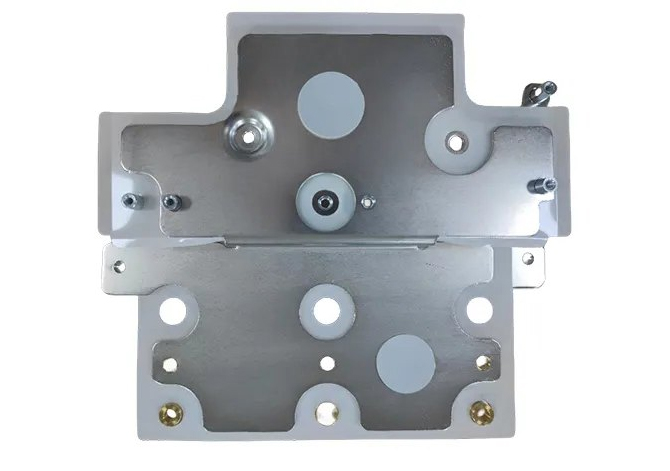
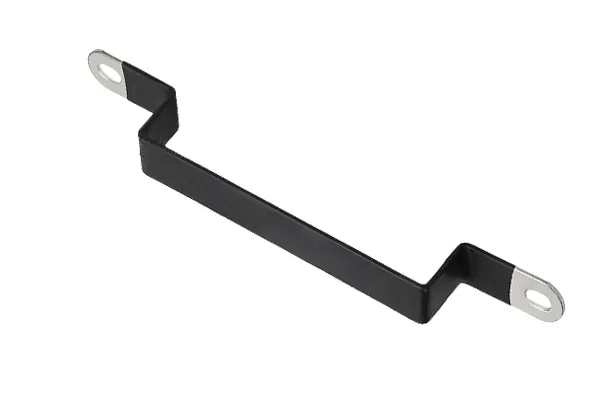
Our factory tin plated copper bus bars are engineered to deliver exceptional conductivity, corrosion resistance, and longevity. Covered with a tin layer on the surface of a pure copper busbar through electroplating or a hot plating process, which is widely used in electric power systems, new energy equipment, rail transportation, communication base stations, and other fields. Its core advantage is that it combines the high conductivity of copper with the corrosion resistance of tin and is suitable for high-current transmission and high-frequency signal shielding scenarios.
| アイテムタイプ: | 錫メッキ銅バスバー |
|---|---|
| 素材ベース: | 銅(C11000またはC10100) |
| コーティング: | ブリキ(マット仕上げまたは光沢仕上げ) |
| 幅: | 10mm~200mm |
| 厚さ: | 2mm~20mm |
| 長さ: | カスタマイズ可能、通常は最大6メートル |
| 導電率: | ≥ 98% IACS (国際軟銅規格) |
| 抵抗: | 錫メッキによる低接触抵抗 |
| 抗張力: | 200~400 MPa(合金と焼き入れ度によって異なります) |
| 伸長: | 30-40%(特定の合金と焼き入れ度によって異なります) |
| 硬度: | 40-80 HV(ビッカース硬度) |
| 錫コーティングの厚さ: | 3~15ミクロン(カスタマイズ可能) |
| 耐腐食性: | 錫コーティングのおかげで素晴らしい |
| 動作温度: | -55°C ~ +105°C (ほとんどの電気アプリケーションに適しています) |
錫メッキ銅バスバーの大手メーカー
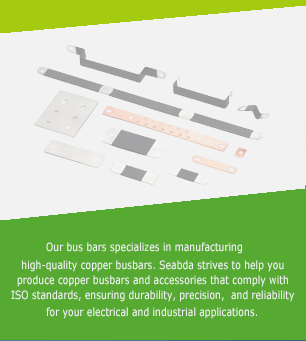
弊社の工場は、高品質の錫メッキ銅バスバーの製造を専門としています。弊社の製品は、耐腐食性、導電性、はんだ付け性が向上しています。寸法はカスタマイズ可能で、ISO および業界標準に準拠しているため、幅広い電気および産業用途で信頼性と耐久性に優れたバスバーを保証できます。弊社が製造するすべてのバスバーは、優れた性能と優れた品質を誇ります。
パラメータ
1. Electrical performanc
- Rated current: 250A to 5000A (adjusted according to cross-section and wire diameter).
- Conductivity: Tinned copper purity ≥ 99.95%, resistivity ≤ 0.01777 Ω-mm²/m (hard state).
- Voltage withstand level: frequency withstand voltage 42kV (dry test), impact withstand voltage 75 kV.
2. Physical Characteristics
- Single wire diameter: 0.05mm to 0.30mm (braided); cross-section range 1.5-6000mm².
- Thickness of tin plating: usually 0.5-2.0 μm (conventional plating), special requirements up to 6 μm or more.
- Mechanical strength: hard state busbar tensile strength ≥200N/mm², soft state elongation ≥35%.
3. Environmental adaptability
- Temperature range: -30℃ to 105℃, some high-temperature-resistant models can reach 200℃.
- Protection grade: IP54 (dustproof and waterproof).
銅バスバーを錫メッキするにはどうすればいいですか?
1. Copper pretreatment
- Drawing and annealing: High purity copper rods are drawn to the target wire diameter, and the annealing temperature is controlled at 400-550°C to optimize the ductility.
- Acid washing to remove oxidized layer: Use acidic solution (such as hydrochloric acid or flux) to remove surface oxides to ensure plating adhesion.
2. Tin plating process
- Hot-dip plating/electroplating: Copper wires are immersed in a tin furnace (250-260°C) or electroplating bath to form a uniform plating layer. Cooling and cleaning: Water or air cooling is used to remove the surface oxides.
- Cooling and Cleaning: After water or air cooling, clean the residue, add shaft guide oil to prevent the generation of tin ash.
3. Post-treatment and inspection
- Annealing: 600-800℃ annealing to eliminate stress and improve flexibility.
- Quality inspection: including conductivity test, plating thickness measurement (such as X-ray fluorescence method) and corrosion resistance test.
錫メッキ銅バスバーの厚さはどれくらいですか?
- Conventional applications: 0.5-2.0μm, balancing cost and performance.
- High protection requirements: such as power equipment or marine environment, the thickness of the coating can be more than 6μm.
銅バスバーにスズメッキを施す理由は何ですか?
銅バスバーのスズメッキには、複数の目的があります。まず、銅の耐腐食性を高め、特に湿気や腐食性の高い環境で銅の寿命を延ばし、長期的な性能を保証します。次に、スズメッキは表面仕上げを滑らかにし、表面の凹凸を減らし、電気接触と導電性を向上させます。さらに、スズメッキは銅表面の酸化を防ぎ、長期間にわたって銅の完全性と電気特性を維持します。全体として、スズメッキはさまざまな用途の銅バスバーの耐久性、導電性、信頼性を向上させます。
錫メッキ銅バスバーにはいくつかの利点があります。
1. Anti-oxidation and corrosion resistance
- The tin layer isolates copper from oxygen and moisture, avoiding the generation of copper green (Cu₂(OH)₂CO₃) with poor electrical conductivity, and prolonging the life of the busbar.
2. Improve conductive stability
- Tin plating reduces contact resistance (by about 10-15%), especially in high-frequency or high-current scenarios to reduce energy loss.
3. Enhanced solderability
- Tin has a low melting point (232°C), which makes solder joints easier to form and stronger, making it suitable for automated soldering processes.
4. Adapt to complex environments
- Resistant to salt spray, acid and alkali, suitable for chemical, marine and other corrosive environments.
5. Economy and environmental protection
- Compared with pure silver plating, tin plating cost is lower, and tin non-toxic in line with RoHS standards.
Tin-plated copper bus bars application:
- Power system: transformer, switchgear connection, extra high voltage transmission.
- New energy vehicles: battery pack connection, charging pile internal conductor.
- Communication equipment: 5G base station, data center high frequency signal shielding.

 Japanese
  English
  Arabic
  German
  Spanish
  French
  Russian
  Danish
  Italian
  Vietnamese
  Turkish
  Dutch
Dutch  Portuguese
  Thai
Thai  Swedish
  Korean
  Greek
Greek  Polish
  Estonian
  Esperanto
  Hindi
Hindi  Indonesian
  Latvian