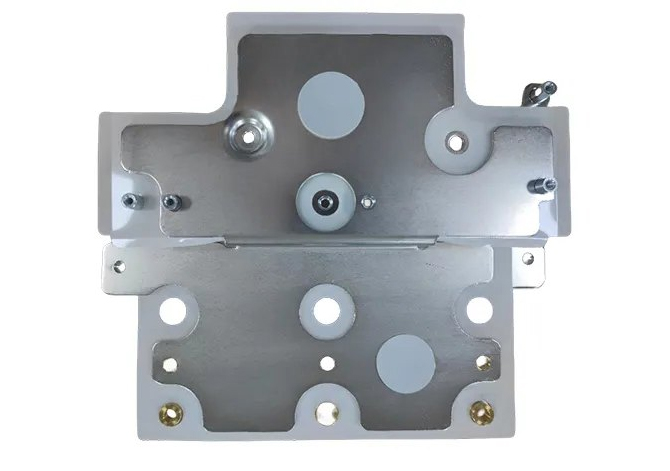
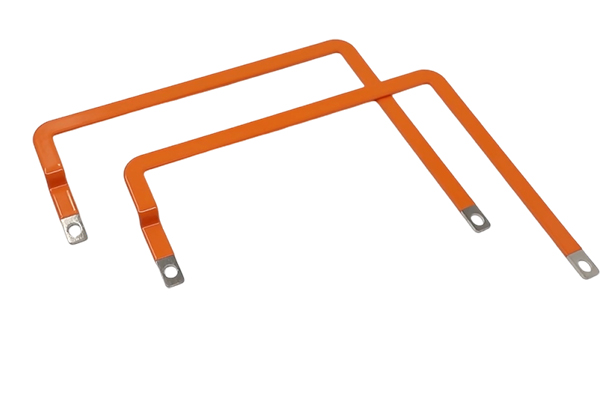
Our bending and extruding coated rigid busbar is a composite power transmission component made of high purity copper, aluminum or aluminum alloy as the core conductor, molded by precision extrusion process and covered with multi-layer protective coatings (e.g. PVF, PVC, etc.). Its structural design provides both rigid support strength and controllable bending characteristics, enabling efficient and stable transmission of high currents (up to 5000A) in complex installation environments. The core application scenarios cover new energy power generation systems (e.g. photovoltaic power stations, wind farms), industrial electrical equipment, intelligent building power distribution networks and other fields to meet the demand for high-strength, high-security power connections.
| 품목 유형: | 강성 모선 |
|---|---|
| 재료 기반: | copper, aluminum or aluminum alloy |
| 도체 재료: | copper (conductivity ≥58MS/m), aluminum (conductivity ≥37MS/m) or copper-aluminum composite |
| Section shape: | rectangular, round or other customized sections, thickness range 5-30mm, width 50-250mm |
| Load capacity: | 1250A to 5000A (depending on section size). |
| Voltage resistance level: | 1kV-35kV. |
| Tensile strength: | copper busbar ≥250MPa, aluminum busbar ≥150MPa. |
| Bending radius: | flat bending minimum 2 times busbar thickness, vertical bending minimum 1 times busbar width. |
| Machining accuracy | ±0.1mm (CNC machining) |
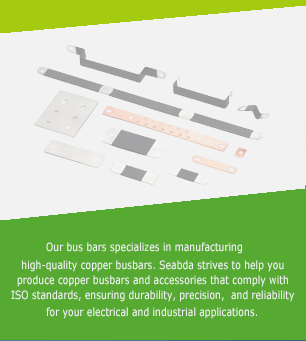
Production Process of Rigid Busbar:
- Material Preparation: Raw material inspection (copper/aluminum bar) → Cut to standard length → Surface cleaning and pretreatment.
- Extrusion Molding: Heating to 250-350°C → Die extrusion (rectangular/round cross-section) → Cooling and shaping.
- 코팅: Surface coating with PVF or PVC → Curing at high temperature → Multi-layer compounding (fireproof layer, waterproof layer, insulation layer).
- Processing and Inspection: Punching/bending → Tin or silver plating on contact surfaces → Conductivity and mechanical strength testing.
- 포장 및 배송: Shock-proof packaging → Qualified marking → Logistics transportation.
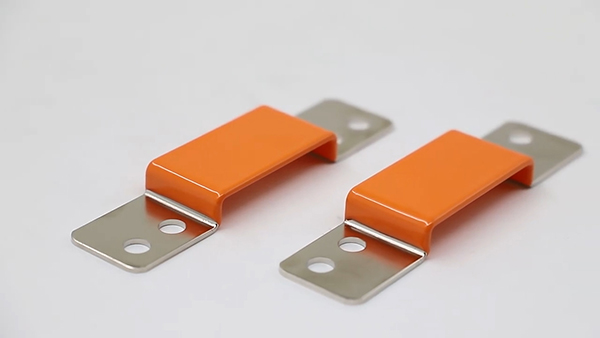
Product Advantages of Rigid Busbar:
1. Energy efficient
Compared with traditional cables, the current-carrying capacity is increased by 15% and the space occupied is reduced by 70%.
2. Environmental adaptability
Stable operation in -40℃ to 120℃ environment, suitable for extreme climate and industrial scenarios.
3. Long life and low maintenance
Corrosion-resistant coating reduces maintenance frequency, and the design life is more than 30 years.
4. Environmental
Recyclable materials, low energy consumption during production, RoHS compliant.
Application Areas of Rigid Busbar
- New Energy: Solar power station, wind power plant power collection and distribution system. 2.
- Industry and Building: High-voltage power distribution in factories, power backbone in intelligent buildings, power supply in data centers.
- Transportation: New energy vehicle battery connection, rail transportation power supply network.
- Power Infrastructure: Substations, high-voltage bus ducts for transmission and distribution networks.
FAQ
Q1: How to choose the bending radius?
A: According to the cross-section size and material, flat bending radius ≥ 2 times the thickness, vertical bending radius ≥ 1 times the width, refer to GB/T 5585.1 standard.
Q2:How to repair the coating damage?
A: Re-spray the special coating material after partial grinding and do insulation resistance test.
Q3:Does it support customized size?
A:Support non-standard cross-section and length customization, need to provide application scenarios and electrical parameters.
Q4: What should I pay attention to when installing?
A: Avoid mechanical damage to the coating, and the bolt tightening torque should be in accordance with the specification (e.g. 25N-m for M10 bolts).
Q5: Advantages compared with cables?
A: High current-carrying capacity, less space occupation, long life, low maintenance cost, suitable for fixed installation scenarios.

 Korean
  English
  Arabic
  German
  Spanish
  French
  Russian
  Danish
  Japanese
  Italian
  Vietnamese
  Turkish
  Dutch
Dutch  Portuguese
  Thai
Thai  Swedish
  Greek
Greek  Polish
  Estonian
  Esperanto
  Hindi
Hindi  Indonesian
  Latvian