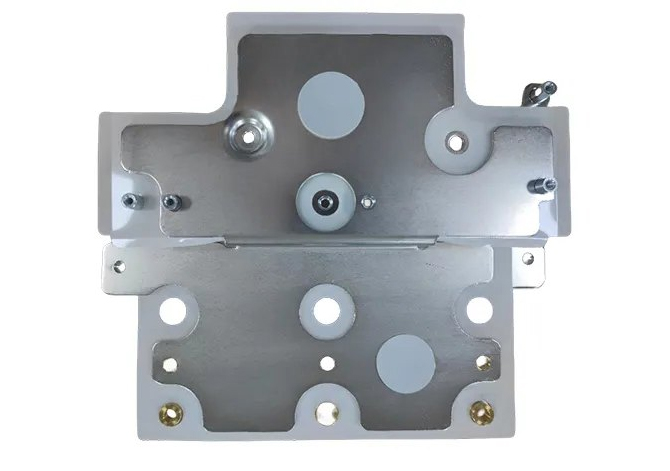
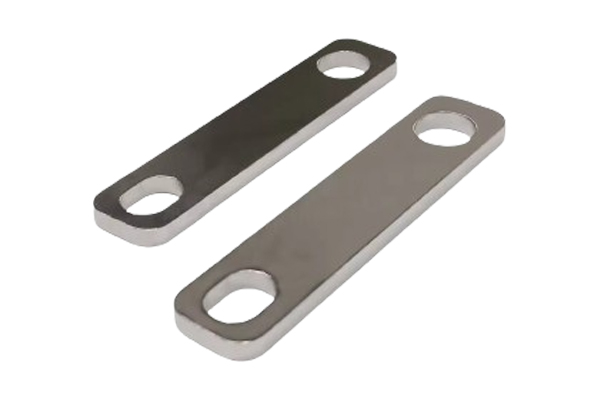
Our Tin-coated copper busbars is a key conductive component in new energy vehicle battery packs, which is mainly used to efficiently transmit high currents, connect battery monomers, reduce contact resistance, and adapt to complex working conditions. Its surface tinning treatment significantly improves oxidation and corrosion resistance, and is widely used in electric vehicle powertrain, charging pile and energy storage system.
| 품목 유형: | 주석도금구리버스바 자동차 배터리버스바 |
|---|---|
| 재료 기반: | High purity electrolytic copper (T2 copper, purity ≥99.9%) or aluminum, tin/nickel/silver plated surface. |
| 코팅: | 주석(무광 또는 광택 마감) |
| 치수: | Typical width 20mm, thickness 3mm, length 200mm (can be customized); copper foil single layer thickness 0.03-0.3mm, support multi-layer stacking. |
| 격리: | PVC, polyimide or polyester resin, thickness 0.1-1.0mm, flame retardant grade UL94-V-0. |
| 저항률: | ≤0.00001Ω, conductivity ≥57%. |
| 전도도: | 효율적인 전력 전송을 위해 높은 전기 전도도를 유지합니다. |
| Rated voltage: | DC 1.0kVDC, maximum power up to 300kW |
| 사용자 정의: | 다양한 크기, 모양 및 구성으로 제공되어 개별 자동차 배터리 요구 사항을 충족합니다. |
| 내구성: | 자동차 환경 및 기계적 스트레스를 견디도록 설계되었습니다. |
| 안전: | 안전한 배터리 작동을 위해 안정적인 전기 연결을 제공합니다. |
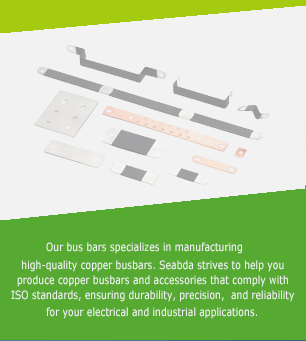
선도적인 주석 도금 구리 버스바 자동차 배터리 버스바
제조업체
자동차 배터리용 주석 도금 구리 버스바의 선도적 제조업체로서, 당사는 자동차 애플리케이션의 까다로운 요구 사항을 충족하도록 맞춤화된 고품질 솔루션을 제공하는 데 특화되어 있습니다. 당사의 버스바는 프리미엄 구리 소재를 사용하여 세심하게 제작되고 주석으로 코팅되어 내구성과 내식성이 향상되었습니다. 당사는 혁신과 맞춤화를 우선시하여 버스바가 자동차 배터리 시스템의 사양에 맞게 정밀하게 설계되어 신뢰할 수 있는 전기 연결과 최적의 성능을 제공합니다. 우수성과 고객 만족에 대한 헌신으로 당사는 최고 수준의 버스바 솔루션을 찾는 자동차 제조업체의 신뢰할 수 있는 파트너로 자리 매김하고 있습니다. 주석 도금 구리 버스바의 선호 공급업체로 당사를 선택하고 품질과 신뢰성의 차이를 경험하십시오.
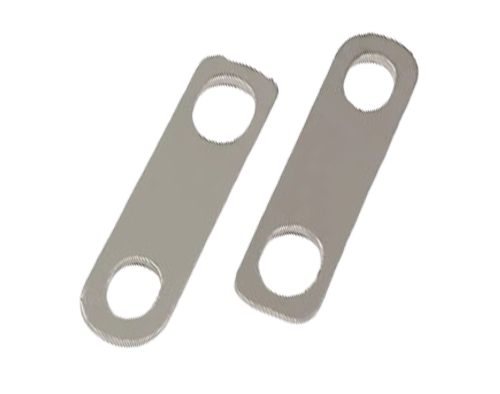
Tin Coated Copper Busbar Prodution Process:
1. Substrate pretreatment
- Unwinding and annealing: copper wire is stretched by wire drawing machine and then annealed, controlling the temperature at 400-550℃ to optimize the ductility.
- Pickling activation: Use acidic solution (such as tinning flux) to remove surface oxides and enhance the adhesion of plating.
2. Tin plating process
- Plating solution configuration: use stannic acid or tin chloride plating solution, temperature control 250-260 ℃ (to prevent oxidation and tin tumors).
- Plating process: Form a uniform tin layer by electrochemical deposition, the thickness of the layer is 3-12μm, and support salt spray test ≥ 240 hours.
3. Post-treatment and testing
- Cooling and insulation: air or air-cooled and wrapped with insulating materials (e.g. heat-shrink tubing or impregnated paint).
- Quality control: Test conductivity, plating thickness, insulation strength, complying with IATF 16949 and RoHS standards.
Tin Coated Copper Busbar Car battery Bus bar Feature:
배터리 시스템에서 버스바는 배터리 팩 내에서 전력을 효율적으로 분배하는 데 중요한 구성 요소 역할을 합니다. 배터리에서 버스바를 사용하는 방법은 다음과 같습니다.
1. High conductivity and low loss
– Copper substrate combined with tin plating layer, taking into account the conductivity efficiency (close to pure copper) and surface oxidation resistance, reducing energy transmission loss.
2. Environmental resistance
– Tin-plated layer to isolate moisture, salt spray corrosion, suitable for automotive battery packs, high temperature, vibration environment.
3. Flexible design
– Multi-layer copper foil laminated structure supports multi-angle bending, suitable for complex battery module layout.
4. Integration and light weight
– Voltage/temperature sensor signal lines can be integrated to reduce overall weight (50% weight reduction compared to aluminum busbar).
Tin Coated Copper Busbar Car battery Bus bar Application:
- Power battery pack: cylindrical/square battery connection for Tesla, BMW and other models.
- Charging system: conductive module for high-voltage fast-charging pile, supporting 800V high-voltage platform.
- Energy storage system (BESS): low inductance and high reliability power distribution in energy storage batteries.
배터리에서 버스바의 용도는 무엇인가?
배터리 시스템에서 버스바는 배터리 팩 내에서 전력을 효율적으로 분배하는 데 중요한 구성 요소 역할을 합니다. 배터리에서 버스바를 사용하는 방법은 다음과 같습니다.
1. Current transmission and distribution
– Connecting battery cells to form series/parallel circuits, realizing efficient energy transfer and reducing contact resistance (laser welding technology reduces heat loss).
2. Thermal management support
– Copper’s high thermal conductivity (401W/mK) helps to dissipate heat, avoiding localized overheating and triggering thermal runaway of the battery.
3. Mechanical Stability
– Rigid structure supports the battery module to resist displacement caused by vehicle vibration and enhance safety.
4. Signal Integration
– Part of the hybrid bus integrates BMS signal lines to monitor battery voltage, temperature and other parameters in real time.

 Korean
  English
  Arabic
  German
  Spanish
  French
  Russian
  Danish
  Japanese
  Italian
  Vietnamese
  Turkish
  Dutch
Dutch  Portuguese
  Thai
Thai  Swedish
  Greek
Greek  Polish
  Estonian
  Esperanto
  Hindi
Hindi  Indonesian
  Latvian