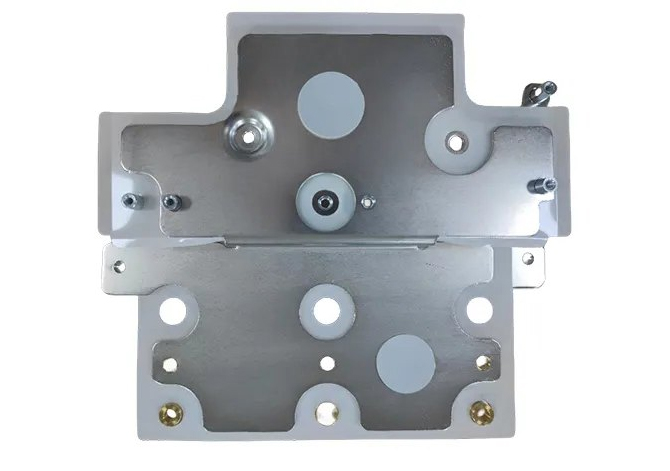
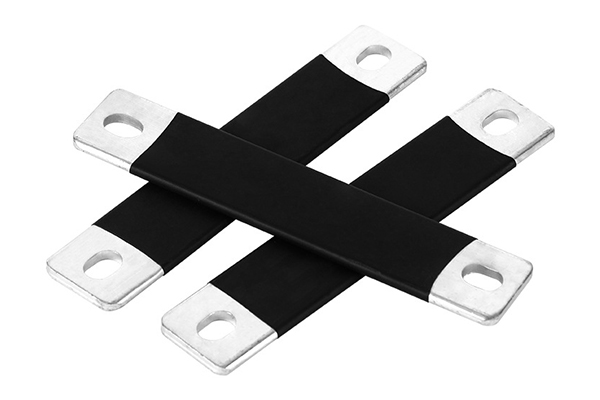
Our factory nickel-plated copper busbar is a conductive material that is uniformly covered with a layer of nickel metal on the surface of high-purity copper through the electroplating process and is widely used in high-demand scenarios such as power transmission, new energy equipment (e.g., batteries, photovoltaics), rail transportation, and communication base stations. Its core advantage lies in combining the high conductivity of copper with the corrosion resistance of nickel, which is suitable for harsh environments such as humidity, high temperature, and chemical corrosion.
| Preces veids | niķelēta vara kopnes stienis |
|---|---|
| Pamata materiāls: | High purity electrolytic copper (purity ≥ 99.95%) nickel plating (nickel layer thickness 5-20μm) |
| Pārklājums: | Nickel layer bonding ≥ 5N/mm², surface hardness HV200-300 |
| Nominālais spriegums: | 250V-600V (depending on the model) |
| Vadītspēja: | ≥10V |
| Garums: | Pielāgojams, parasti līdz 6 metriem |
| Vadītspēja: | ≥ 98% IACS (starptautiskais rūdītā vara standarts) |
| Pretestība: | ≤ 0,017241 omi·mm²/m |
| Stiepes izturība: | 200-400 MPa (atkarībā no konkrētās vara kategorijas) |
| Pagarinājums: | 30-45% |
| Siltumvadītspēja: | 385 W/m·K |
| Darba temperatūras diapazons: | -65℃ to 260℃ (long-term use), short-term temperature resistance up to 300℃ |
| Niķeļa biezums: | Parasti 1-10 mikroni |
| Adhēzija: | Spēcīga, vienmērīga saķere ar vara pamatni |
| Izturība pret koroziju: | Lieliska aizsardzība pret koroziju un oksidāciju |
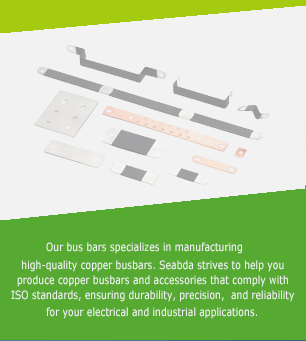
Jūsu Premier niķelēta vara kopņu stieņu ražotājs
Kā vadošais ražotājs mūsu rūpnīca specializējas augstākās kvalitātes niķelēta vara kopņu ražošanā efektīvai un uzticamai jaudas sadalei. Mūsu vara kopnes ir izgatavotas no augstas tīrības pakāpes vara un pārklātas ar izturīgu niķeļa slāni, kas izstrādāta, lai apmierinātu dažādu rūpniecisko un komerciālo lietojumu stingras prasības.
Production Process of nickel plate copper bus bar:
1. Copper wire preparation:
Adopt high-purity electrolytic copper through drawing and stranding processes to process it into the required diameter of copper wire, with tolerance control within ± 0.005mm.
2. Surface treatment:
Copper wire by ultrasonic cleaning and acid washing (such as with sulfamic acid) to remove surface oil and oxides.
3. Electroplating nickel layer:
Adopt the electroplating or chemical plating process, and control the current density (2-5A/dm²), temperature (50-60℃) and pH (3.5-5.5) to form a uniform and dense nickel layer.
4. Post-treatment:
Annealing to eliminate internal stress, ultrasonic cleaning to remove residues, drying and testing of coating thickness, bonding force, and other indicators.
5. Quality Inspection:
The use of high-precision instruments to detect the conductivity, plating uniformity, and corrosion resistance (such as salt spray test).
Kāpēc kopnes ir niķelētas?
1. Corrosion resistance:
Nickel in the humid, salt spray environment can form a passivation film, preventing oxidation of the copper substrate, prolonging the life of the busbar.
2. Reduce contact resistance:
The nickel layer has a smooth surface, which reduces the roughness of the contact surface and avoids the elevated resistance caused by oxidized copper and improves the efficiency of current transmission.
3. Abrasion resistance:
Nickel hardness (HV200-300) is much higher than copper (HV40-60), suitable for sliding contact scenarios (e.g. drawer cabinet connectors).
4. Solderability:
The nickel plating layer is stable at high temperature, superior to tin plating (easy to produce tin whiskers), and suitable for high-frequency welding processes.

Kam tiek izmantots niķelēts varš?
With its high electrical conductivity, corrosion resistance, and abrasion resistance, nickel-plated copper is widely used in electronic communications, new energy, industrial manufacturing, and other fields: in electronic communications, it is used in 5G equipment, high-frequency circuit boards, and precision sensors to ensure the stable transmission of signals; in the new energy automotive and photovoltaic industries, it is used as a battery connector and high-voltage conductor to adapt to high temperatures, salt spray, and other harsh environments; and it is used for abrasion-resistant mechanical parts and chemical pipelines to resist friction and cost in the industry.
With the development of 5G, electric vehicles, and other industries, the application of nickel-plated copper will continue to expand in scenarios that require high conductivity and durability.
Vai niķelēts varš ir labāks par varu?
Kā ražotājs mēs atzīstam, ka niķelēta vara piemērotība pret tukšu varu ir atkarīga no īpašajām pielietojuma prasībām. Niķelētais varš piedāvā priekšrocības attiecībā uz paaugstinātu izturību pret koroziju, oksidācijas novēršanu un uzlabotu izturību salīdzinājumā ar tukšu varu. Šīs priekšrocības padara niķelēto varu īpaši piemērotu lietojumiem, kur ir paredzama saskarsme ar skarbu vidi, kodīgām vielām vai ilgstoša lietošana. Tomēr priekšroka var būt tukšam varam lietojumos, kur prioritāte ir rentabilitāte vai minimāla elektriskā pretestība. Galu galā izvēle starp niķelēto varu un tukšo varu ir atkarīga no tādiem faktoriem kā vides apstākļi, veiktspējas cerības un budžeta ierobežojumi.
| Characteristics | Nickel-plated copper | Pure copper |
|---|---|---|
| Electrical Conductivity | Slightly lower (higher nickel resistivity) | Excellent (conductivity ≥100% IACS) |
| Izturība pret koroziju | Excellent (resistant to oxidation, acids and alkalis) | Medium (easily oxidized to produce copper green) |
| Mehāniskā izturība | Augsts | Vidēja |
| Environment | High humidity, high salt spray, high temperature | Dry, non-corrosive environment |
| Costs | Augsts | Zems |
 Latvian
  English
  Arabic
  German
  Spanish
  French
  Russian
  Danish
  Japanese
  Italian
  Vietnamese
  Turkish
  Dutch
Dutch  Portuguese
  Thai
Thai  Swedish
  Korean
  Greek
Greek  Polish
  Estonian
  Esperanto
  Hindi
Hindi  Indonesian