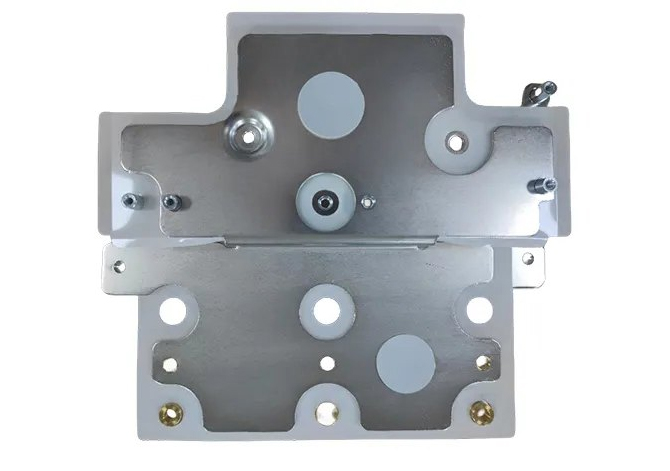
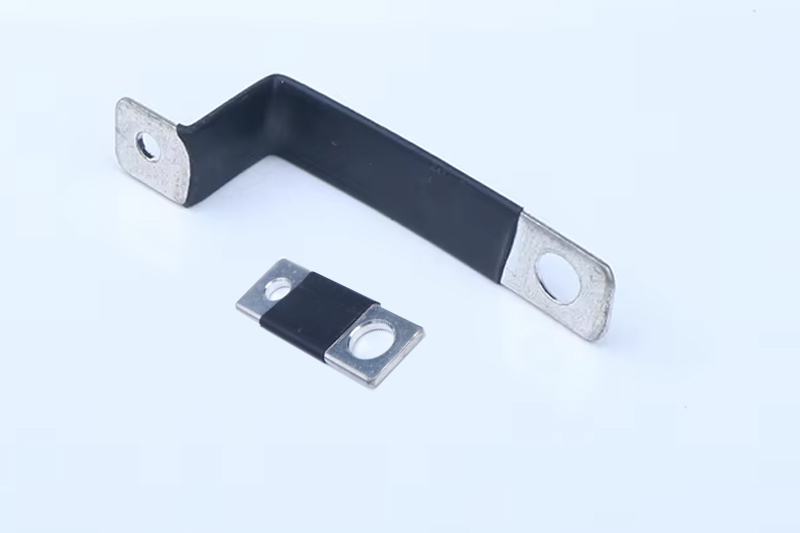
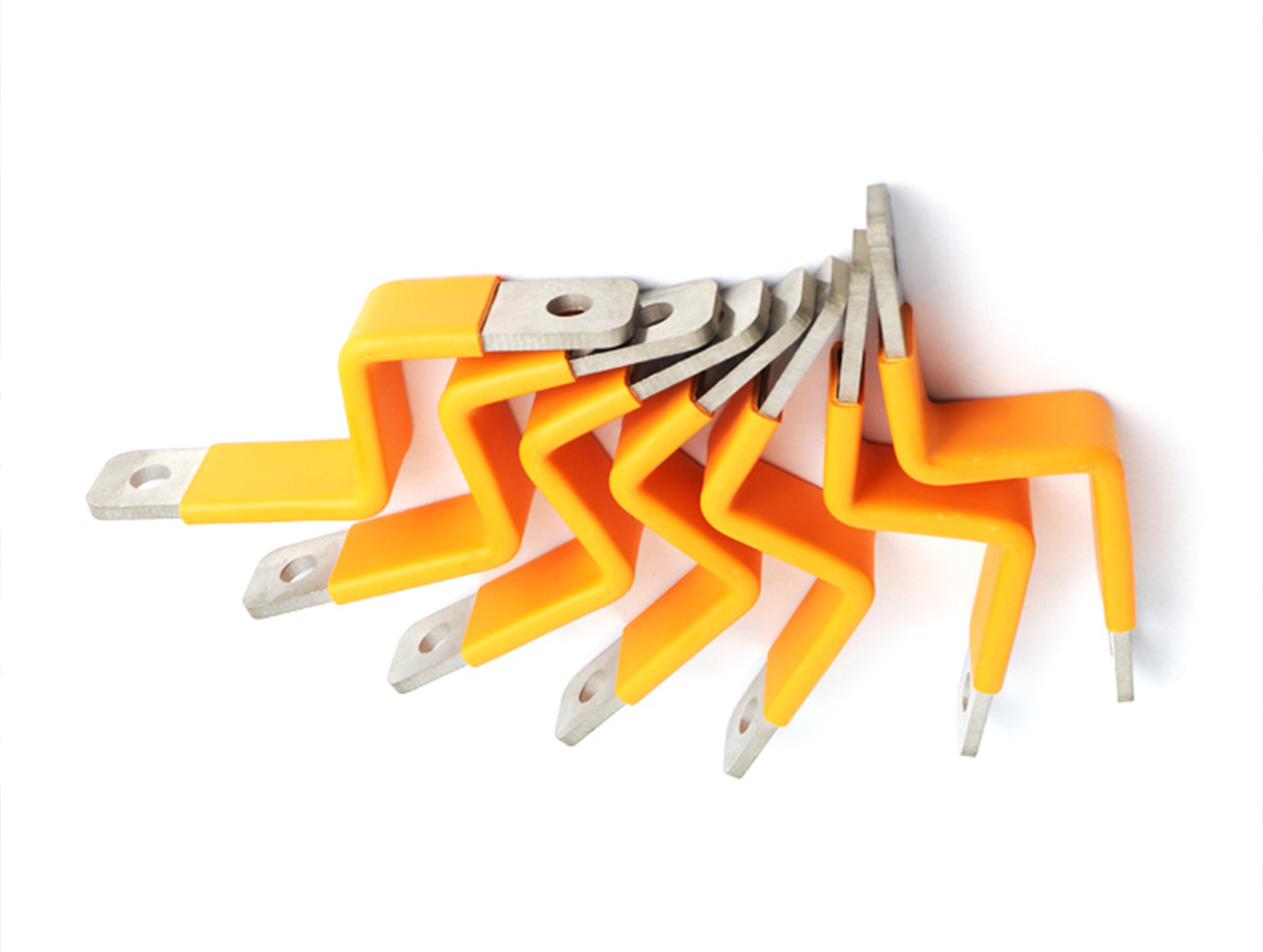
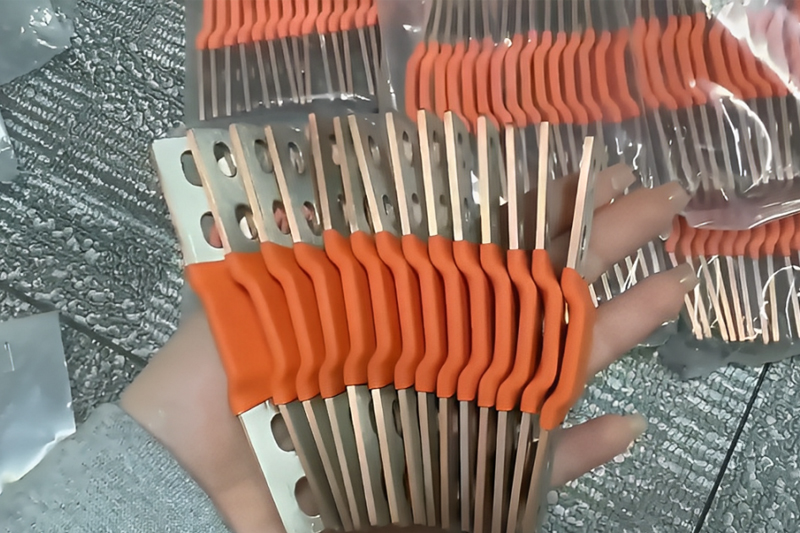
With the rapid development of the new energy industry, the high-current scenario requires increasingly stringent performance of conductive components. With its excellent conductivity, corrosion resistance, and solderability, Alvota vara kopne has become the core component of new energy vehicles, photovoltaic power generation, and other fields. This article starts from the scientific principles of tin-plating process, combined with 7 technical dimensions, in-depth analysis of the selection criteria and application strategy of the tinned copper busbar, and authoritative data comparison to provide enterprises with landing solutions.
1. Benefits of tinned copper busbar
- Vadītspējas uzlabošana un stabilitātes optimizācija
- The conductivity of copper itself is as high as 58 S/m, but the conductivity of copper oxide on the surface decreases significantly. After tin plating, tin oxide (SnO₂) has better conductivity than copper oxide (CuO), which can reduce the contact resistance by up to 30%. Experimental data show that the temperature rise of tin-plated copper busbars is 15-20% lower than that of bare copper busbars(under the same current), which significantly reduces power loss.
- Korozijas izturības uzlabošana ar lēcieniem un robežām
In the salt spray test, the thickness of the tin-plated layer ≥ 25 25μm copper busbar can withstand 1000 hours without corrosion, far more than the limit of 72 hours of bare copper. For example, in coastal photovoltaic power plants, the service life of tinned copper busbars can be extended to more than 15 years, reducing maintenance costs by 40%. - Lodēšanas procesa uzlabošana
Ja matētā alvas pārklājuma virsmas raupjums (Ra vērtība) tiek kontrolēts ar 0,8–1,6 μm, lodēšanas savienojuma stiprība palielinās par vairāk nekā 50%, un uzticamu savienojumu var izveidot bez plūsmas. Tesla Supercharger izmanto šo procesu, lai 3 reizes uzlabotu metināšanas efektivitāti.
2. Alvas pārklāšanas process
| Procesa veids | Apšuvuma biezums (μm) | Vadītspēja (%IACS) | Scenāriji | Izmaksu indekss (bez vara = 1) |
|---|---|---|---|---|
| Spilgta alva | 8-12 | 85-90 | Sadales paneļi, ārējās daļas | 1.8 |
| Matēta alva (lodējama) | 12-15 | 80-85 | Savienotāju daļas, PCB lodēšana | 2.2 |
| Hot Dip Tin | 25-40 | 75-80 | Aprīkojums, ķīmiskā vide | 3.5 |
- Spilgta alva: līdzsvaro estētiku un funkciju
Piemērots datu centru strāvas sadales skapjiem un citiem scenārijiem, kam nepieciešams augsts izskata līmenis, ar spoguļa spīdumu (mērot 60° leņķī) 90GU vai vairāk, taču ir jāizvairās no lodēšanas. - Matēta skārda: labākais risinājums rūpnieciskiem savienojumiem
Augstas temperatūras pretestību var palielināt līdz 200°C, pārklājot niķeļa bāzes slāni (2-5μm biezums), ko izmanto Ningde Times akumulatoru moduļos, samazinot bojāto lodēšanas ātrumu līdz 0,02%. - Karstā skārda: aizsargbarjera ekstremālām vidēm
In offshore wind power projects, 40μm hot-dip tinned copper busbars are 10 times more resistant to sulfide corrosion than bare copper, which is especially suitable for industrial environments containing H₂S.
3. Pārklājuma biezuma materiāls
- Biezuma izvēle
- Sausa iekštelpu vide: 12,5 μm (atbilst GB/T 2423.17 sāls aerosola testa 4. līmeņa standartam)
- Mitrā/rūpnieciskā vide: 25 μm (izturēts IEC 60068-2-11 smagas pakāpes tests)
- Ķīmiskā/jūras vide: ≥30 μm (skatīt NACE TM0172 standartu)
- C110 tīra vara neaizstājamība
C110 copper busbars with copper content ≥99.9%, conductivity up to 101% IACS, and bending formability 3 times higher than brass are the best substrates for the tin-plating process. An ultra-high voltage substation project was measured to show that the C110 copper busbar of the current-carrying capacity of 22% higher than the alloy copper.
4. Kvalitātes kontrole
- Pārklāšanas viendabīguma pārbaude
Rentgenstaru fluorescences spektrometru (XRF) izmanto biezuma kartēšanai, kam nepieciešama novirze ≤±10% (skat. ASTM B568 standartu). - Līmēšanas tests
Izturēt lieces testu (180° liece bez nolobīšanās) un termiskā trieciena testu (-40°C ~ 150°C cikls 5 reizes), kas noteikts ISO 2819. - Vides aizsardzības procesa modernizācija
Vadošie uzņēmumi ir pieņēmuši cianīdu nesaturošus alvas pārklāšanas procesus (piemēram, citrāta sistēmas), kas samazina notekūdeņu toksicitāti par 90% un atbilst RoHS 3.0 standartiem.
5. Pielietojums nozarē
- Augstsprieguma sistēma jauniem enerģijas transportlīdzekļiem
The BYD blade battery module adopts matte tin copper busbars, with contact resistance stabilized at below 0.15 mΩ, supporting 600 A continuous current. - PV invertora topoloģijas optimizācija
Sunny Power’s latest string inverter uses tinned copper busbars to increase the power density to 1.5W/cm³, and the efficiency breaks through 99%.
Apkopojiet
Tehnoloģiskais izrāviens no alvota vara kopne busbars is reshaping the competitive landscape of the new energy industry. From the quantum-level optimization of electrical conductivity to the reliability of extreme environments, the scientific selection of plating processes and thicknesses has become the core strategy of cost reduction and efficiency. With the strategic deployment of high-end materials, the tinned copper busbar will accelerate to aerospace, smart grid and other cutting-edge areas of penetration, opening a new era of conductive components.
Product Categories
〉 Alvas pārklājuma vara kopnes stienis
〉 Niķelēts vara kopnes stienis
Related Post
Why can’t a copper busbar and an aluminum busbar be directly connected?
[email protected]2025-12-08T02:54:03+00:00decembris 8th, 2025|0 Comments
Introduction Copper busbars and aluminum busbars are the two most commonly used conductive materials in the field of power systems and industrial distribution. Due to differences in cost, resource availability, and technical requirements, they often

How Do You Calculate the Size of a Copper Busbar?
[email protected]2025-06-06T06:54:57+00:00jūnijs 6th, 2025|0 Comments
1. Introduction to Busbar Sizing Accurate copper busbar sizing is vital for secure, dependable, and effective electric circulation. Busbars disperse high currents in switchgear and panelboards. Inappropriate sizing reasons extreme warmth, power loss, voltage
10 Essential Tips for Working with Copper Busbars
[email protected]2025-06-03T06:35:28+00:00jūnijs 3rd, 2025|0 Comments
In modern power systems, copper busbars have actually become a core element in power transmission and distribution because of their superb electric conductivity, rust resistance and mechanical strength. As a specialist manufacturer of copper
A Guide to Maintaining Copper Busbars Effectively
[email protected]2025-05-28T06:09:36+00:00maijs 28th, 2025|0 Comments
As a core component of power transmission systems, copper busbars are an important choice for industry due to their high electrical conductivity, corrosion resistance and mechanical strength. However, the durability of its performance is
How to Install Copper Bus Bars for Electrical Systems
[email protected]2025-05-27T07:25:44+00:00maijs 27th, 2025|0 Comments
As a copper busbar manufacturer, we are well aware of its central role in electrical systems. With its excellent electrical conductivity, mechanical strength and corrosion resistance, copper busbar has become a key component in
Everything you need to know about copper busbars
[email protected]2025-05-19T02:55:47+00:00maijs 15th, 2025|0 Comments
Nam lacinia arcu tortor, nec luctus nibh dignissim eu nulla sit amet maximus.
SAZINIETIES
Mēs piegādājam jebkuras pielāgotas kopnes
Saistītās ziņas
Introduction Copper busbars and aluminum busbars are the two most commonly used conductive materials in the field of power systems and industrial distribution. Due to differences in cost, resource availability, and technical requirements, they often need to be connected and used in practical applications. However, directly connecting copper aluminum busbars can pose serious safety hazards.

 Latvian
  English
  Arabic
  German
  Spanish
  French
  Russian
  Danish
  Japanese
  Italian
  Vietnamese
  Turkish
  Dutch
Dutch  Portuguese
  Thai
Thai  Swedish
  Korean
  Greek
Greek  Polish
  Estonian
  Esperanto
  Hindi
Hindi  Indonesian