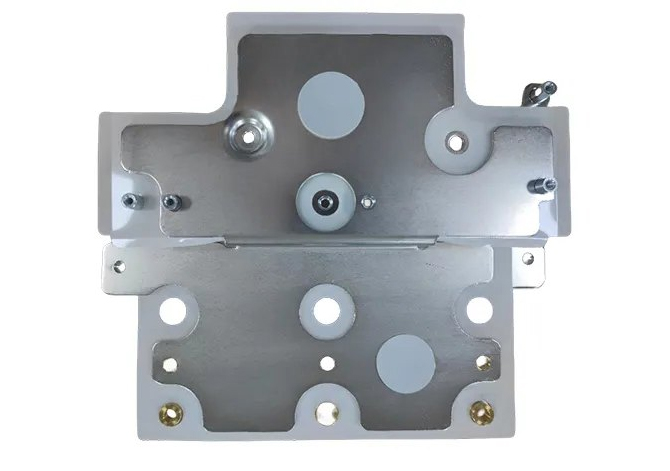
With the rapid development of the new energy industry, the high-current scenario requires increasingly stringent performance of conductive components. With its excellent conductivity, corrosion resistance, and solderability, Vertinde koperen busbar has become the core component of new energy vehicles, photovoltaic power generation, and other fields. This article starts from the scientific principles of tin-plating process, combined with 7 technical dimensions, in-depth analysis of the selection criteria and application strategy of the tinned copper busbar, and authoritative data comparison to provide enterprises with landing solutions.
- Verbetering van de geleidbaarheid en optimalisatie van de stabiliteit
- The conductivity of copper itself is as high as 58 S/m, but the conductivity of copper oxide on the surface decreases significantly. After tin plating, tin oxide (SnO₂) has better conductivity than copper oxide (CuO), which can reduce the contact resistance by up to 30%. Experimental data show that the temperature rise of tin-plated copper busbars is 15-20% lower than that of bare copper busbars(under the same current), which significantly reduces power loss.
- Verbetering van corrosiebestendigheid met sprongen vooruit
In the salt spray test, the thickness of the tin-plated layer ≥ 25 25μm copper busbar can withstand 1000 hours without corrosion, far more than the limit of 72 hours of bare copper. For example, in coastal photovoltaic power plants, the service life of tinned copper busbars can be extended to more than 15 years, reducing maintenance costs by 40%.
- Verbetering van het soldeerproces
Wanneer de oppervlakteruwheid (Ra-waarde) van matte tinplating wordt geregeld op 0,8-1,6 μm, wordt de hechtsterkte van het solderen met meer dan 50% verhoogd en kan een betrouwbare verbinding worden gerealiseerd zonder flux. De Tesla Supercharger gebruikt dit proces om de lasefficiëntie met 3 keer te verbeteren.
2. Vertinproces
| Procestype |
Platingdikte (μm) |
Geleidbaarheid (%IACS) |
Scenario's |
Kostenindex (kaal koper = 1) |
| Helder blik |
8-12 |
85-90 |
Schakelborden, Exterieuronderdelen |
1.8 |
| Mat blik (soldeerbaar) |
12-15 |
80-85 |
Connectorstukken, PCB-solderen |
2.2 |
| Hete duik blik |
25-40 |
75-80 |
Apparatuur, Chemische omgevingen |
3.5 |
- Bright Tin: balans tussen esthetiek en functie
Geschikt voor stroomverdeelkasten in datacenters en andere scenario's waarbij een hoog niveau van uiterlijk vereist is, met een spiegelglans (gemeten onder een hoek van 60°) van 90 GU of meer. Soldeertoepassingen moeten echter worden vermeden.
- Mat blik: de ultieme oplossing voor industriële aansluitingen
De hogetemperatuurbestendigheid kan worden verhoogd tot 200°C door een nikkelbasislaag (2-5μm dik) aan te brengen. Deze laag wordt gebruikt in Ningde Times-batterijmodules, waardoor de kans op defecte soldeersels wordt teruggebracht tot 0,02%.
- Warmgedompeld blik: een beschermende barrière voor extreme omgevingen
In offshore wind power projects, 40μm hot-dip tinned copper busbars are 10 times more resistant to sulfide corrosion than bare copper, which is especially suitable for industrial environments containing H₂S.
3. Plating dikte materiaal
- Dikte selectie
- Droge binnenomgeving: 12,5 μm (voldoet aan GB/T 2423.17 zoutsproeitest niveau 4-norm)
- Vochtige/industriële omgeving: 25 μm (voldoet aan de strenge IEC 60068-2-11-test)
- Chemische/mariene omgeving: ≥30μm (raadpleeg NACE TM0172-norm)
- Onvervangbaarheid van C110 zuiver koper
C110 copper busbars with copper content ≥99.9%, conductivity up to 101% IACS, and bending formability 3 times higher than brass are the best substrates for the tin-plating process. An ultra-high voltage substation project was measured to show that the C110 copper busbar of the current-carrying capacity of 22% higher than the alloy copper.
4. Kwaliteitscontrole
- Test voor uniformiteit van de plating
Voor het in kaart brengen van de dikte wordt een röntgenfluorescentiespectrometer (XRF) gebruikt, waarbij een afwijking van ≤±10% vereist is (raadpleeg de ASTM B568-norm).
- Hechtingstest
Voldoet aan de buigtest (180° buigen zonder af te pellen) en de thermische schoktest (cyclus van -40°C tot 150°C, 5 keer) zoals voorgeschreven door ISO 2819.
- Verbetering van het milieubeschermingsproces
Toonaangevende bedrijven zijn overgegaan op cyanidevrije vertinprocessen (bijvoorbeeld citraatsystemen), die de toxiciteit van afvalwater met 90% verminderen en voldoen aan de RoHS 3.0-normen.
5. Toepassing in de industrie
- Hoogspanningssysteem voor nieuwe energievoertuigen
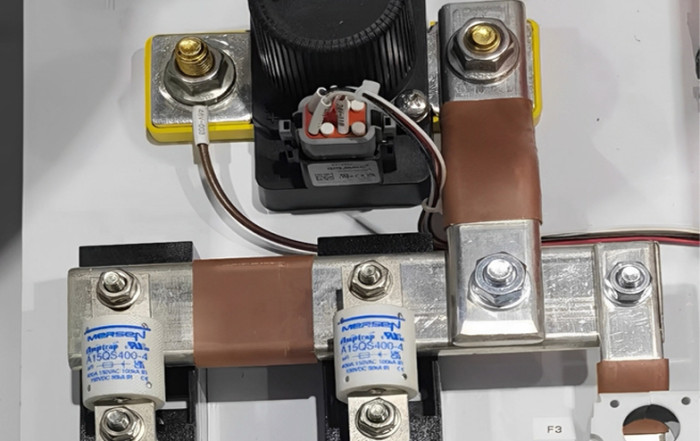
The BYD blade battery module adopts matte tin copper busbars, with contact resistance stabilized at below 0.15 mΩ, supporting 600 A continuous current.
- Optimalisatie van PV-omvormertopologie
Sunny Power’s latest string inverter uses tinned copper busbars to increase the power density to 1.5W/cm³, and the efficiency breaks through 99%.
Samenvatten
De technologische doorbraak van vertinde koperen busbar busbars is reshaping the competitive landscape of the new energy industry. From the quantum-level optimization of electrical conductivity to the reliability of extreme environments, the scientific selection of plating processes and thicknesses has become the core strategy of cost reduction and efficiency. With the strategic deployment of high-end materials, the tinned copper busbar will accelerate to aerospace, smart grid and other cutting-edge areas of penetration, opening a new era of conductive components.


 Dutch
Dutch  English
  Arabic
  German
  Spanish
  French
  Russian
  Danish
  Japanese
  Italian
  Vietnamese
  Turkish
  Portuguese
  Thai
Thai  Swedish
  Korean
  Greek
Greek  Polish
  Estonian
  Esperanto
  Hindi
Hindi  Indonesian
  Latvian