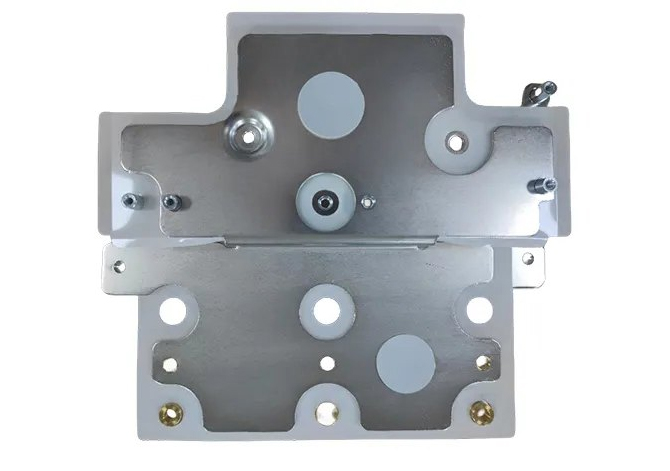
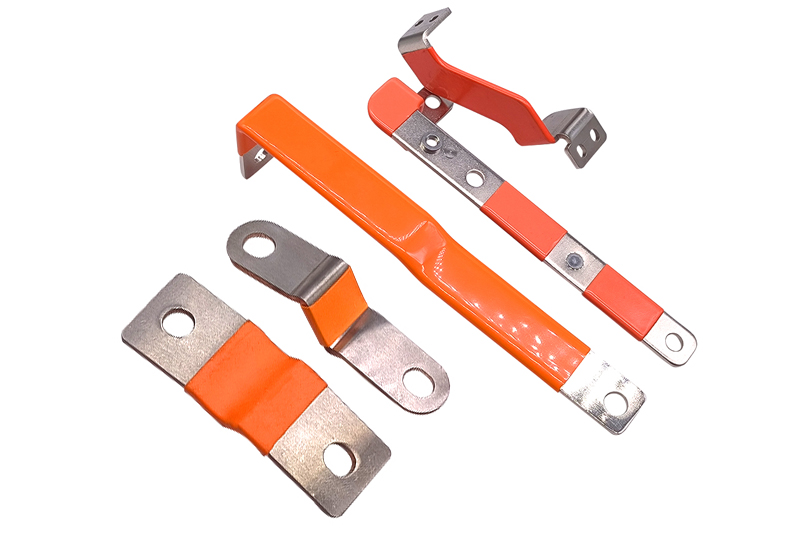
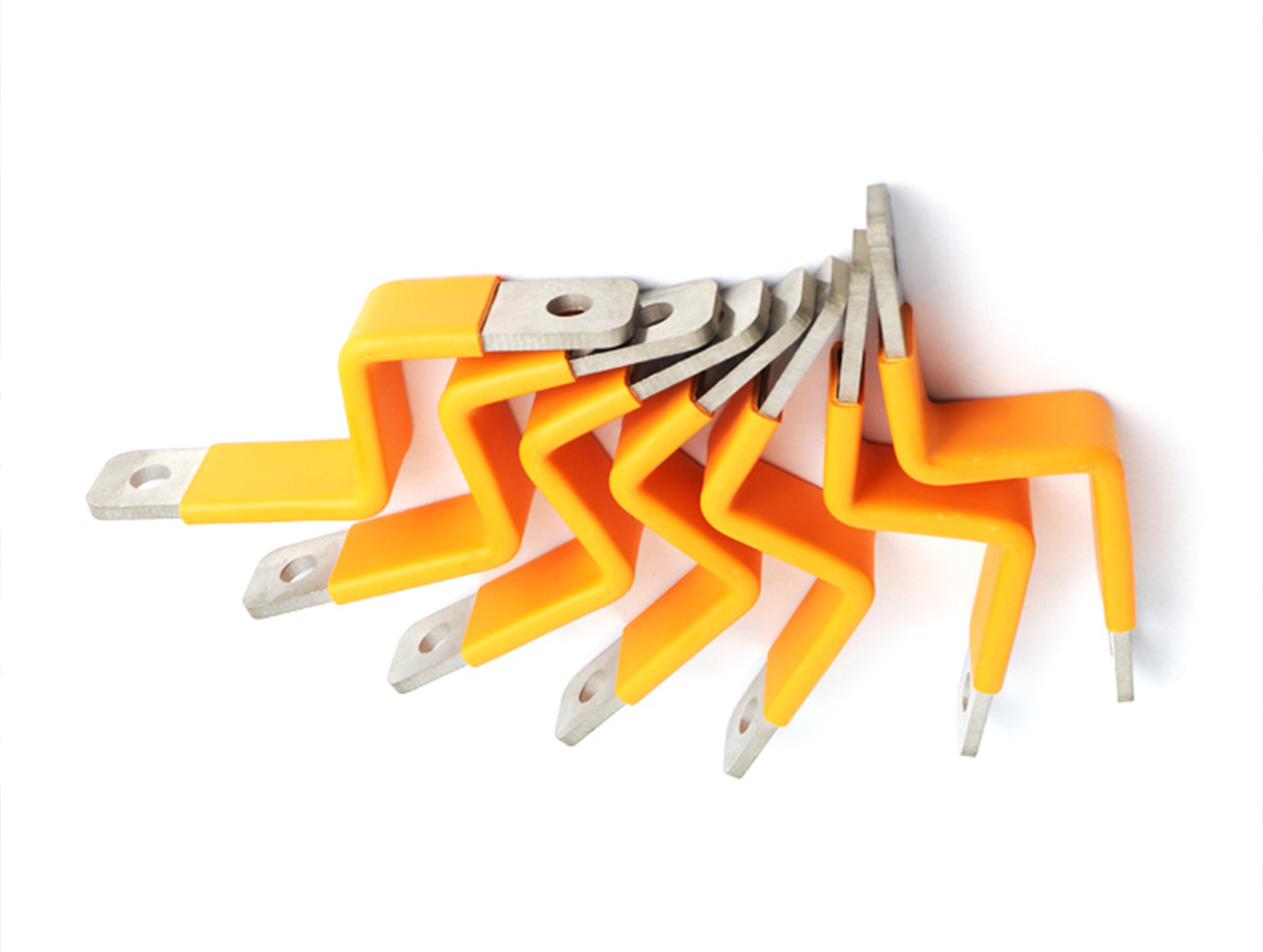
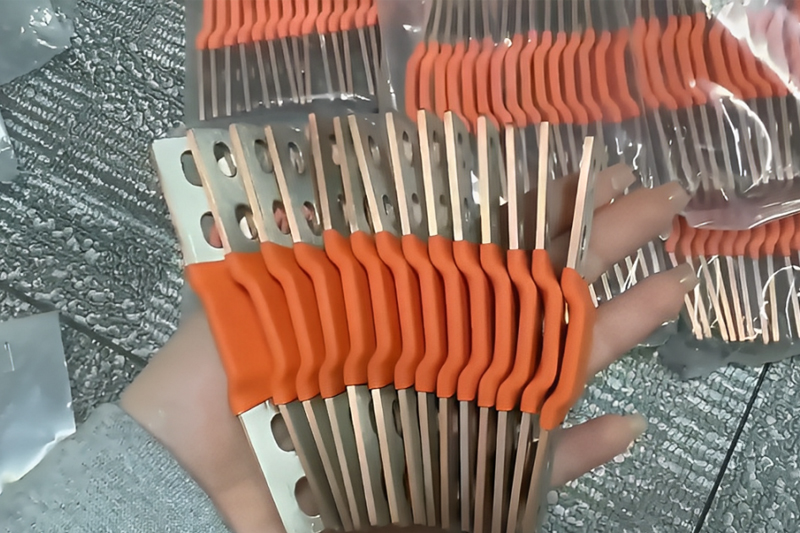
In the field of electrical engineering, a koperen busbar is a key conductive element; its surface treatment process directly affects the performance and life of the equipment. Tinned copper busbars and non-tinned copper busbars are due to different treatment methods; in terms of conductivity, corrosion resistance, cost, and application scenarios, there are significant differences. This paper analyzes the five core indicators (conductivity, corrosion resistance, temperature rise control, economic cost, and application scenarios), combined with authoritative data and industry cases, for engineering design and selection to provide a scientific basis.
Verschil in geleidbaarheid
- Geleidbaarheidsverschillen
Zuiver koper heeft een soortelijke weerstand van 1,7 × 10⁻⁸ Ω-m, terwijl tin een soortelijke weerstand heeft van maximaal 2,2 × 10⁻⁷ Ω-m. Hoewel vertinnen de algehele weerstand van de koperen busbars licht verhoogt, ligt het voordeel in de stabiliteit op lange termijn.
| Materiaalsoort | Weerstand (Ω-m) | Elektrische geleidbaarheid (IACS) |
|---|---|---|
| Zuiver koper | 1,7×10⁻⁸ | 100% |
| Vertind koper | 97% |
De vertinde laag voorkomt oxidatie van het kopersubstraat en voorkomt weerstandspieken door de vorming van kopergroen (koperalkalicarbonaat).
- Optimalisatie van contactweerstand
Vertinde koperen busbars hebben een glad en uniform oppervlak en de contactweerstand is met ongeveer 15-20% verlaagd in vergelijking met gewone koperen busbars. Bijvoorbeeld, bij de aansluiting van een fotovoltaïsche omvormer vermindert de vertinbehandeling de temperatuurstijging bij het contactpunt met 8-10K, wat de systeemefficiëntie aanzienlijk verbetert.
Verschil in corrosieweerstand
- Oxidatiebeschermingsmechanisme
Gewone koperen busbars in omgevingen met een luchtvochtigheid > 60% produceren binnen 48 uur een zichtbare oxidatielaag; vertinde koperen busbars met een tinlaag kunnen worden geïsoleerd van zuurstof en vocht, waardoor het oxidatieproces 3-5 keer langzamer verloopt. Zo is de onderhoudscyclus na de toepassing van vertinde koperen busbars in kuststations verlengd van 1 jaar naar 3 jaar. - Weerstand tegen zure en alkalische omgevingen
In een zure of alkalische omgeving met een pH-waarde van 3-11 bedraagt de corrosiesnelheid van vertinde koperen busstaven slechts een kwart van die van gewone koperen busstaven. - Vergelijking van corrosiesnelheid in verschillende omgevingen.
| Omgevingstype | ingeplateerde koperen busbars (mm/jaar) | Zuiver koperen busbars (mm/jaar) |
|---|---|---|
| Kustzoutnevel | 0.003 | 0.015 |
| Industriële zure regen (pH4) | 0.002 | 0.008 |
Temperatuurverschil
- Standaardverschil temperatuurstijging
Volgens de nationale norm GB/T 14048.1 bedraagt de toegestane temperatuurstijging van vertinde koperen busstaven 65 K, wat hoger is dan die van gewone koperen busstaven, die 50 K bedragen. Deze eigenschap maakt het mogelijk om het draagvermogen met ongeveer 10%-15% te vergroten bij dezelfde doorsnede. - Thermisch stabiliteitsvoordeel
Vertinlagen kunnen de stroomdichtheid gelijkmatig verdelen, waardoor het risico op lokale oververhitting wordt verminderd. Bijvoorbeeld, na het gebruik van vertinde koperen busbars in een datacenter, daalde de piektemperatuurstijging van 75K naar 62K en daalde het uitvalpercentage van het systeem met 40%.
Toepassingsscenario's
- Vertinde koperen busbar van toepasbare velden
- Omgevingen met een hoge luchtvochtigheid, zoals kustenergiecentrales en elektrische systemen op schepen
- Precisie-elektronica: halfgeleiderverpakking, 5G-basisstation
- Scenario's met hoge frequenties: nieuwe energieomvormers, hogesnelheidstreintractiesystemen.
- De economische keuze voor gewone koperen busbars
- Droge binnenomgevingen, zoals verdeelkasten in commerciële gebouwen (nationale norm GB50303-2015 staat niet-vertinde behandeling toe).
- Projecten op korte termijn: tijdelijke stroomvoorzieningen, goedkope apparatuur.
Conclusie
De keuze tussen vertinde koperen geleiders Vereist een combinatie van geleidbaarheidsvereisten, omgevingsomstandigheden, budget en onderhoudskosten. In corrosieve omgevingen of situaties met een hoge betrouwbaarheid zijn vertinde koperen busbars de eerste keuze geworden vanwege hun stabiele geleidbaarheid en langdurige bescherming, terwijl in conventionele situaties met een droge, laagbelaste omgeving gewone koperen busbars nog steeds kostenvoordelen bieden. In de toekomst, met de optimalisatie van het vertinproces (zoals nanocoatingtechnologie), zal het kosteneffectieve voordeel ervan verder worden benadrukt.
Related Post
Why can’t a copper busbar and an aluminum busbar be directly connected?
[email protected]2025-12-08T02:54:03+00:00december 8th, 2025|0 Comments
Introduction Copper busbars and aluminum busbars are the two most commonly used conductive materials in the field of power systems and industrial distribution. Due to differences in cost, resource availability, and technical requirements, they often

How Do You Calculate the Size of a Copper Busbar?
[email protected]2025-06-06T06:54:57+00:00juni 6th, 2025|0 Comments
1. Introduction to Busbar Sizing Accurate copper busbar sizing is vital for secure, dependable, and effective electric circulation. Busbars disperse high currents in switchgear and panelboards. Inappropriate sizing reasons extreme warmth, power loss, voltage
10 Essential Tips for Working with Copper Busbars
[email protected]2025-06-03T06:35:28+00:00juni 3rd, 2025|0 Comments
In modern power systems, copper busbars have actually become a core element in power transmission and distribution because of their superb electric conductivity, rust resistance and mechanical strength. As a specialist manufacturer of copper
A Guide to Maintaining Copper Busbars Effectively
[email protected]2025-05-28T06:09:36+00:00mei 28th, 2025|0 Comments
As a core component of power transmission systems, copper busbars are an important choice for industry due to their high electrical conductivity, corrosion resistance and mechanical strength. However, the durability of its performance is
How to Install Copper Bus Bars for Electrical Systems
[email protected]2025-05-27T07:25:44+00:00mei 27th, 2025|0 Comments
As a copper busbar manufacturer, we are well aware of its central role in electrical systems. With its excellent electrical conductivity, mechanical strength and corrosion resistance, copper busbar has become a key component in
Everything you need to know about copper busbars
[email protected]2025-05-19T02:55:47+00:00mei 15th, 2025|0 Comments
Nam lacinia arcu tortor, nec luctus nibh dignissim eu nulla sit amet maximus.
Neem contact op
Wij leveren alle aangepaste busbars
Gerelateerde berichten
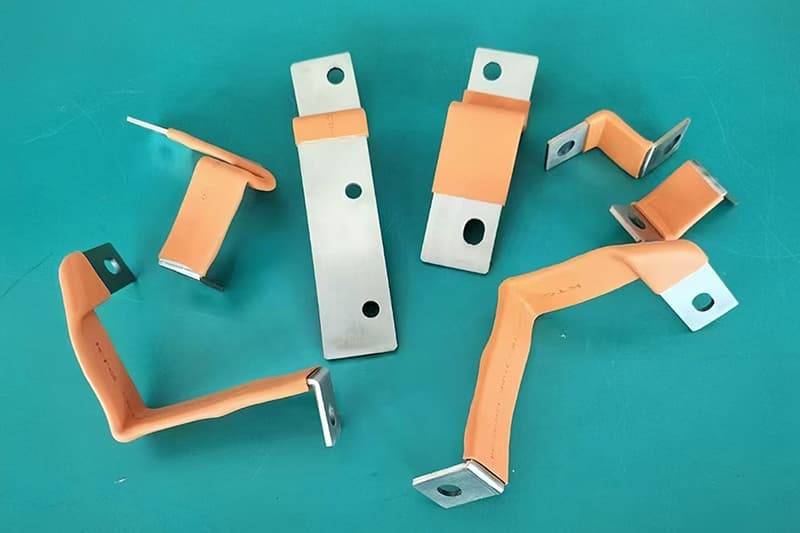
Introduction Copper busbars and aluminum busbars are the two most commonly used conductive materials in the field of power systems and industrial distribution. Due to differences in cost, resource availability, and technical requirements, they often need to be connected and used in practical applications. However, directly connecting copper aluminum busbars can pose serious safety hazards.

 Dutch
Dutch  English
  Arabic
  German
  Spanish
  French
  Russian
  Danish
  Japanese
  Italian
  Vietnamese
  Turkish
  Portuguese
  Thai
Thai  Swedish
  Korean
  Greek
Greek  Polish
  Estonian
  Esperanto
  Hindi
Hindi  Indonesian
  Latvian