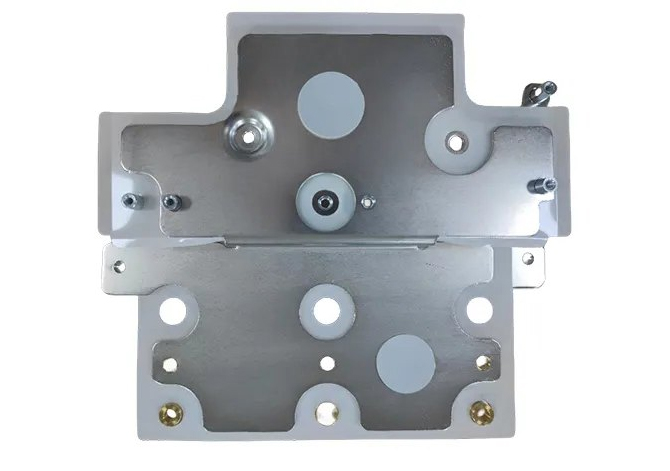
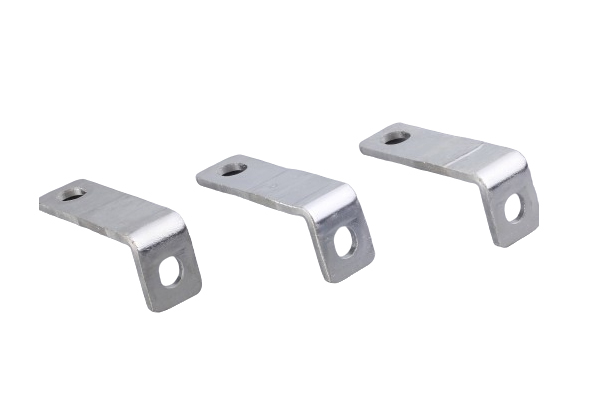
Verzilverde koperen busstang
√ Verzilvering verbetert de geleidbaarheid van koper aanzienlijk
√ Uitstekende bestendigheid tegen oxidatie en zware omstandigheden.
√ Efficiënte warmteafvoer om oververhitting te voorkomen.
√ Sterk en robuust, bestand tegen fysieke belasting en slijtage.
√ Betrouwbare elektrische verbindingen met verminderde weerstand.
The silver plated copper busbar we manufacture is a kind of power transmission material with high-purity copper (such as oxygen-free copper or low-oxygen copper) as the substrate, and the surface is covered with silver layer through electroplating process. It combines the high conductivity of copper with the oxidation resistance of silver, and is widely used in high-precision and high-reliability scenarios such as electric power systems, communication equipment, new energy vehicles, aerospace, etc. It is especially suitable for high-frequency transmission and high-current environments.
| Artikeltype: | verzilverde koperen busbar |
|---|---|
| Materiaal basis: | Koperen kern met een zilveren platinglaag. |
| Zilverplating dikte: | Meestal varieert de grootte van 5 tot 15 micron. |
| Dikte van koperen kern: | Varieert op basis van de stroomdraagcapaciteit en de toepassingsvereisten. |
| Spanningsclassificatie: | Geschikt voor verschillende spanningsniveaus, afhankelijk van de isolatie en het ontwerp. |
| Lengte: | Aanpasbaar aan de gewenste afmetingen van het elektrische systeem. |
| Breedte: | Aanpasbaar op basis van de specifieke toepassingsbehoeften. |
| Huidige capaciteit: | Wordt bepaald door de dikte, breedte en materiaaleigenschappen. |
| Temperatuurclassificatie: | Kan werken binnen een breed temperatuurbereik, doorgaans van -50°C tot 150°C. |
| Verlenging: | 30-40% (afhankelijk van de specifieke legering en hardheid) |
| Hardheid: | 40-80 HV (Vickers-hardheid) |
| Dikte van de tincoating: | 3 tot 15 micron (aanpasbaar) |
| Oppervlakteafwerking: | Verzilvering biedt uitstekende corrosiebestendigheid en verbetert de elektrische geleiding. |
| Toepassingen: | Geschikt voor gebruik in stroomdistributiesystemen, elektrische panelen, schakelapparatuur en diverse industriële toepassingen waar een hoge geleidbaarheid en corrosiebestendigheid vereist zijn. |
Toonaangevende fabrikant van verzilverde koperen busbars
Wij zijn gespecialiseerd in het produceren van hoogwaardige verzilverde koperen busbars die zijn afgestemd op de veeleisende vereisten van verschillende industrieën. Onze verzilverde koperen busbars zijn ontworpen voor uitzonderlijke geleidbaarheid, betrouwbaarheid en duurzaamheid. Met precisietechniek en geavanceerde verzilveringstechnologie bieden onze busbars superieure elektrische prestaties, wat zorgt voor minimaal energieverlies en efficiënte krachtoverbrenging.
1. conductor material:
- Copper purity ≥ 99.95% (e.g. T2 copper or high purity oxygen-free copper), surface silver plating layer thickness is usually 1-5μm.- Conductivity ≥ 97.6% IACS (International Annealed Copper Standard), better than ordinary copper busbar.
2. Electrical performance:
- Carrying capacity increased by more than 30% (due to the silver layer to reduce the contact resistance).- Temperature rise limit: Silver-plated busbar allows temperature rise up to 70K (bare copper is 60K), suitable for high load scenarios.
3. Physical properties:
- Tensile strength ≥15%, can withstand high-frequency vibration and mechanical shock.- Corrosion resistance: passed 1800 hours of salt spray test, suitable for humid, chemical, and other harsh environments.
4. Dimensional specifications:
- Common thickness 1.5-25mm, width 10-250mm, support customized shaped rows (such as C-type female rows).
Silver plated copper bus bar Production process:
1. Raw material processing:
- Copper rods are processed into copper strips by the top-induction method or cold-rolling process, and the surface is milled to remove the oxidized layer.
2. Pre-plating treatment:
- Alkaline etching: 50-80 ℃ sodium hydroxide solution to clean the oil.
- Acid cleaning activation: dilute sulfuric acid to remove oxides and enhance the adhesion of the plating layer.
3. Silver plating process:
- Pre-silver plating: current density 1-3A/dm², energized for 5-10 seconds to form the bottom layer.
- Main silver plating: current density 0.5-3A/dm², temperature 15-35 ℃, plating 1.5-2.5 hours, and the thickness of the silver layer is uniform.
4. Post-treatment:
- Dip anti-silver discoloration agent (such as benzotriazole) to prevent sulfidation and oxidation.
- Laser marking, automatic inspection, and packaging.
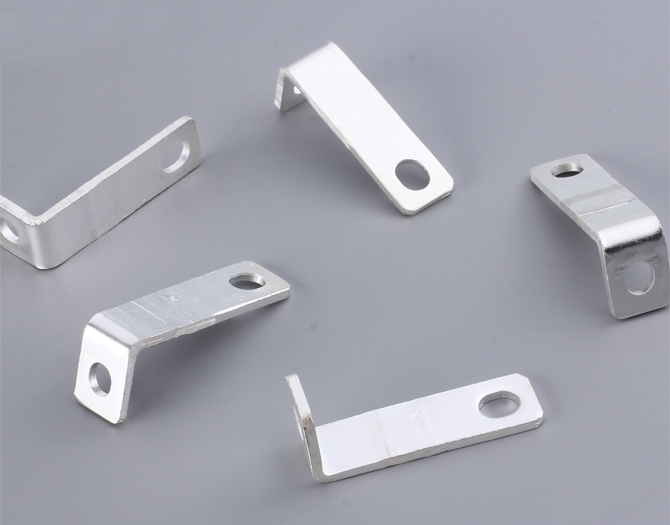
Kenmerken van verzilverde koperen busbar:
1. High conductivity: the conductivity of silver (6.3×10⁷ S/m) is higher than that of copper (5.96×10⁷ S/m), which reduces transmission losses.
2. Oxidation resistance: silver layer isolates copper from oxygen, avoiding the generation of copper oxide and keeping low contact resistance.
3. High-frequency adaptability: under skin effect, the silver layer improves the stability of high-frequency signal transmission, suitable for 5G, data center and other scenarios.
4. High Temperature Resistance: Support -65℃ to 250℃ working temperature, short time resistance 300℃, better than tinned copper row.
5. Environmentally friendly: Halogen-free materials, no release of toxic gases in case of fire, passes UL94 flame retardant standard.
Waarom zijn busbars verzilverd?
Busbars worden vaak verzilverd om verschillende redenen:
- Reduced contact resistance: silver conductivity is better than copper and tin; silver plating reduces contact resistance by 30%, improving current-carrying capacity and energy efficiency.
- Resistance to corrosion and oxidation: Silver is less susceptible to corrosion in humid, sulfur/chlorine environments, avoiding performance degradation caused by oxidation of the copper substrate.
- Optimization of high-frequency performance: high-frequency current is concentrated on the surface of the conductor (skin effect), and the silver layer reduces signal attenuation and ensures communication quality.
- Extended service life: the silver plating layer is wear-resistant, suitable for frequent plugging and unplugging scenarios (such as switchgear connectors), reducing maintenance costs.
- Temperature rise control: allows a higher temperature rise (70K vs. 60K for bare copper), adapting to the needs of high-current transmission.

 Dutch
Dutch  English
  Arabic
  German
  Spanish
  French
  Russian
  Danish
  Japanese
  Italian
  Vietnamese
  Turkish
  Portuguese
  Thai
Thai  Swedish
  Korean
  Greek
Greek  Polish
  Estonian
  Esperanto
  Hindi
Hindi  Indonesian
  Latvian