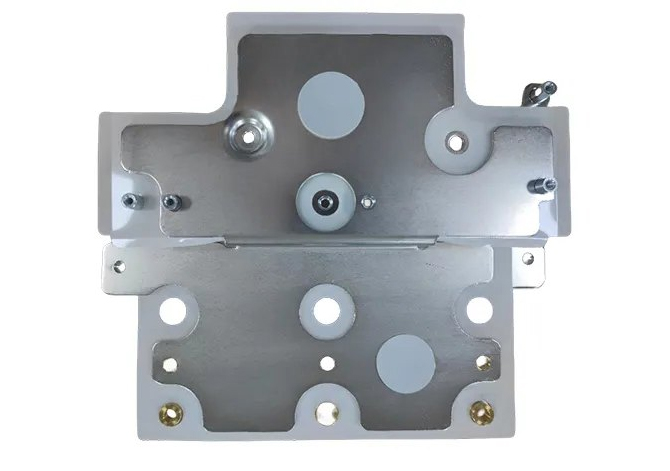
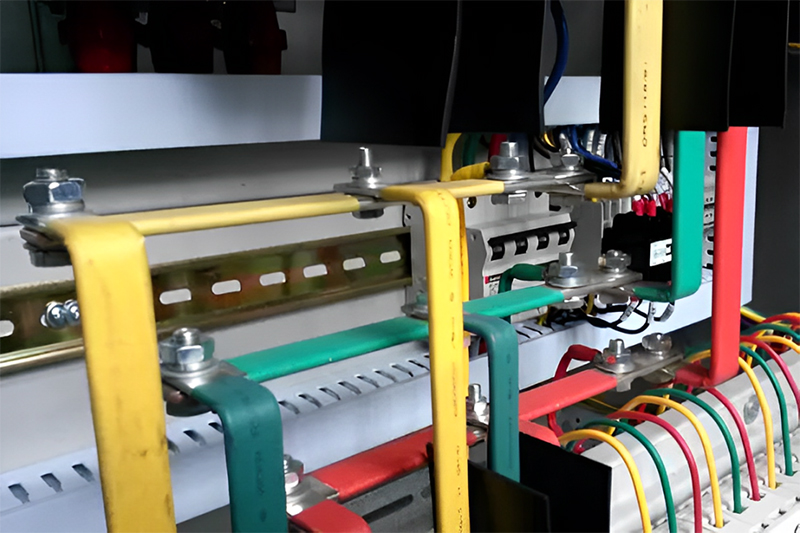
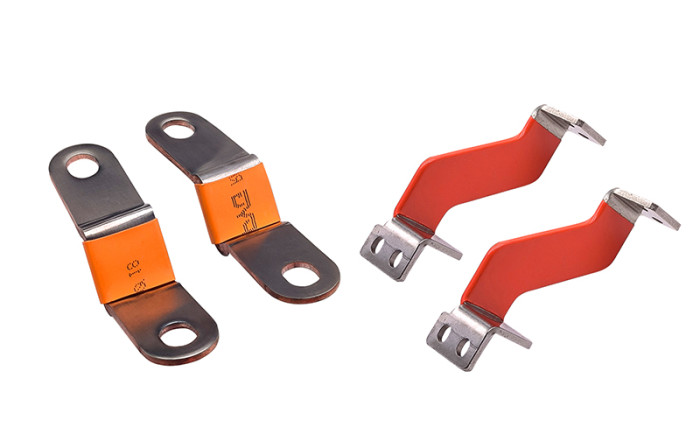
Geïsoleerde koperen busbar has become a key material in the field of power transmission and distribution due to its excellent electrical performance, safety and environmental adaptability. This article systematically analyzes its core value in new energy, industrial automation, and other fields from the perspective of material innovation, performance advantages, application scenarios, and future trends, combined with global market data and authoritative research. By comparing experimental data and industry cases, it reveals how copper insulation busbars can promote energy efficiency and reduce carbon emissions through technological innovation.
I. Material: technological innovation of insulation layer
The core competitiveness of insulated copper busbar comes from the innovation of its polymer materials. Currently, the mainstream insulating materials include epoxy resin, polyester, and silicone.
Mainstream Insulation Material Performance Comparison
| Materiaalsoort | Temperature Resistance (℃) | Breakdown Voltage (kV/mm) | Cost Index (benchmark 1) |
|---|---|---|---|
| Epoxy | 180 | 35 | 1.2 |
| Polyester | 150 | 28 | 1.0 |
| Silicone | 200 | 25 | 1.5 |
II. Advantages: Double Guarantee of Safety and Efficiency
- Electrical safety: Insulation reduces the risk of short circuit by 98% (IEEE 2023 study) and remains stable in environments with humidity >90%.
- Energy efficiency: resistivity as low as 0.0175 Ω-mm²/m, reducing transmission losses by 15% compared to aluminum busbar (ABB lab data).
- Mechanical strength: shock resistance increased by 50%, suitable for high-speed rail, wind power and other vibration scenarios (IEC 61439 standard certification).
III. Application : From Traditional Electricity to New Energy
- Railway transportation: In China’s high-speed railway CR400AF model, the insulated copper busbars are 100% localized, supporting the contact network system for 20 years without maintenance.
- Photovoltaic power generation: The Tesla Solar Roof project adopts silicone-insulated copper busbars, extending module life to 30 years (NREL test data).
- Data center: Google supercomputing center through the copper busbar optimization layout, power loss reduced by 12%, annual power savings of 240 million degrees.
IV. Environmental Protection and Sustainability
- Recycling rate: Copper recycling rate >95%; the proportion of degradable materials in the insulation layer increased to 40% (EU RoHS Directive).
- Carbon Footprint: Carbon emissions per ton of insulated copper busbar production are reduced by 2.3 tons compared with the traditional process (International Copper Association data).
V. Market Outlook and Industry Trends
According to Grand View Research, the global insulated copper busbars market size will exceed $24 billion in 2025, growing at a CAGR of 8.7%. Growth drivers include:
- New energy demand: installed wind power capacity to grow at a CAGR of 12% (GWEC 2025 report).
- Smart grid construction: global investment of $650 billion (IEA forecast).
Conclusie
The revolution in copper insulation is not only a triumph of materials science but also a key underpinning of the global energy transition. From reducing power losses to driving carbon neutrality goals, its technological iteration and market adoption are reconfiguring the underlying logic of power infrastructure. In the future, with the deep integration of recyclable materials and intelligent production, copper insulation will continue to lead the revolution of efficient, safe, and sustainable energy transmission.
Related Post
Why can’t a copper busbar and an aluminum busbar be directly connected?
[email protected]2025-12-08T02:54:03+00:00december 8th, 2025|0 Comments
Introduction Copper busbars and aluminum busbars are the two most commonly used conductive materials in the field of power systems and industrial distribution. Due to differences in cost, resource availability, and technical requirements, they often

How Do You Calculate the Size of a Copper Busbar?
[email protected]2025-06-06T06:54:57+00:00juni 6th, 2025|0 Comments
1. Introduction to Busbar Sizing Accurate copper busbar sizing is vital for secure, dependable, and effective electric circulation. Busbars disperse high currents in switchgear and panelboards. Inappropriate sizing reasons extreme warmth, power loss, voltage
10 Essential Tips for Working with Copper Busbars
[email protected]2025-06-03T06:35:28+00:00juni 3rd, 2025|0 Comments
In modern power systems, copper busbars have actually become a core element in power transmission and distribution because of their superb electric conductivity, rust resistance and mechanical strength. As a specialist manufacturer of copper
A Guide to Maintaining Copper Busbars Effectively
[email protected]2025-05-28T06:09:36+00:00mei 28th, 2025|0 Comments
As a core component of power transmission systems, copper busbars are an important choice for industry due to their high electrical conductivity, corrosion resistance and mechanical strength. However, the durability of its performance is
How to Install Copper Bus Bars for Electrical Systems
[email protected]2025-05-27T07:25:44+00:00mei 27th, 2025|0 Comments
As a copper busbar manufacturer, we are well aware of its central role in electrical systems. With its excellent electrical conductivity, mechanical strength and corrosion resistance, copper busbar has become a key component in
Everything you need to know about copper busbars
[email protected]2025-05-19T02:55:47+00:00mei 15th, 2025|0 Comments
Nam lacinia arcu tortor, nec luctus nibh dignissim eu nulla sit amet maximus.
Neem contact op
Wij leveren alle aangepaste busbars
Gerelateerde berichten
Nam lacinia arcu tortor, nec luctus nibh dignissim eu nulla sit amet maximus.

Nam lacinia arcu tortor, nec luctus nibh dignissim eu nulla sit amet maximus.
Nam lacinia arcu tortor, nec luctus nibh dignissim eu nulla sit amet maximus.
Nam lacinia arcu tortor, nec luctus nibh dignissim eu nulla sit amet maximus.

 Dutch
Dutch  English
  Arabic
  German
  Spanish
  French
  Russian
  Danish
  Japanese
  Italian
  Vietnamese
  Turkish
  Portuguese
  Thai
Thai  Swedish
  Korean
  Greek
Greek  Polish
  Estonian
  Esperanto
  Hindi
Hindi  Indonesian
  Latvian