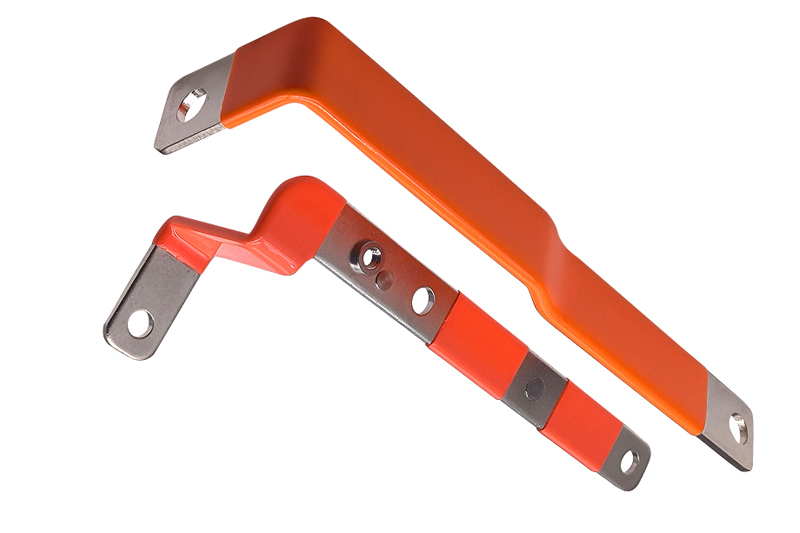
As an important innovation in the field of modern power transmission, flexibele koperen busbar (O-state soft busbar) is gradually replacing traditional cables and rigid busbars by virtue of its excellent conductivity, flexibility, and efficient installation characteristics. This paper analyzes the technical characteristics and economic value of flexible copper busbar from its six core advantages, combined with its application cases in the fields of new energy, electric power systems, electronic equipment, and so on. Through data comparison, industry authority cited, and actual scene demonstration, revealing how flexible copper busbars are to technical innovation to promote industry change.
I. Advantages of flexible copper busbars
- Space and quality optimization
Flexible copper busbar w adopts a multi-layer corona-proof thin copper sheet stacking structure (bare copper or tinned copper), which reduces the installation space by more than 50% compared with traditional cables. For example, in the distribution cabinet, flexible copper busbar can be bent to adapt to the compact layout, allowing the minimum installation spacing (≤ 5mm), while the same load capacity of the cable needs to reserve more than 15 mm of space.Comparison of space occupied by flexible copper and conventional cables
| Parameter | Flexibele koperen busbar | Conventional Cable |
|---|---|---|
| Installation space (mm) | ≤5 | ≥15 |
| Conductor length | 30% shorter | Fixed length |
| Weight (kg/m | 1.2-2.5 | 3.0-5.0 |
- Increased installation efficiency
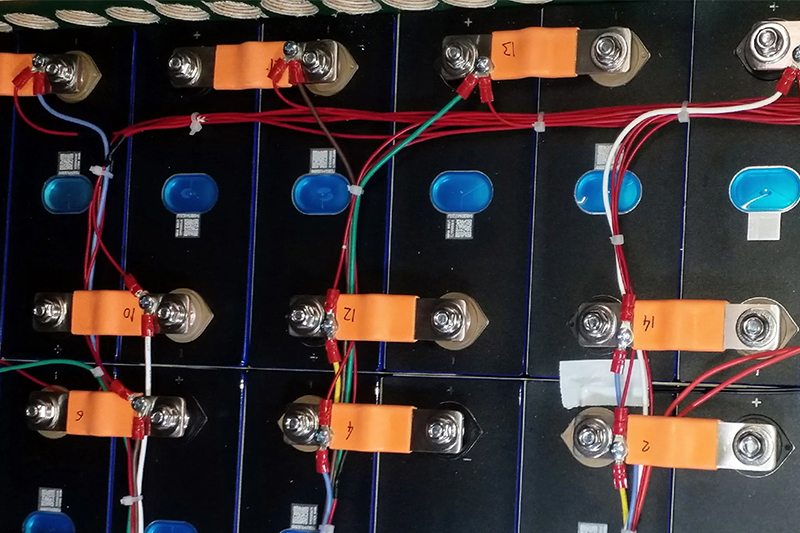
Flexible copper busbars do not require additional connectors and connecting blocks and can be used by punching holes directly. Take the customer case of Zhejiang Jinqiao Copper as an example: after adopting flexible copper busbars for a new energy vehicle battery module, the installation time was shortened from 4 hours to 1.5 hours, and the labor cost was reduced by 60%. - Design flexibility and aesthetics
Flexible copper busbars support 360° bending (bending radius ≥ 2 times the thickness), which can be adapted to the design of shaped structures. For example, in photovoltaic inverters, it bends to solve the traditional hard busbar due to thermal expansion and contraction of the connection failure. - High conductivity and safety
The electrical conductivity of copper is 58×10⁶ S/m, which is better than aluminum (35×10⁶ S/m). The surface of the flexible copper busbar can be customized with a heat-shrinkable tube or PVC sleeve, insulation voltage rating of 3000V, effectively preventing short circuit and corona loss (a power system measured life enhancement to more than 15 years). - Energy saving and environmental benefits
The resistivity of flexible copper busbar is as low as 0.017 Ω-mm²/m, and the energy loss is 20%-30% less than that of traditional cables. According to the International Copper Association (ICA), if 10% of the world’s electric power system is changed to flexible copper busbar, the annual power saving can reach 12 billion kWh. - Significant economic benefits
Although the initial cost of flexible copper busbar is higher (about 15% higher than cable), its low maintenance cost and long life (≥20 years) reduce the comprehensive cost by more than 40%. Take a data center project as an example; after adopting flexible copper busbar, the 10-year operation and maintenance cost savings exceed 2 million yuan.
II. Flexible Copper Busbar Application
- New energy field
- Electric vehicles: flexible copper busbars are used for battery module connection, resistant to vehicle vibration and temperature changes (-40℃~150℃), Tesla Model 3 battery packs are designed with multi-layer tin-plated copper busbars , with a current-carrying capacity of 600A.
- PV/energy storage systems: In Huawei’s smart PV solutions, flexible copper busbars realize efficient connections between modules and inverters, reducing line losses by 3%-5%.
- Power Systems
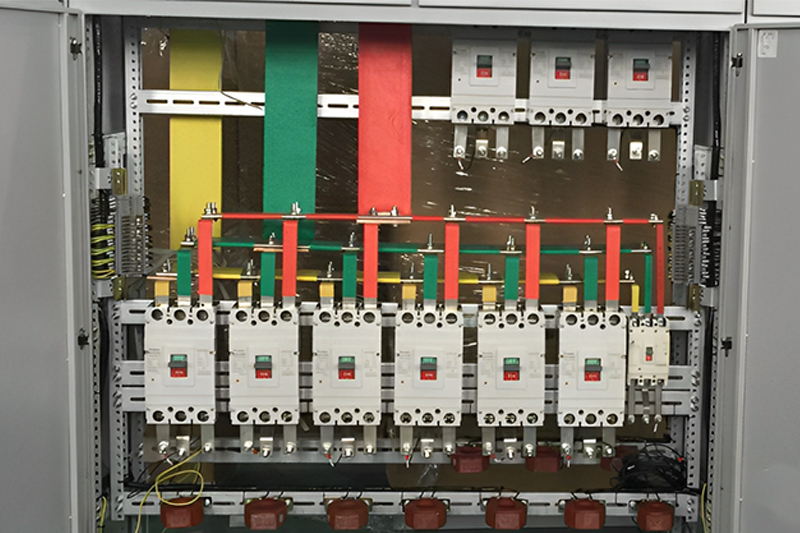
- Substations and distribution cabinets: After flexible copper busbars were used to replace cables in a 110 kV substation of the State Grid, the temperature rise of bus ducts was reduced by 10°C, and the failure rate dropped by 50%.
- Grounding system: Flexible copper busbar is highly corrosion-resistant (salt spray test ≥ 500 h), suitable for high humidity environments in coastal areas.
- High-end electronic equipment
- 5G base station: ZTE Corporation uses flexible copper busbars to connect RF modules, reducing space occupation by 40% and improving heat dissipation efficiency by 25%.
- Server power supply: Google’s data center achieves stable transmission under 10kA short-circuit current, and MTBF (mean time between failure) is extended to 100,000 hours through customized copper busbar design.
Conclusie
With the advantages of space-saving, efficient installation, safety and reliability, flexibele koperen busbar has become a revolutionary force in the field of power transmission. From new energy vehicles to 5G base stations, from photovoltaic power stations to data centers, its application scenarios continue to expand. With technological innovation (e.g. Jinqiao Copper’s patented technology) and industry standard improvement, flexible copper busbars will continue to promote energy efficiency and sustainable development goals. Enterprises can further optimize their designs through customized services (e.g. heat-shrinkable tubes/PVC sleeves) to seize market opportunities.
Related Post
Why can’t a copper busbar and an aluminum busbar be directly connected?
[email protected]2025-12-08T02:54:03+00:00december 8th, 2025|0 Comments
Introduction Copper busbars and aluminum busbars are the two most commonly used conductive materials in the field of power systems and industrial distribution. Due to differences in cost, resource availability, and technical requirements, they often

How Do You Calculate the Size of a Copper Busbar?
[email protected]2025-06-06T06:54:57+00:00juni 6th, 2025|0 Comments
1. Introduction to Busbar Sizing Accurate copper busbar sizing is vital for secure, dependable, and effective electric circulation. Busbars disperse high currents in switchgear and panelboards. Inappropriate sizing reasons extreme warmth, power loss, voltage
10 Essential Tips for Working with Copper Busbars
[email protected]2025-06-03T06:35:28+00:00juni 3rd, 2025|0 Comments
In modern power systems, copper busbars have actually become a core element in power transmission and distribution because of their superb electric conductivity, rust resistance and mechanical strength. As a specialist manufacturer of copper
A Guide to Maintaining Copper Busbars Effectively
[email protected]2025-05-28T06:09:36+00:00mei 28th, 2025|0 Comments
As a core component of power transmission systems, copper busbars are an important choice for industry due to their high electrical conductivity, corrosion resistance and mechanical strength. However, the durability of its performance is
How to Install Copper Bus Bars for Electrical Systems
[email protected]2025-05-27T07:25:44+00:00mei 27th, 2025|0 Comments
As a copper busbar manufacturer, we are well aware of its central role in electrical systems. With its excellent electrical conductivity, mechanical strength and corrosion resistance, copper busbar has become a key component in
Everything you need to know about copper busbars
[email protected]2025-05-19T02:55:47+00:00mei 15th, 2025|0 Comments
Nam lacinia arcu tortor, nec luctus nibh dignissim eu nulla sit amet maximus.
Neem contact op
Wij leveren alle aangepaste busbars
Gerelateerde berichten
Nam lacinia arcu tortor, nec luctus nibh dignissim eu nulla sit amet maximus.

Nam lacinia arcu tortor, nec luctus nibh dignissim eu nulla sit amet maximus.
Nam lacinia arcu tortor, nec luctus nibh dignissim eu nulla sit amet maximus.
Nam lacinia arcu tortor, nec luctus nibh dignissim eu nulla sit amet maximus.

 Dutch
Dutch  English
  Arabic
  German
  Spanish
  French
  Russian
  Danish
  Japanese
  Italian
  Vietnamese
  Turkish
  Portuguese
  Thai
Thai  Swedish
  Korean
  Greek
Greek  Polish
  Estonian
  Esperanto
  Hindi
Hindi  Indonesian
  Latvian