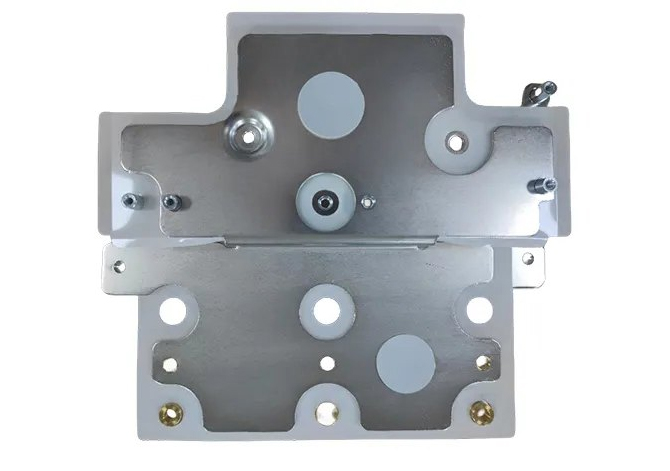
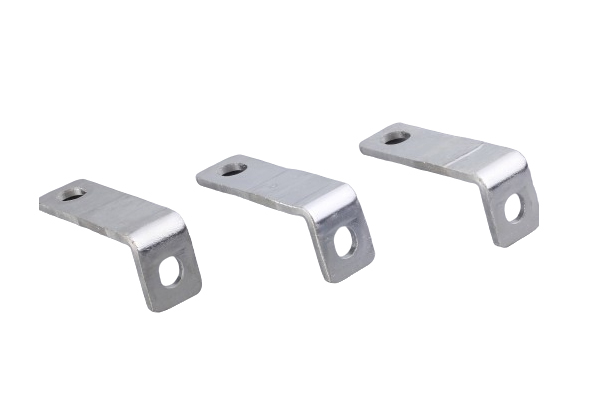
Szyna zbiorcza z miedzi posrebrzanej
√ Cynkowanie znacznie zwiększa przewodność miedzi
√ Doskonała odporność na utlenianie i trudne warunki środowiskowe.
√ Skuteczne odprowadzanie ciepła zapobiegające przegrzaniu.
√ Mocne i wytrzymałe, odporne na obciążenia fizyczne i zużycie.
√ Niezawodne połączenia elektryczne o zmniejszonej rezystancji.
The silver plated copper busbar we manufacture is a kind of power transmission material with high-purity copper (such as oxygen-free copper or low-oxygen copper) as the substrate, and the surface is covered with silver layer through electroplating process. It combines the high conductivity of copper with the oxidation resistance of silver, and is widely used in high-precision and high-reliability scenarios such as electric power systems, communication equipment, new energy vehicles, aerospace, etc. It is especially suitable for high-frequency transmission and high-current environments.
| Typ przedmiotu: | szyna zbiorcza z miedzi posrebrzanej |
|---|---|
| Baza materiałowa: | Rdzeń miedziany z warstwą srebra. |
| Grubość powłoki srebrzonej: | Zwykle waha się od 5 do 15 mikronów. |
| Grubość rdzenia miedzianego: | Zależy od obciążalności prądowej i wymagań zastosowania. |
| Napięcie znamionowe: | Przystosowane do różnych poziomów napięcia, w zależności od izolacji i konstrukcji. |
| Długość: | Możliwość dostosowania do żądanych wymiarów instalacji elektrycznej. |
| Szerokość: | Możliwość dostosowania do konkretnych potrzeb aplikacji. |
| Obecna pojemność: | Określone na podstawie grubości, szerokości i właściwości materiału. |
| Zakres temperatur: | Może pracować w szerokim zakresie temperatur, zwykle od -50°C do 150°C. |
| Wydłużenie: | 30-40% (w zależności od konkretnego stopu i hartowania) |
| Twardość: | 40-80 HV (twardość Vickersa) |
| Grubość powłoki cynowej: | Od 3 do 15 mikronów (możliwość dostosowania) |
| Wykończenie powierzchni: | Srebrzenie zapewnia doskonałą odporność na korozję i poprawia przewodność elektryczną. |
| Zastosowania: | Nadaje się do stosowania w systemach dystrybucji energii, panelach elektrycznych, rozdzielnicach i różnych zastosowaniach przemysłowych wymagających wysokiej przewodności i odporności na korozję. |
Wiodący producent srebrzonych szyn zbiorczych z miedzi
Specjalizujemy się w produkcji wysokiej jakości srebrzonych miedzianych szyn zbiorczych dostosowanych do wymagań różnych branż. Nasze srebrzone miedziane szyny zbiorcze są zaprojektowane tak, aby zapewniać wyjątkową przewodność, niezawodność i trwałość. Dzięki precyzyjnej inżynierii i najnowocześniejszej technologii srebrzenia nasze szyny zbiorcze oferują doskonałą wydajność elektryczną, zapewniając minimalną utratę energii i wydajną transmisję mocy.
1. conductor material:
- Copper purity ≥ 99.95% (e.g. T2 copper or high purity oxygen-free copper), surface silver plating layer thickness is usually 1-5μm.- Conductivity ≥ 97.6% IACS (International Annealed Copper Standard), better than ordinary copper busbar.
2. Electrical performance:
- Carrying capacity increased by more than 30% (due to the silver layer to reduce the contact resistance).- Temperature rise limit: Silver-plated busbar allows temperature rise up to 70K (bare copper is 60K), suitable for high load scenarios.
3. Physical properties:
- Tensile strength ≥15%, can withstand high-frequency vibration and mechanical shock.- Corrosion resistance: passed 1800 hours of salt spray test, suitable for humid, chemical, and other harsh environments.
4. Dimensional specifications:
- Common thickness 1.5-25mm, width 10-250mm, support customized shaped rows (such as C-type female rows).
Silver plated copper bus bar Production process:
1. Raw material processing:
- Copper rods are processed into copper strips by the top-induction method or cold-rolling process, and the surface is milled to remove the oxidized layer.
2. Pre-plating treatment:
- Alkaline etching: 50-80 ℃ sodium hydroxide solution to clean the oil.
- Acid cleaning activation: dilute sulfuric acid to remove oxides and enhance the adhesion of the plating layer.
3. Silver plating process:
- Pre-silver plating: current density 1-3A/dm², energized for 5-10 seconds to form the bottom layer.
- Main silver plating: current density 0.5-3A/dm², temperature 15-35 ℃, plating 1.5-2.5 hours, and the thickness of the silver layer is uniform.
4. Post-treatment:
- Dip anti-silver discoloration agent (such as benzotriazole) to prevent sulfidation and oxidation.
- Laser marking, automatic inspection, and packaging.
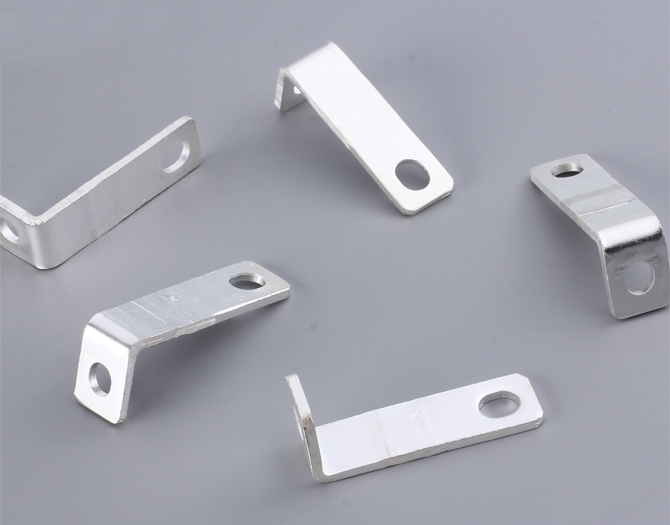
Cechy szyn zbiorczych z miedzi srebrzonej:
1. High conductivity: the conductivity of silver (6.3×10⁷ S/m) is higher than that of copper (5.96×10⁷ S/m), which reduces transmission losses.
2. Oxidation resistance: silver layer isolates copper from oxygen, avoiding the generation of copper oxide and keeping low contact resistance.
3. High-frequency adaptability: under skin effect, the silver layer improves the stability of high-frequency signal transmission, suitable for 5G, data center and other scenarios.
4. High Temperature Resistance: Support -65℃ to 250℃ working temperature, short time resistance 300℃, better than tinned copper row.
5. Environmentally friendly: Halogen-free materials, no release of toxic gases in case of fire, passes UL94 flame retardant standard.
Dlaczego szyny zbiorcze są srebrzone?
Szyny zbiorcze są często posrebrzane z kilku powodów:
- Reduced contact resistance: silver conductivity is better than copper and tin; silver plating reduces contact resistance by 30%, improving current-carrying capacity and energy efficiency.
- Resistance to corrosion and oxidation: Silver is less susceptible to corrosion in humid, sulfur/chlorine environments, avoiding performance degradation caused by oxidation of the copper substrate.
- Optimization of high-frequency performance: high-frequency current is concentrated on the surface of the conductor (skin effect), and the silver layer reduces signal attenuation and ensures communication quality.
- Extended service life: the silver plating layer is wear-resistant, suitable for frequent plugging and unplugging scenarios (such as switchgear connectors), reducing maintenance costs.
- Temperature rise control: allows a higher temperature rise (70K vs. 60K for bare copper), adapting to the needs of high-current transmission.

 Polish
  English
  Arabic
  German
  Spanish
  French
  Russian
  Danish
  Japanese
  Italian
  Vietnamese
  Turkish
  Dutch
Dutch  Portuguese
  Thai
Thai  Swedish
  Korean
  Greek
Greek  Estonian
  Esperanto
  Hindi
Hindi  Indonesian
  Latvian