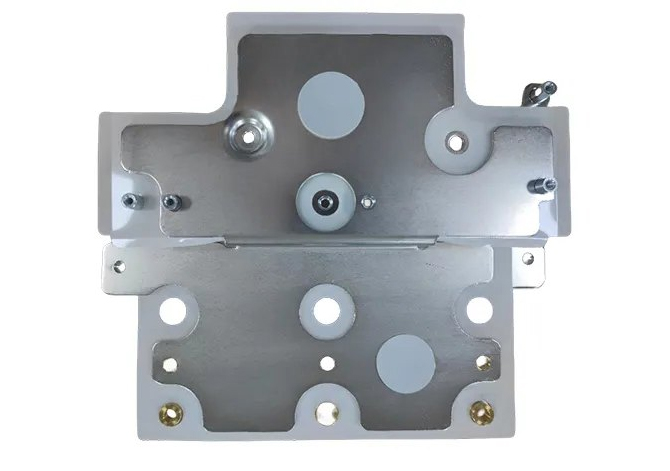
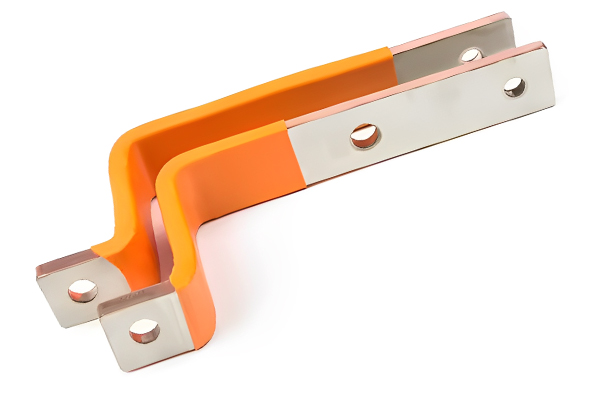
Niestandardowa szyna zbiorcza miedziana
√ Rdzenie miedziane zapewniają wydajną dystrybucję mocy.
√ Poprawia wydajność elektryczną.
√ Odporny na zużycie i uszkodzenia mechaniczne.
√ Idealny do dystrybucji energii elektrycznej, rozdzielnic i innych zastosowań.
√ Spełnia branżowe standardy jakości i niezawodności.
Jako wiodący producent wytwarzamy wysokiej jakości lite miedziane szyny zbiorcze zaprojektowane dla doskonałej przewodności elektrycznej i trwałości. Idealne do zastosowań w dystrybucji energii i uziemieniu, nasze szyny zbiorcze oferują niezawodną wydajność zarówno w zastosowaniach komercyjnych, jak i przemysłowych. Dzięki doskonałym właściwościom termicznym i elektrycznym, odporności na korozję i dużej wytrzymałości mechanicznej nasze lite miedziane szyny zbiorcze zapewniają wydajny transfer mocy i długoterminową niezawodność. Nasze produkty są dostosowywane do konkretnych wymagań i wytwarzane zgodnie z najwyższymi standardami branżowymi. Wybierz nasze lite miedziane szyny zbiorcze, aby uzyskać doskonałą wydajność i efektywność w swoich systemach elektrycznych.
| Typ produktu | miedź burbar |
|---|---|
| Gatunek miedzi: | C11000 (czysta miedź 99,9%) lub inne gatunki na zamówienie |
| Grubość: | od 1 mm do 10 mm |
| Szerokość: | od 10 mm do 200 mm |
| Długość: | Możliwość dostosowania, zazwyczaj do 6 metrów |
| Przewodność: | ≥ 98% IACS (Międzynarodowy standard wyżarzanej miedzi) |
| Oporność: | ≤ 0,017241 omów·mm²/m |
| Wytrzymałość na rozciąganie: | 200-400 MPa (w zależności od konkretnego gatunku miedzi) |
| Wydłużenie: | 30-45% (oznacza elastyczność i ciągliwość) |
| Przewodność cieplna: | 385 W/mK |
| Współczynnik rozszerzalności cieplnej: | 16,5 x 10^-6 /°C |
| Standardowe wykończenie: | Gładkie, jasne i wypolerowane |
| Opcjonalne wykończenia: | Powłoki cynowane, srebrzone lub niestandardowe zapewniające zwiększoną odporność na korozję |
| Odporność na korozję: | Wysoka odporność na korozję atmosferyczną i chemiczną |
| Zakres temperatur pracy: | -65°C do +150°C |
Szyna wiodąca Miedź Producent
As a manufacturer of busbar copper, our production process, size design and selection criteria are directly related to the safety and efficiency of the power distribution system. From the production process optimization, size selection science, performance verification system and other dimensions to provide a systematic reference for engineering design.
First, the busbar copper row production process
Modern busbar copper production has formed a standardized process, covering raw material handling, processing molding, surface treatment of the three major links (see Figure 1). Take Hubei Ruineng Electric as an example, its core process includes:
- Raw material screening: T2 electrolytic copper with purity ≥99.95% is used, and the copper content and impurity ratio are detected by spectral analyzer to ensure that the conductivity is ≥58MS/m (IACS standard);
- Precision processing:
- Cutting process uses laser cutting machine to control the tolerance ≤±0.1mm, avoiding the burr problem caused by traditional punching and shearing;
- The bending process uses a three-point hydraulic bending machine with a bending radius of 2.5-5 times the width to ensure that there are no cracks at the bending corners (GB/T 5585.1-2018);
- Surface treatment: the thickness of the tin-plated layer is controlled at 8-12μm, which not only improves the oxidation resistance (salt spray test ≥ 720h), but also limits the increase in contact resistance to less than 7%.
Comparison of copper processing equipment
| Equipment Type | Accuracy Level | Aplikacja | Efficiency Enhancement |
|---|---|---|---|
| Conventional Punch Press | ±0.5mm | Low Precision Mass Production | Benchmark |
| CNC Bending Machine | ±0.1mm | Complex shaped parts processing | 300% |
| Automatic Tinning Line | Uniform Plating | Products with High Corrosion Protection Requirements | 200% |
Second, dimensional design of bubar copper:
- Load capacity calculation
According to IEC 61439 standard, the formula of current-carrying capacity is: 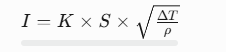
- ( K ): heat dissipation coefficient (1.1 for vertical, 1.0 for flat)
- ( S ): cross-sectional area (mm²)
- ( ΔT ): allowable temperature rise (usually taken as 55K)
- ( ρ ): resistivity (0.01774Ω-mm²/m)
Copper row current-carrying capacity (ambient temperature 35℃)
| Specification (mm | Flat discharge current
-carrying capacity (A) |
Vertical discharge current
-carrying capacity (A) |
Cross-sectional area (mm²) |
|---|---|---|---|
| 30×4 | 475 | 520 | 120 |
| 60×6 | 1069 | 1125 | 360 |
| 100×10 | 2121 | 2310 | 1000 |
third, Digital Transformation of Performance Verification System
- Mechanical performance testing:
- Tensile strength ≥295MPa (China Steel National Inspection cases show a pass rate of 99.8%)
- Brinell hardness HB≥80 to ensure the stability of installation.
- Electrical test:
- Insulation resistance ≥ 20MΩ (2500V withstand voltage test)
- Temperature rise test: 2000A copper row under full load temperature rise ≤ 55K
- Environmental simulation:
- Humidity and heat cycle test (85 ℃ / 85% RH) 1000 hours after the insulation performance degradation < 5%
Fourth, industry application scenarios Customized development according to the special needs of application scenarios:
- Nowe pole energetyczne:
- Battery pack connecting row adopts 0.2mm ultra-thin insulation layer, and the voltage resistance level is increased to 3000V.
- Seismic design through GB/T 31467.3 standard (random vibration 27.8m/s²)
- High-voltage switchgear:
- The 10kV system prioritizes the use of vertically placed 80×8mm specifications, and the current-carrying capacity has been increased by 18%
What is the technology for our busbar copper?
- Application of recycled copper: new refining technology makes the purity of recycled copper up to 99.9% and reduces carbon emission by 40%.
- Intelligent monitoring system: implanted RFID chip real-time monitoring of temperature, deformation, early warning accuracy>95%.
- Modular design: standard connectors library reduces installation time by 15% (Siemens case).

 Polish
  English
  Arabic
  German
  Spanish
  French
  Russian
  Danish
  Japanese
  Italian
  Vietnamese
  Turkish
  Dutch
Dutch  Portuguese
  Thai
Thai  Swedish
  Korean
  Greek
Greek  Estonian
  Esperanto
  Hindi
Hindi  Indonesian
  Latvian