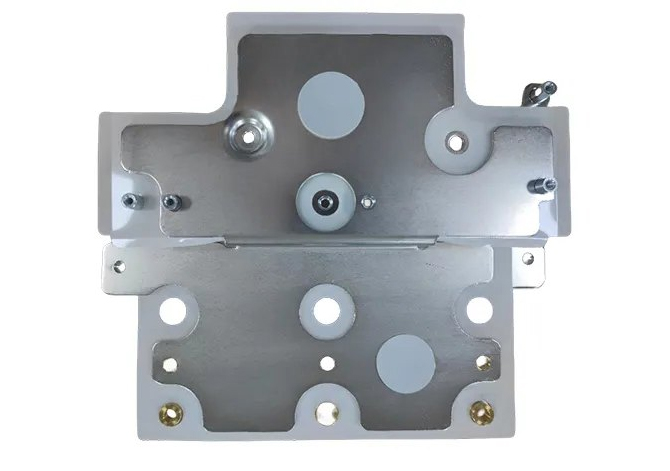
With the rapid development of the new energy industry, the high-current scenario requires increasingly stringent performance of conductive components. With its excellent conductivity, corrosion resistance, and solderability, Barramento de cobre estanhado has become the core component of new energy vehicles, photovoltaic power generation, and other fields. This article starts from the scientific principles of tin-plating process, combined with 7 technical dimensions, in-depth analysis of the selection criteria and application strategy of the tinned copper busbar, and authoritative data comparison to provide enterprises with landing solutions.
- Melhoria da condutividade e otimização da estabilidade
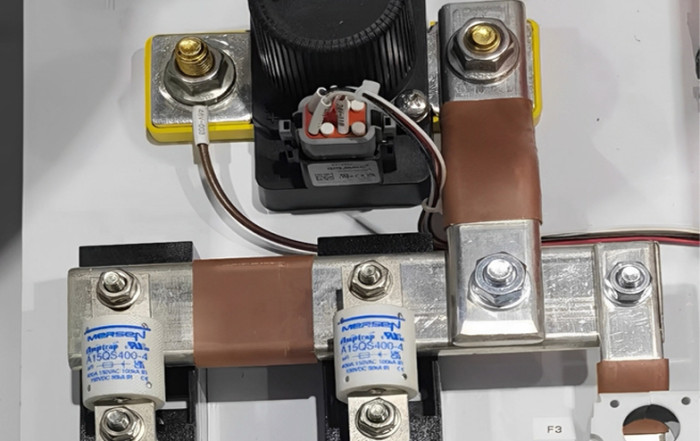
- The conductivity of copper itself is as high as 58 S/m, but the conductivity of copper oxide on the surface decreases significantly. After tin plating, tin oxide (SnO₂) has better conductivity than copper oxide (CuO), which can reduce the contact resistance by up to 30%. Experimental data show that the temperature rise of tin-plated copper busbars is 15-20% lower than that of bare copper busbars(under the same current), which significantly reduces power loss.
- Melhoria da resistência à corrosão aos trancos e barrancos
In the salt spray test, the thickness of the tin-plated layer ≥ 25 25μm copper busbar can withstand 1000 hours without corrosion, far more than the limit of 72 hours of bare copper. For example, in coastal photovoltaic power plants, the service life of tinned copper busbars can be extended to more than 15 years, reducing maintenance costs by 40%.
- Melhoria do processo de soldagem
Quando a rugosidade da superfície (valor Ra) do revestimento de estanho fosco é controlada em 0,8-1,6 μm, a força de ligação da soldagem é aumentada em mais de 50%, e uma conexão confiável pode ser realizada sem fluxo. O Tesla Supercharger usa esse processo para melhorar a eficiência da soldagem em 3 vezes.
2. Processo de estanhagem
| Tipo de processo |
Espessura do revestimento (μm) |
Condutividade (%IACS) |
Cenários |
Índice de Custo (Cobre Nu = 1) |
| Lata Brilhante |
8-12 |
85-90 |
Quadros de distribuição, peças exteriores |
1.8 |
| Estanho fosco (soldável) |
12-15 |
80-85 |
Peças de conexão, soldagem de PCB |
2.2 |
| Lata para imersão a quente |
25-40 |
75-80 |
Equipamentos, Ambientes Químicos |
3.5 |
- Bright Tin: Equilibrando Estética e Função
Adequado para gabinetes de distribuição de energia de data centers e outros cenários que exigem um alto nível de aparência, com um brilho espelhado (medido em um ângulo de 60°) de 90GU ou mais, mas aplicações de soldagem devem ser evitadas.
- Estanho fosco: a solução definitiva para conexões industriais
A resistência a altas temperaturas pode ser aumentada para 200 °C por meio do revestimento de uma camada de base de níquel (espessura de 2-5 μm), que é usada em módulos de bateria Ningde Times, reduzindo a taxa de soldagem defeituosa para 0,02%.
- Estanho quente: uma barreira protetora para ambientes extremos
In offshore wind power projects, 40μm hot-dip tinned copper busbars are 10 times more resistant to sulfide corrosion than bare copper, which is especially suitable for industrial environments containing H₂S.
3. Espessura do material de revestimento
- Seleção de espessura
- Ambiente interno seco: 12,5 μm (atende ao padrão de teste de névoa salina nível 4 GB/T 2423.17)
- Ambiente úmido/industrial: 25μm (aprovado no teste de grau severo IEC 60068-2-11)
- Ambiente químico/marinho: ≥30μm (consulte a norma NACE TM0172)
- Insubstituibilidade do cobre puro C110
C110 copper busbars with copper content ≥99.9%, conductivity up to 101% IACS, and bending formability 3 times higher than brass are the best substrates for the tin-plating process. An ultra-high voltage substation project was measured to show that the C110 copper busbar of the current-carrying capacity of 22% higher than the alloy copper.
4. Controle de qualidade
- Teste de uniformidade de galvanoplastia
O espectrômetro de fluorescência de raios X (XRF) é usado para mapeamento de espessura, exigindo um desvio de ≤±10% (consulte a norma ASTM B568).
- Teste de ligação
Passa no teste de flexão (flexão de 180° sem descascar) e no teste de choque térmico (ciclo de -40°C~150°C por 5 vezes) estipulado pela ISO 2819.
- Atualização do processo de proteção ambiental
Empresas líderes adotaram processos de estanhagem sem cianeto (por exemplo, sistemas de citrato), que reduzem a toxicidade das águas residuais em 90% e atendem aos padrões RoHS 3.0.
5. Aplicação na indústria
- Sistema de alta tensão para veículos de nova energia
The BYD blade battery module adopts matte tin copper busbars, with contact resistance stabilized at below 0.15 mΩ, supporting 600 A continuous current.
- Otimização da topologia do inversor fotovoltaico
Sunny Power’s latest string inverter uses tinned copper busbars to increase the power density to 1.5W/cm³, and the efficiency breaks through 99%.
Resumir
O avanço tecnológico de barramento de cobre estanhado busbars is reshaping the competitive landscape of the new energy industry. From the quantum-level optimization of electrical conductivity to the reliability of extreme environments, the scientific selection of plating processes and thicknesses has become the core strategy of cost reduction and efficiency. With the strategic deployment of high-end materials, the tinned copper busbar will accelerate to aerospace, smart grid and other cutting-edge areas of penetration, opening a new era of conductive components.



 Portuguese
  English
  Arabic
  German
  Spanish
  French
  Russian
  Danish
  Japanese
  Italian
  Vietnamese
  Turkish
  Dutch
Dutch  Thai
Thai  Swedish
  Korean
  Greek
Greek  Polish
  Estonian
  Esperanto
  Hindi
Hindi  Indonesian
  Latvian