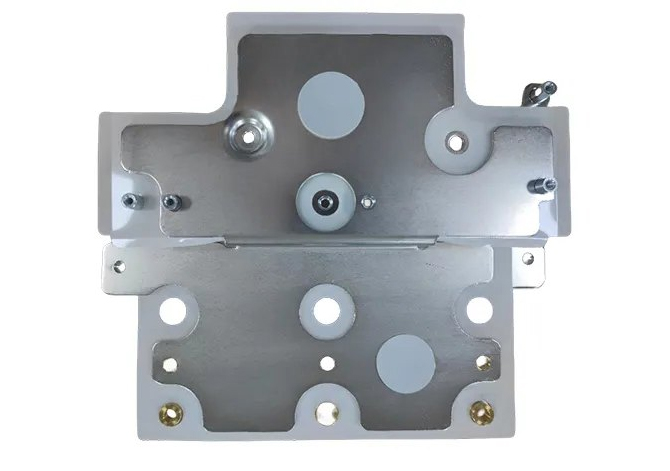
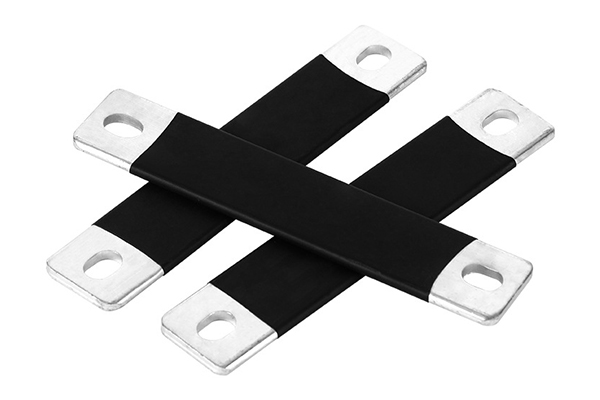
Our factory nickel-plated copper busbar is a conductive material that is uniformly covered with a layer of nickel metal on the surface of high-purity copper through the electroplating process and is widely used in high-demand scenarios such as power transmission, new energy equipment (e.g., batteries, photovoltaics), rail transportation, and communication base stations. Its core advantage lies in combining the high conductivity of copper with the corrosion resistance of nickel, which is suitable for harsh environments such as humidity, high temperature, and chemical corrosion.
| Öğe türü | nikel kaplamalı bakır bara |
|---|---|
| Taban Malzemesi: | High purity electrolytic copper (purity ≥ 99.95%) nickel plating (nickel layer thickness 5-20μm) |
| Kaplama: | Nickel layer bonding ≥ 5N/mm², surface hardness HV200-300 |
| Anma Gerilimi: | 250V-600V (depending on the model) |
| İletkenlik: | ≥10V |
| Uzunluk: | Özelleştirilebilir, genellikle 6 metreye kadar |
| İletkenlik: | ≥ 98% IACS (Uluslararası Tavlanmış Bakır Standardı) |
| Direnç: | ≤ 0,017241 ohm·mm²/m |
| Çekme Dayanımı: | 200-400 MPa (belirli bakır sınıfına bağlı olarak) |
| Uzama: | 30-45% |
| Isıl İletkenlik: | 385 W/m·K |
| Çalışma Sıcaklık Aralığı: | -65℃ to 260℃ (long-term use), short-term temperature resistance up to 300℃ |
| Nikel Kalınlığı: | Tipik olarak 1-10 mikron |
| Yapışma: | Bakır alt tabakaya güçlü, düzgün bağ |
| Korozyon Direnci: | Korozyona ve oksidasyona karşı mükemmel koruma |
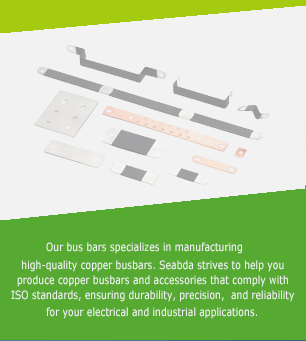
Önde Gelen Nikel Kaplamalı Bakır Bara Üreticiniz
Birinci sınıf bir üretici olarak fabrikamız, verimli ve güvenilir güç dağıtımı için en kaliteli nikel kaplamalı bakır baraları üretme konusunda uzmanlaşmıştır. Bakır baralarımız yüksek saflıkta bakırdan üretilir ve çeşitli endüstriyel ve ticari uygulamaların zorlu taleplerini karşılamak üzere tasarlanmış dayanıklı bir nikel tabakasıyla kaplanır.
Production Process of nickel plate copper bus bar:
1. Copper wire preparation:
Adopt high-purity electrolytic copper through drawing and stranding processes to process it into the required diameter of copper wire, with tolerance control within ± 0.005mm.
2. Surface treatment:
Copper wire by ultrasonic cleaning and acid washing (such as with sulfamic acid) to remove surface oil and oxides.
3. Electroplating nickel layer:
Adopt the electroplating or chemical plating process, and control the current density (2-5A/dm²), temperature (50-60℃) and pH (3.5-5.5) to form a uniform and dense nickel layer.
4. Post-treatment:
Annealing to eliminate internal stress, ultrasonic cleaning to remove residues, drying and testing of coating thickness, bonding force, and other indicators.
5. Quality Inspection:
The use of high-precision instruments to detect the conductivity, plating uniformity, and corrosion resistance (such as salt spray test).
Baralar Neden Nikel Kaplamalıdır?
1. Corrosion resistance:
Nickel in the humid, salt spray environment can form a passivation film, preventing oxidation of the copper substrate, prolonging the life of the busbar.
2. Reduce contact resistance:
The nickel layer has a smooth surface, which reduces the roughness of the contact surface and avoids the elevated resistance caused by oxidized copper and improves the efficiency of current transmission.
3. Abrasion resistance:
Nickel hardness (HV200-300) is much higher than copper (HV40-60), suitable for sliding contact scenarios (e.g. drawer cabinet connectors).
4. Solderability:
The nickel plating layer is stable at high temperature, superior to tin plating (easy to produce tin whiskers), and suitable for high-frequency welding processes.

Nikel kaplamalı bakır ne işe yarar?
With its high electrical conductivity, corrosion resistance, and abrasion resistance, nickel-plated copper is widely used in electronic communications, new energy, industrial manufacturing, and other fields: in electronic communications, it is used in 5G equipment, high-frequency circuit boards, and precision sensors to ensure the stable transmission of signals; in the new energy automotive and photovoltaic industries, it is used as a battery connector and high-voltage conductor to adapt to high temperatures, salt spray, and other harsh environments; and it is used for abrasion-resistant mechanical parts and chemical pipelines to resist friction and cost in the industry.
With the development of 5G, electric vehicles, and other industries, the application of nickel-plated copper will continue to expand in scenarios that require high conductivity and durability.
Nikel kaplamalı bakır, bakırdan daha mı iyidir?
Üretici olarak, nikel kaplamalı bakırın çıplak bakıra göre uygunluğunun belirli uygulama gereksinimlerine bağlı olduğunu biliyoruz. Nikel kaplamalı bakır, çıplak bakıra kıyasla gelişmiş korozyon direnci, oksidasyon önleme ve iyileştirilmiş dayanıklılık açısından avantajlar sunar. Bu avantajlar, nikel kaplamalı bakırı özellikle zorlu ortamlara, aşındırıcı maddelere veya uzun süreli kullanıma maruz kalmanın beklendiği uygulamalar için uygun hale getirir. Ancak, maliyet etkinliğinin veya minimum elektrik direncinin önceliklendirildiği uygulamalarda çıplak bakır tercih edilebilir. Sonuç olarak, nikel kaplamalı bakır ile çıplak bakır arasındaki seçim, çevre koşulları, performans beklentileri ve bütçe kısıtlamaları gibi faktörlere bağlıdır.
| Özellikler | Nickel-plated copper | Pure copper |
|---|---|---|
| Electrical Conductivity | Slightly lower (higher nickel resistivity) | Excellent (conductivity ≥100% IACS) |
| Korozyon Direnci | Excellent (resistant to oxidation, acids and alkalis) | Medium (easily oxidized to produce copper green) |
| Mechanical Strength | Yüksek | Orta |
| Environment | High humidity, high salt spray, high temperature | Dry, non-corrosive environment |
| Costs | Yüksek | Düşük |

 Turkish
  English
  Arabic
  German
  Spanish
  French
  Russian
  Danish
  Japanese
  Italian
  Vietnamese
  Dutch
Dutch  Portuguese
  Thai
Thai  Swedish
  Korean
  Greek
Greek  Polish
  Estonian
  Esperanto
  Hindi
Hindi  Indonesian
  Latvian