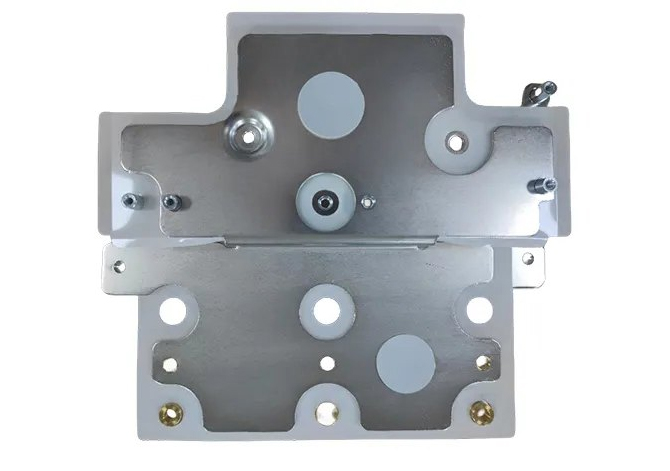
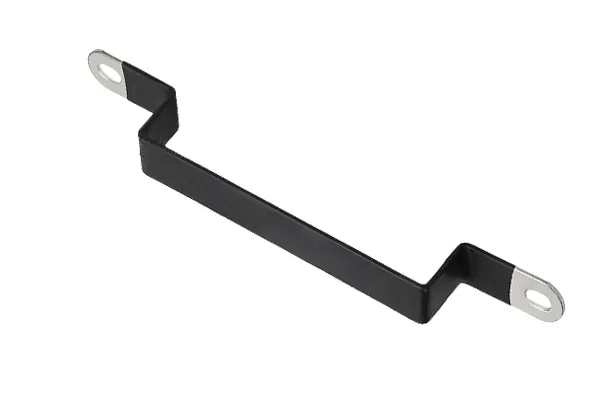
Our factory tin plated copper bus bars are engineered to deliver exceptional conductivity, corrosion resistance, and longevity. Covered with a tin layer on the surface of a pure copper busbar through electroplating or a hot plating process, which is widely used in electric power systems, new energy equipment, rail transportation, communication base stations, and other fields. Its core advantage is that it combines the high conductivity of copper with the corrosion resistance of tin and is suitable for high-current transmission and high-frequency signal shielding scenarios.
| Loại sản phẩm: | thanh cái bằng đồng mạ thiếc |
|---|---|
| Cơ sở vật chất: | Đồng (C11000 hoặc C10100) |
| Lớp phủ: | Thiếc (mờ hoặc sáng bóng) |
| Chiều rộng: | 10 mm đến 200 mm |
| Độ dày: | 2 mm đến 20 mm |
| Chiều dài: | Có thể tùy chỉnh, thường lên đến 6 mét |
| Độ dẫn điện: | ≥ 98% IACS (Tiêu chuẩn đồng ủ quốc tế) |
| Sức chống cự: | Điện trở tiếp xúc thấp do mạ thiếc |
| Độ bền kéo: | 200-400 MPa (tùy thuộc vào hợp kim và nhiệt độ cụ thể) |
| Độ giãn dài: | 30-40% (tùy thuộc vào hợp kim và nhiệt độ cụ thể) |
| Độ cứng: | 40-80 HV (Độ cứng Vickers) |
| Độ dày lớp phủ thiếc: | 3 đến 15 micron (có thể tùy chỉnh) |
| Khả năng chống ăn mòn: | Tuyệt vời, do lớp phủ thiếc |
| Nhiệt độ hoạt động: | -55°C đến +105°C (phù hợp với hầu hết các ứng dụng điện) |
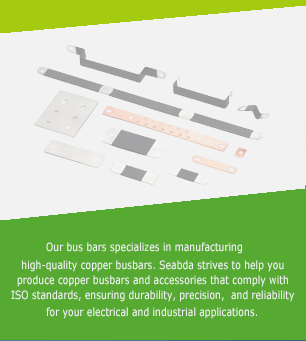
Nhà sản xuất thanh cái đồng mạ thiếc hàng đầu
Nhà máy của chúng tôi chuyên sản xuất thanh cái đồng mạ thiếc chất lượng cao. Sản phẩm của chúng tôi có khả năng chống ăn mòn được cải thiện, độ dẫn điện tuyệt vời và khả năng hàn được cải thiện. Với kích thước tùy chỉnh và tuân thủ các tiêu chuẩn ISO và tiêu chuẩn công nghiệp, chúng tôi đảm bảo thanh cái đáng tin cậy và bền bỉ cho nhiều ứng dụng điện và công nghiệp. Hãy tin tưởng chúng tôi về hiệu suất vượt trội và chất lượng đặc biệt trong mọi thanh cái chúng tôi sản xuất.
Các tham số
1. Electrical performanc
- Rated current: 250A to 5000A (adjusted according to cross-section and wire diameter).
- Conductivity: Tinned copper purity ≥ 99.95%, resistivity ≤ 0.01777 Ω-mm²/m (hard state).
- Voltage withstand level: frequency withstand voltage 42kV (dry test), impact withstand voltage 75 kV.
2. Physical Characteristics
- Single wire diameter: 0.05mm to 0.30mm (braided); cross-section range 1.5-6000mm².
- Thickness of tin plating: usually 0.5-2.0 μm (conventional plating), special requirements up to 6 μm or more.
- Mechanical strength: hard state busbar tensile strength ≥200N/mm², soft state elongation ≥35%.
3. Environmental adaptability
- Temperature range: -30℃ to 105℃, some high-temperature-resistant models can reach 200℃.
- Protection grade: IP54 (dustproof and waterproof).
Làm thế nào để mạ thiếc thanh cái bằng đồng?
1. Copper pretreatment
- Drawing and annealing: High purity copper rods are drawn to the target wire diameter, and the annealing temperature is controlled at 400-550°C to optimize the ductility.
- Acid washing to remove oxidized layer: Use acidic solution (such as hydrochloric acid or flux) to remove surface oxides to ensure plating adhesion.
2. Tin plating process
- Hot-dip plating/electroplating: Copper wires are immersed in a tin furnace (250-260°C) or electroplating bath to form a uniform plating layer. Cooling and cleaning: Water or air cooling is used to remove the surface oxides.
- Cooling and Cleaning: After water or air cooling, clean the residue, add shaft guide oil to prevent the generation of tin ash.
3. Post-treatment and inspection
- Annealing: 600-800℃ annealing to eliminate stress and improve flexibility.
- Quality inspection: including conductivity test, plating thickness measurement (such as X-ray fluorescence method) and corrosion resistance test.
Thanh cái bằng đồng mạ thiếc dày bao nhiêu?
- Conventional applications: 0.5-2.0μm, balancing cost and performance.
- High protection requirements: such as power equipment or marine environment, the thickness of the coating can be more than 6μm.
Tại sao phải mạ thiếc trên thanh cái bằng đồng?
Mạ thiếc trên thanh cái đồng có nhiều mục đích. Đầu tiên, nó tăng cường khả năng chống ăn mòn của đồng, kéo dài tuổi thọ và đảm bảo hiệu suất lâu dài, đặc biệt là trong môi trường ẩm ướt hoặc ăn mòn. Thứ hai, mạ thiếc cung cấp bề mặt hoàn thiện mịn hơn, giảm độ không đồng đều trên bề mặt và cải thiện tiếp xúc điện và độ dẫn điện. Ngoài ra, mạ thiếc có thể ngăn ngừa quá trình oxy hóa bề mặt đồng, duy trì tính toàn vẹn và các đặc tính điện của nó theo thời gian. Nhìn chung, mạ thiếc mang lại độ bền, độ dẫn điện và độ tin cậy được cải thiện cho thanh cái đồng trong nhiều ứng dụng khác nhau.
Thanh cái bằng đồng mạ thiếc có một số ưu điểm:
1. Anti-oxidation and corrosion resistance
- The tin layer isolates copper from oxygen and moisture, avoiding the generation of copper green (Cu₂(OH)₂CO₃) with poor electrical conductivity, and prolonging the life of the busbar.
2. Improve conductive stability
- Tin plating reduces contact resistance (by about 10-15%), especially in high-frequency or high-current scenarios to reduce energy loss.
3. Enhanced solderability
- Tin has a low melting point (232°C), which makes solder joints easier to form and stronger, making it suitable for automated soldering processes.
4. Adapt to complex environments
- Resistant to salt spray, acid and alkali, suitable for chemical, marine and other corrosive environments.
5. Economy and environmental protection
- Compared with pure silver plating, tin plating cost is lower, and tin non-toxic in line with RoHS standards.
Tin-plated copper bus bars application:
- Power system: transformer, switchgear connection, extra high voltage transmission.
- New energy vehicles: battery pack connection, charging pile internal conductor.
- Communication equipment: 5G base station, data center high frequency signal shielding.

 Vietnamese
  English
  Arabic
  German
  Spanish
  French
  Russian
  Danish
  Japanese
  Italian
  Turkish
  Dutch
Dutch  Portuguese
  Thai
Thai  Swedish
  Korean
  Greek
Greek  Polish
  Estonian
  Esperanto
  Hindi
Hindi  Indonesian
  Latvian