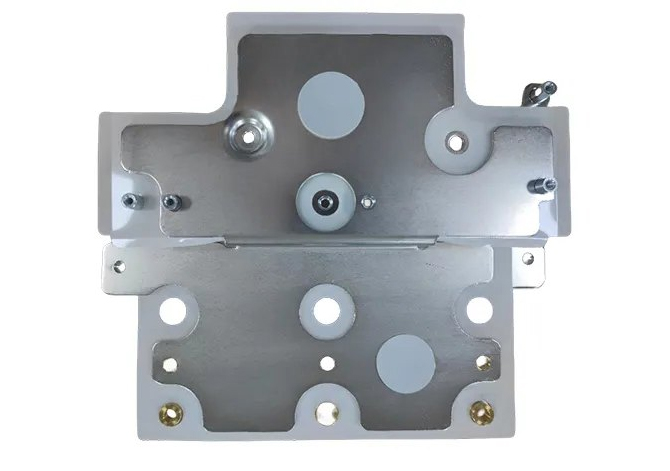
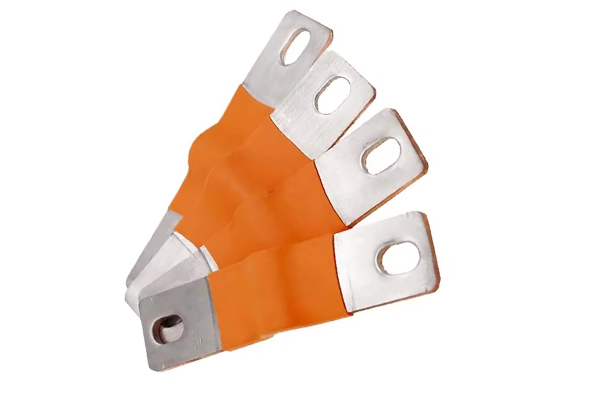
Our flexible insulated bus bars are specifically designed for battery connections, offering exceptional electrical performance and safety. Flexible insulated busbar is a kind of power supply and distribution equipment made of flexible conductor compounded with multi-layer insulating material, which combines the current-carrying capacity of traditional busbar and the flexibility of cable. Its core feature lies in the special process to realize large current transmission while adapting to the complex installation environment, such as narrow space, humid environment and so on.
| Loại sản phẩm | Thanh cái cách điện linh hoạt |
|---|---|
| Cấp độ đồng: | Đồng, Đồng Niken |
| PVC (Polyvinyl clorua): | Linh hoạt, tiết kiệm chi phí và dễ áp dụng. |
| Epoxy: | Cung cấp lớp phủ cứng, bền với khả năng cách điện tuyệt vời. |
| Silicon: | Có khả năng chịu nhiệt độ cao và tính linh hoạt. |
| Ống co nhiệt: | Khi được gia nhiệt, nó sẽ co lại chặt quanh thanh cái, tạo sự vừa khít. |
| Sơn tĩnh điện: | Được sử dụng dưới dạng bột và sau đó được xử lý để tạo thành lớp bảo vệ rắn chắc. |
| Nhiệt độ hoạt động: | -36°C ~ 65°C |
| Cao su: | Cung cấp khả năng cách điện và bảo vệ cơ học tốt. |
| Ứng dụng: | kết nối pin, phân phối điện, biến tần năng lượng mặt trời và hệ thống tua bin gió, v.v. |
| Load Capacity: | 125A-6000A (up to 12000A |
| Điện áp định mức: | 600V-1000V (AC)/750V-1500V (DC |
| Bend radius: | Minimum 6 times the diameter of the busbar, adapted to the complex wiring |
| Insulation Resistance: | ≥15000MΩ (3.5kV withstand voltage test without breakdown) |
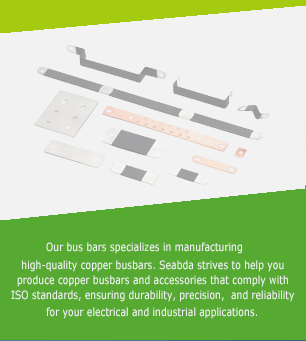
Nhà sản xuất thanh cái cách điện linh hoạt hàng đầu
As a manufacturer of flexible insulated busbars, we specialized in innovative solutions for battery connections and power distribution systems. Our busbars are designed to offer superior electrical performance, high flexibility, and robust insulation to ensure safety and reliability in various applications.
Product structure of flexible insulated busbars
- Conductor layer: composed of flexible copper wire rows or tinned copper tape, providing high conductivity and flexibility.
- Wrapping layer: Polyester film or PTFE tape is used to wrap the conductor, enhancing insulation and anti-electromagnetic interference.
- Insulation Layer: The main insulating materials include polyvinyl chloride (PVC), cross-linked polyethylene (XLPE) or silicone rubber, with a thickness of 1.8-2.1mm, providing electrical isolation.
- Armor Layer: Interlocking metal armor (e.g., stainless steel tape) provides mechanical protection against external damage.
- Sheath layer: The outer layer is made of flame retardant and corrosion resistant material (such as halogen free PVC), with protection level up to IP68.
Production process of flexible insulated busbars
1. Conductor processing
- Copper/aluminum is drawn into fine wires by wire drawing machine and annealed to enhance flexibility.
- The stranding process weaves multiple strands of conductors into flexible copper wire rows to enhance current-carrying capacity.
2. Insulation treatment
- Wrapping layer: polyester film or mica tape is wrapped by automatic wrapping machine to reduce partial discharge.
- Extrusion molding: PVC or XLPE evenly cover the conductor through high temperature extruder, thickness error ≤ 0.1mm.
3. Armor and sheath
- The metal armor layer wraps the insulating layer through interlocking technology to enhance the compressive strength (can withstand 50kA short-circuit current).
- The outer sheath adopts co-extrusion technology to ensure weather resistance and flame retardancy.
4. Testing and Packaging
- Voltage withstand test: 3.5kV frequency withstand voltage for 1 minute without breakdown.
- Intelligent detection: integrated current/temperature sensor, support real-time online monitoring.
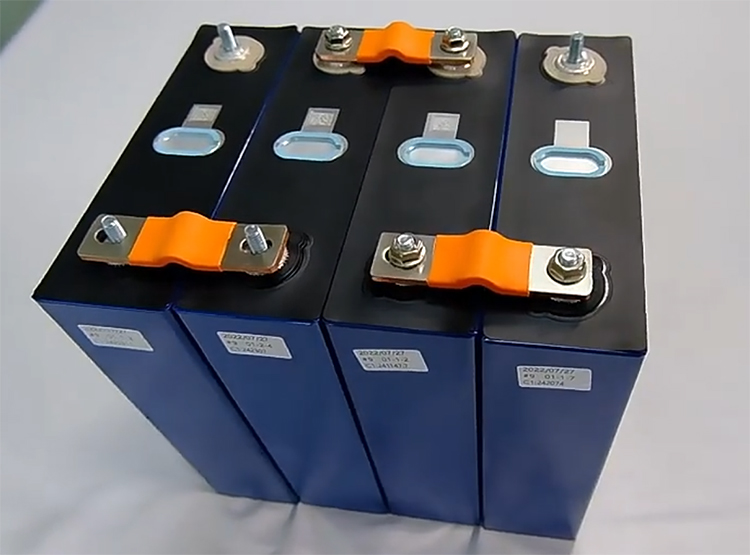
Thanh cái cách điện là gì?
Insulated busbar is a power transmission and distribution equipment that realizes electrical isolation by wrapping insulating material outside the conductor, which is different from the bare rigid busbar. Its classification includes:
- Flexible insulated busbar: adopting multi-layer flexible conductor and insulation structure, suitable for dynamic or complex environment.
- Tubular insulated busbar: copper tube as conductor, covered with PTFE insulation, used in high-voltage scenarios (e.g. substations).
- Enclosed busway: metal shell embedded insulated busbar, mostly used in building power distribution.
Các tính năng và lợi ích chính
- Energy efficient: Large surface area of the conductor, low skin effect, reducing line loss by more than 30%.
- Safe and reliable: 3.5kV voltage without breakdown, insulation resistance ≥ 15000MΩ, support for outdoor wet environment.
- Convenient installation: Flexible structure without customized elbow, installation efficiency increased by 60%.
- Cost optimization: No intermediate joints, construction costs reduced by 50%, maintenance-free for life.
Làm thế nào để cách điện thanh cái?
Cách điện thanh cái bao gồm việc áp dụng một lớp bảo vệ xung quanh vật liệu dẫn điện để ngăn ngừa đoản mạch điện, bảo vệ chống lại các yếu tố môi trường và đảm bảo xử lý an toàn. Sau đây là các phương pháp phổ biến để cách điện thanh cái:
1. Material selection
- High temperature scenario: PTFE (temperature resistance 340℃) or silicone rubber (temperature resistance 200℃).
- Environmental scenario: halogen-free flame retardant materials (oxygen index ≥ 30%).
2. Technology
- Multi-layer winding: alternately winding semi-conductive tape and insulating tape to eliminate electric field concentration.
- Vacuum impregnation: filling epoxy resin for tubular busbars to enhance insulation strength.
- Co-extrusion molding: synchronous extrusion of conductor shielding layer and main insulation layer to reduce interface defects.
3. Liquid Insulation
Có thể bôi hợp chất cách điện dạng lỏng vào thanh cái để tạo ra lớp cách điện liền mạch và linh hoạt.
Các bước thực hiện:
- Vệ sinh thanh cái: Đảm bảo bề mặt thanh cái sạch sẽ.
- Áp dụng cách điện dạng lỏng: Quét, phun hoặc nhúng thanh cái vào hợp chất cách điện dạng lỏng.
- Làm khô và bảo dưỡng: Để hợp chất khô và bảo dưỡng theo hướng dẫn của nhà sản xuất.

 Vietnamese
  English
  Arabic
  German
  Spanish
  French
  Russian
  Danish
  Japanese
  Italian
  Turkish
  Dutch
Dutch  Portuguese
  Thai
Thai  Swedish
  Korean
  Greek
Greek  Polish
  Estonian
  Esperanto
  Hindi
Hindi  Indonesian
  Latvian