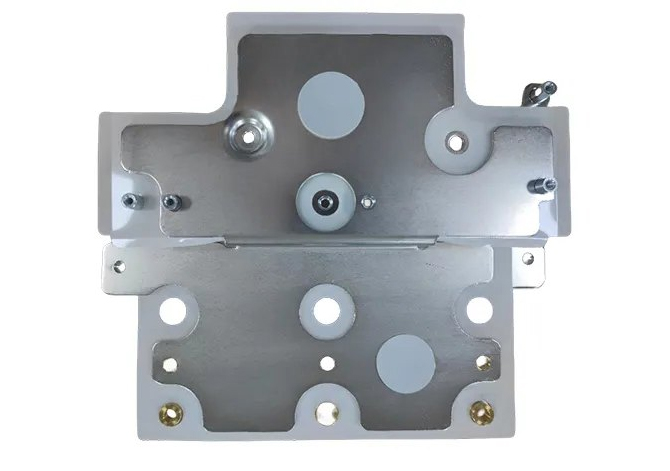
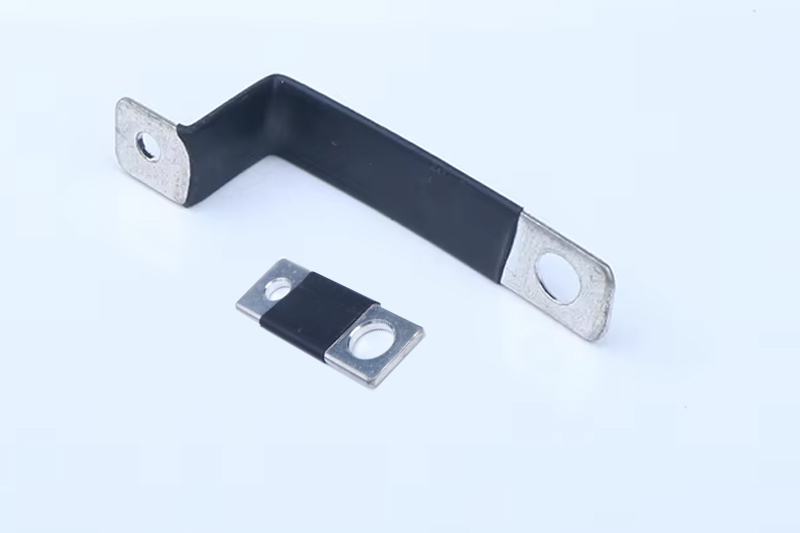
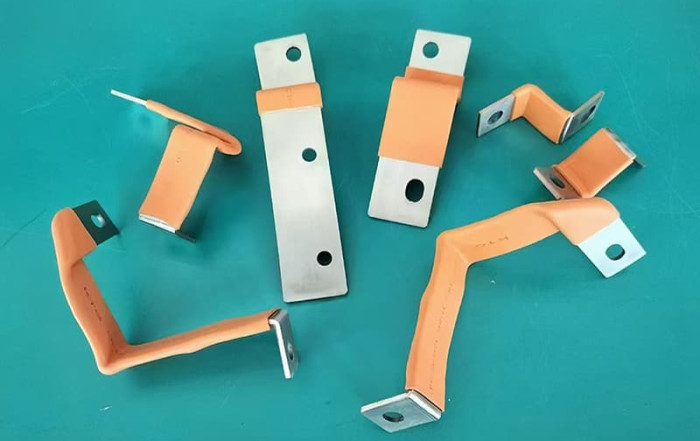
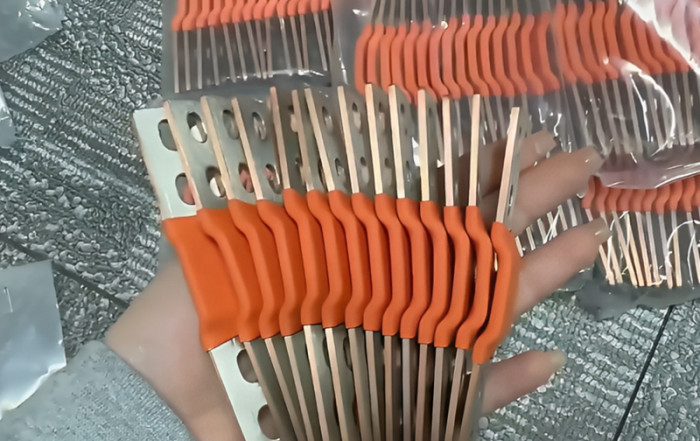
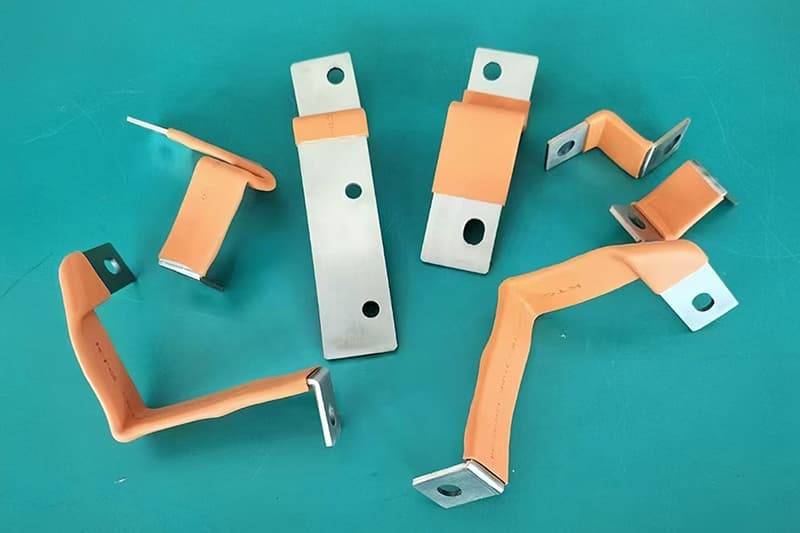
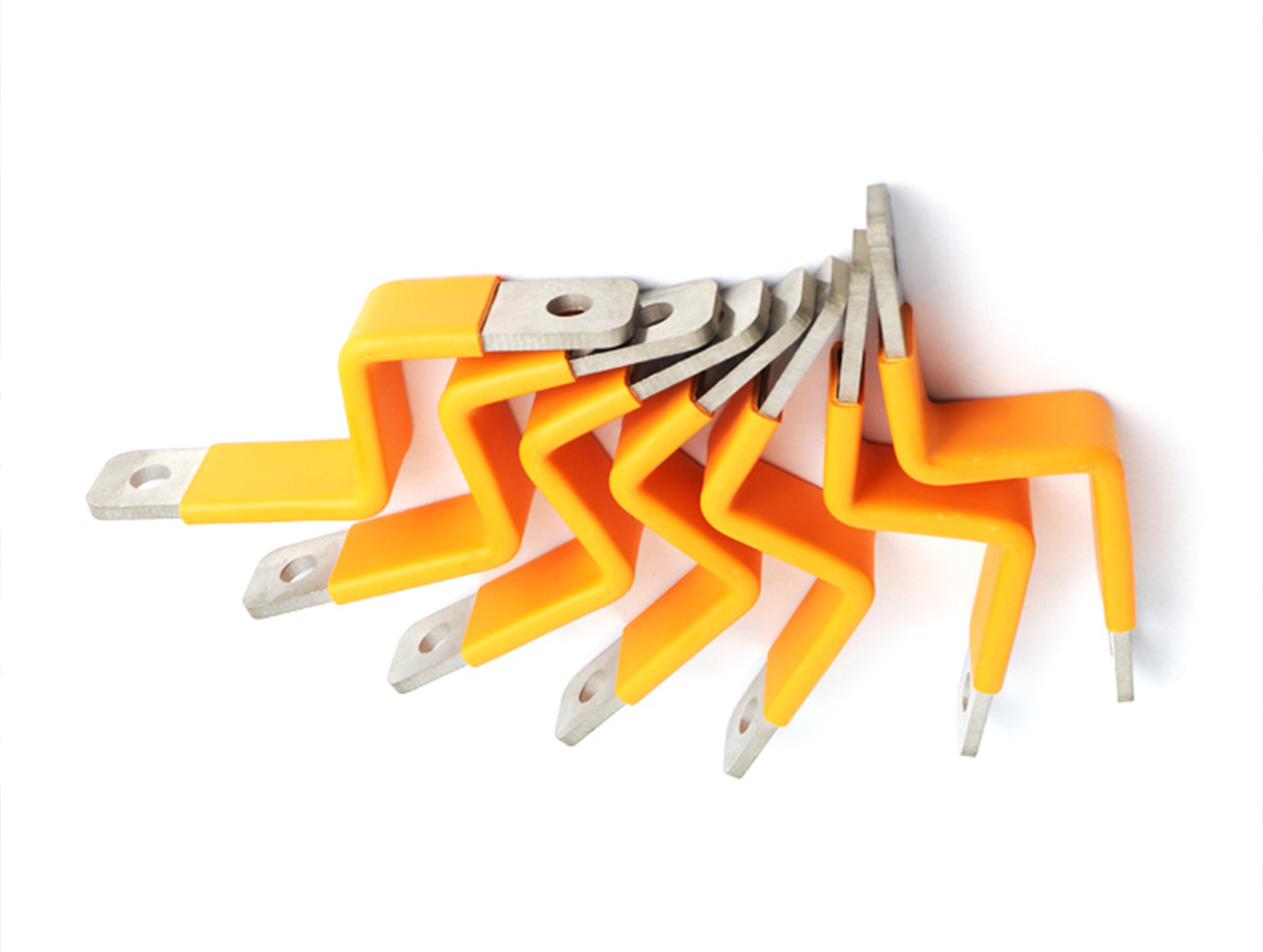
With the rapid development of the new energy industry, the high-current scenario requires increasingly stringent performance of conductive components. With its excellent conductivity, corrosion resistance, and solderability, Verzinnte Kupfersammelschiene has become the core component of new energy vehicles, photovoltaic power generation, and other fields. This article starts from the scientific principles of tin-plating process, combined with 7 technical dimensions, in-depth analysis of the selection criteria and application strategy of the tinned copper busbar, and authoritative data comparison to provide enterprises with landing solutions.
- Leitfähigkeitssteigerung und Stabilitätsoptimierung
- The conductivity of copper itself is as high as 58 S/m, but the conductivity of copper oxide on the surface decreases significantly. After tin plating, tin oxide (SnO₂) has better conductivity than copper oxide (CuO), which can reduce the contact resistance by up to 30%. Experimental data show that the temperature rise of tin-plated copper busbars is 15-20% lower than that of bare copper busbars(under the same current), which significantly reduces power loss.
- Sprunghafte Verbesserung der Korrosionsbeständigkeit
In the salt spray test, the thickness of the tin-plated layer ≥ 25 25μm copper busbar can withstand 1000 hours without corrosion, far more than the limit of 72 hours of bare copper. For example, in coastal photovoltaic power plants, the service life of tinned copper busbars can be extended to more than 15 years, reducing maintenance costs by 40%.
- Verbesserung des Lötprozesses
Wenn die Oberflächenrauigkeit (Ra-Wert) der matten Verzinnung auf 0,8–1,6 μm eingestellt wird, erhöht sich die Lötfestigkeit um mehr als 50 % und eine zuverlässige Verbindung kann ohne Flussmittel hergestellt werden. Der Tesla Supercharger nutzt dieses Verfahren, um die Schweißeffizienz um das Dreifache zu steigern.
2. Verzinnungsprozess
| Prozesstyp |
Beschichtungsdicke (μm) |
Leitfähigkeit (%IACS) |
Szenarien |
Kostenindex (Blankes Kupfer = 1) |
| Helles Zinn |
8-12 |
85-90 |
Schalttafeln, Außenteile |
1.8 |
| Mattzinn (lötbar) |
12-15 |
80-85 |
Verbindungsstücke, Leiterplattenlöten |
2.2 |
| Feuertauchdose |
25-40 |
75-80 |
Ausrüstung, chemische Umgebungen |
3.5 |
- Bright Tin: Ästhetik und Funktion in Einklang bringen
Geeignet für Stromverteilungsschränke in Rechenzentren und andere Szenarien, in denen ein hohes Maß an Erscheinungsbild erforderlich ist, mit einem Spiegelglanz (gemessen in einem Winkel von 60°) von 90 GU oder mehr, Lötanwendungen müssen jedoch vermieden werden.
- Mattzinn: die ultimative Lösung für industrielle Verbindungen
Die Hochtemperaturbeständigkeit kann durch das Aufbringen einer Nickelbasisschicht (2–5 μm Dicke) auf 200 °C erhöht werden. Diese Schicht wird in den Batteriemodulen von Ningde Times verwendet und reduziert die Rate fehlerhafter Lötstellen auf 0,021 TP3T.
- Feuerverzinnung: eine Schutzbarriere für extreme Umgebungen
In offshore wind power projects, 40μm hot-dip tinned copper busbars are 10 times more resistant to sulfide corrosion than bare copper, which is especially suitable for industrial environments containing H₂S.
3. Beschichtungsdicke Material
- Dickenauswahl
- Trockene Innenumgebung: 12,5 μm (erfüllt den Salzsprühteststandard GB/T 2423.17 der Stufe 4)
- Feuchte/industrielle Umgebung: 25 μm (hat den strengen IEC 60068-2-11-Test bestanden)
- Chemische/Meeresumgebung: ≥30μm (siehe NACE TM0172-Standard)
- Unersetzlichkeit von C110-Reinkupfer
C110 copper busbars with copper content ≥99.9%, conductivity up to 101% IACS, and bending formability 3 times higher than brass are the best substrates for the tin-plating process. An ultra-high voltage substation project was measured to show that the C110 copper busbar of the current-carrying capacity of 22% higher than the alloy copper.
4. Qualitätskontrolle
- Prüfung der Gleichmäßigkeit der Beschichtung
Zur Dickenbestimmung wird ein Röntgenfluoreszenzspektrometer (XRF) verwendet, das eine Abweichung von ≤±10% erfordert (siehe Standard ASTM B568).
- Klebetest
Besteht den Biegetest (180°-Biegung ohne Ablösen) und den Thermoschocktest (-40°C bis 150°C-Zyklus, 5-mal) gemäß ISO 2819.
- Verbesserung des Umweltschutzprozesses
Führende Unternehmen haben cyanidfreie Verzinnungsverfahren (z. B. Citratsysteme) eingeführt, die die Toxizität des Abwassers um 90% reduzieren und den RoHS 3.0-Standards entsprechen.
5. Branchenanwendung
- Hochvoltsystem für Fahrzeuge mit alternativer Energie
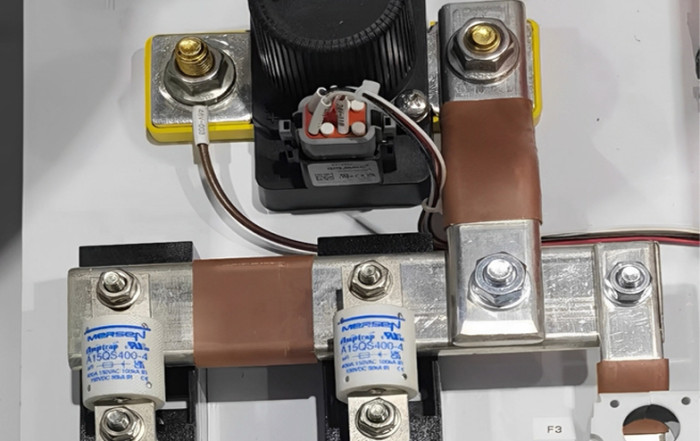
The BYD blade battery module adopts matte tin copper busbars, with contact resistance stabilized at below 0.15 mΩ, supporting 600 A continuous current.
- Optimierung der PV-Wechselrichtertopologie
Sunny Power’s latest string inverter uses tinned copper busbars to increase the power density to 1.5W/cm³, and the efficiency breaks through 99%.
Zusammenfassen
Der technologische Durchbruch von verzinnte Kupfersammelschiene busbars is reshaping the competitive landscape of the new energy industry. From the quantum-level optimization of electrical conductivity to the reliability of extreme environments, the scientific selection of plating processes and thicknesses has become the core strategy of cost reduction and efficiency. With the strategic deployment of high-end materials, the tinned copper busbar will accelerate to aerospace, smart grid and other cutting-edge areas of penetration, opening a new era of conductive components.


 German
  English
  Arabic
  Spanish
  French
  Russian
  Danish
  Japanese
  Italian
  Vietnamese
  Turkish
  Dutch
Dutch  Portuguese
  Thai
Thai  Swedish
  Korean
  Greek
Greek  Polish
  Estonian
  Esperanto
  Hindi
Hindi  Indonesian
  Latvian