Vous avez besoin de barres omnibus sur mesure en cuivre ou en aluminium pour des batteries de véhicules électriques, des systèmes de stockage d'énergie, la distribution d'électricité ou des équipements électriques industriels ? Notre équipe propose des solutions de barres omnibus isolées, flexibles, stratifiées, plaquées et nues, accompagnées d'un soutien à la conception, de conseils en matière d'essais et d'une fabrication fiable pour des projets aux États-Unis et en Europe.
Custom Rigid Insulated Copper Busbar for EV Battery Systems
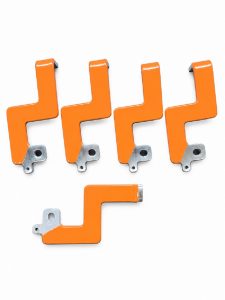
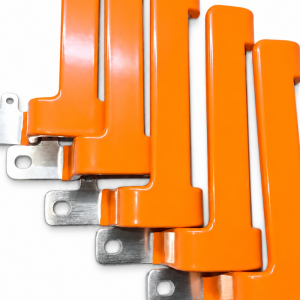
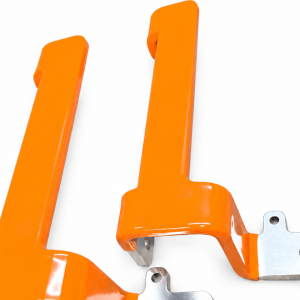
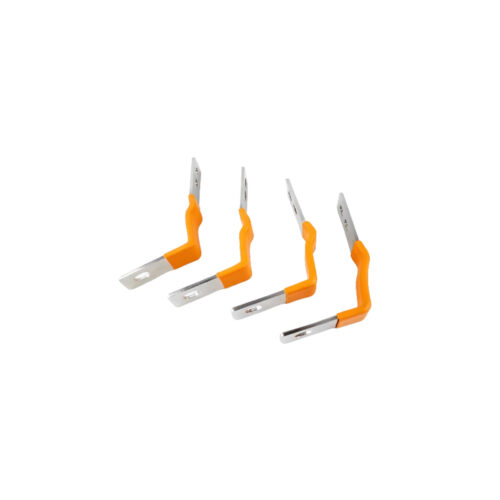
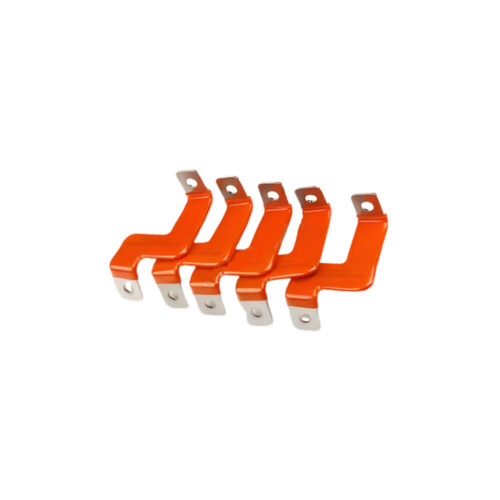
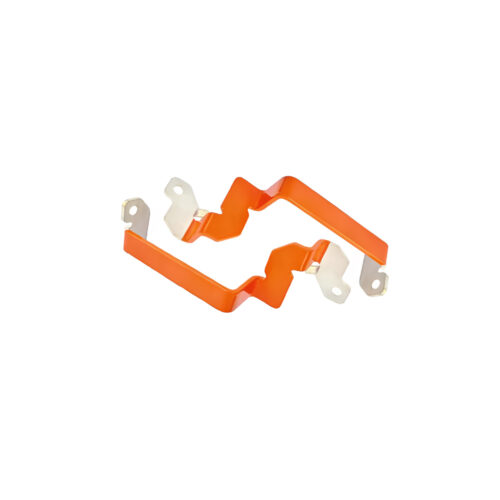
Rigid insulated copper busbar with formed bends, orange electrical insulation and exposed bolted terminal areas. Designed for fixed electrical connections in EV battery packs, power distribution equipment and custom OEM assemblies
Custom Rigid Insulated Copper Busbar for EV Battery Systems
Custom Rigid Insulated Copper Busbar for EV Battery Systems
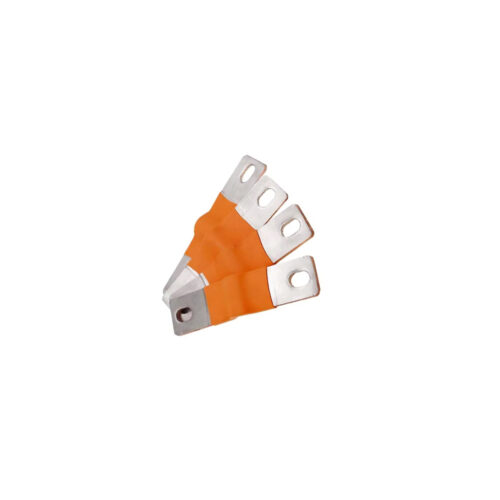
This rigid insulated busbar uses a solid rectangular copper conductor formed into an offset geometry with bends and terminal mounting holes. Most of the conductor is covered by orange insulation while selected terminal contact areas remain exposed for bolted electrical connections. This construction matches the insulated busbar category more closely than flexible or laminated busbars; powder-coated insulation is also widely used on formed rigid busbars.
Custom Rigid Insulated Copper Busbar for EV Battery Systems
The component is suitable for fixed connections in EV battery packs, energy storage equipment, power distribution assemblies and related electrical systems. Its formed geometry and terminal layout can be adapted through custom busbar manufacturing to match OEM installation space, connection points and assembly requirements. Similar insulated formed copper busbars are used for EV battery and industrial power-distribution applications
Features
Main body: A flat, elongated conductor with a rectangular cross-section, typical of rigid copper busbars.
Isolation : The orange surface layer is likely an epoxy powder coating or heat-shrink tubing, providing electrical insulation and mechanical protection.
Metal terminals: The silver-white mounting terminals at both ends are usually made of T2 copper and are nickel- or tin-plated to improve conductivity, wear resistance, and corrosion resistance.
Mounting holes: The holes in the terminals are used for bolted connections, ensuring mechanical fixation and electrical conduction with battery terminals or equipment terminals
Materials and Processes
Body material: T2 copper, with purity not less than 99.90%, to ensure high conductivity.
Terminal process: Stamped and bent into shape, then nickel- or tin-plated to reduce contact resistance and prevent oxidation.
Insulation process: Applied by hot dipping, electrostatic spraying, etc. The coating must have uniform thickness and reliable insulation performance.
Core Performance and Technical Parameters
Electrical performance: Must meet high-voltage system requirements, such as withstanding DC 4380 V, leakage current less than 0.1 mA, and insulation resistance greater than 500 MΩ.
Flame retardancy: Insulation materials must meet UL94-V0 flame retardant rating and be self-extinguishing.
Corrosion resistance: Must pass a 72-hour neutral salt spray test, with no corrosion or red rust on the surface afterward.
Mechanical performance: Must undergo vibration, shock, and other mechanical reliability tests, ensuring bolt residual torque is not less than 60%, with no local fracture
Custom Rigid Insulated Copper Busbar for EV Battery Systems
Cas d'utilisation Rigid copper busbars are mainly suitable for fixed connections that require efficient heat conduction, such as:
Series connections between modules in battery packs.
Main positive and negative output connections to contactors or fuses.
Internal connections in power distribution units (PDUs) and motor controller DC busbars.
High-voltage distribution boxes and connections between energy storage battery clusters.
Selection Recommendations
When selecting a busbar, the specific application scenario should be considered:
For fixed installation, defined space, and active cooling connection points, such as battery pack main circuits and PDU interiors, rigid copper busbars are preferred to achieve low resistance, low inductance, and efficient heat conduction.
For locations with vibration, installation tolerance compensation, or thermal expansion and contraction, such as between cells or between the battery pack and BMS, flexible copper busbars should be selected.